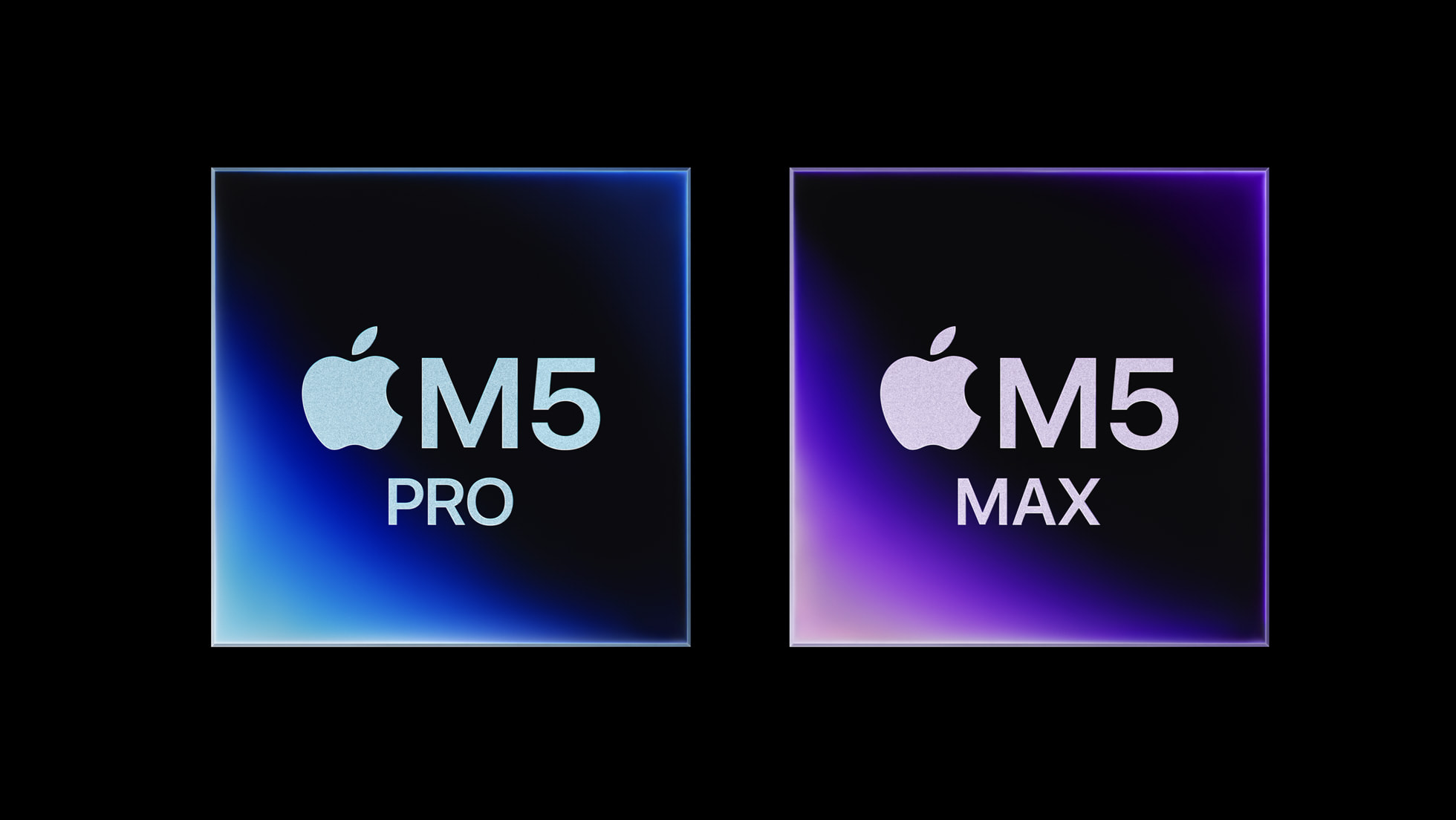
Apple has officially introduced the latest generation of its professional processors with the launch of the M5 Pro and M5 Max chips. These processors mark a significant step forward in the evolution of the Apple Silicon platform and are designed primarily to power the newest MacBook Pro systems.
The new chips are built on a technology Apple calls Fusion architecture. This approach links two 3 nanometer silicon dies into a single system, allowing extremely fast data communication between the components while maintaining very low latency. The architecture enables higher performance while still preserving the power efficiency that Apple Silicon devices are known for.
New CPU design with super performance cores
The CPU structure of the M5 Pro and M5 Max introduces a redesigned configuration with up to 18 cores. Apple divides these into two groups.
Six of the cores are described as super performance cores designed for the most demanding tasks. The remaining twelve are efficiency oriented cores that handle background workloads while minimizing power consumption.
This hybrid design significantly boosts multithreaded performance. Apple reports that the processors can deliver up to 2.5 times faster multi core performance compared with earlier chips such as the M1 Pro and M1 Max.
These improvements benefit workloads like complex software development, large scale data analysis, and professional creative projects.
GPU and AI acceleration reach new levels
Graphics performance has also received a major upgrade. The GPU architecture now supports configurations with up to 40 graphics cores.
Each GPU core includes a built in neural accelerator designed to handle AI tasks more efficiently. Apple states that AI processing performance is more than four times faster compared with earlier generations.
The M5 Max model can also support up to 128GB of unified memory with memory bandwidth reaching 614GB per second. This allows heavy workloads such as large language model training or complex 3D animation rendering to run directly on a laptop.
Ray tracing and media engine improvements
The new processors include a third generation ray tracing engine designed to improve lighting and visual realism in graphics workloads. Apple claims ray tracing performance improves by around 35 percent compared with the M4 Pro generation.
A new media engine also enhances video processing capabilities. It supports formats such as H.264, HEVC, and AV1 while optimizing performance for professional formats like ProRes.
These improvements make the processors particularly attractive for video editors, visual effects artists, and other creative professionals working with high resolution media.
Built for modern connectivity and security
The processors also integrate modern connectivity technologies. Support for Thunderbolt 5 is built directly into the chip, allowing high speed external device connections with greater efficiency.
Security has also been strengthened with new memory protection technologies designed to safeguard data in active memory. Apple calls this feature Memory Integrity Enforcement, which continuously protects sensitive information during operation.
According to Johny Srouji, the M5 Pro and M5 Max represent a balanced combination of performance, power efficiency, and AI capability. He noted that the architecture allows professionals to push creative workflows further while maintaining the energy efficiency expected from Apple Silicon.
With these advancements, the M5 Pro and M5 Max signal another major transition in Apple’s processor strategy and further strengthen the company’s push into AI accelerated computing.
Origin: Apple