Dissidia Final Fantasy explained: story, gameplay, and why fans still love it
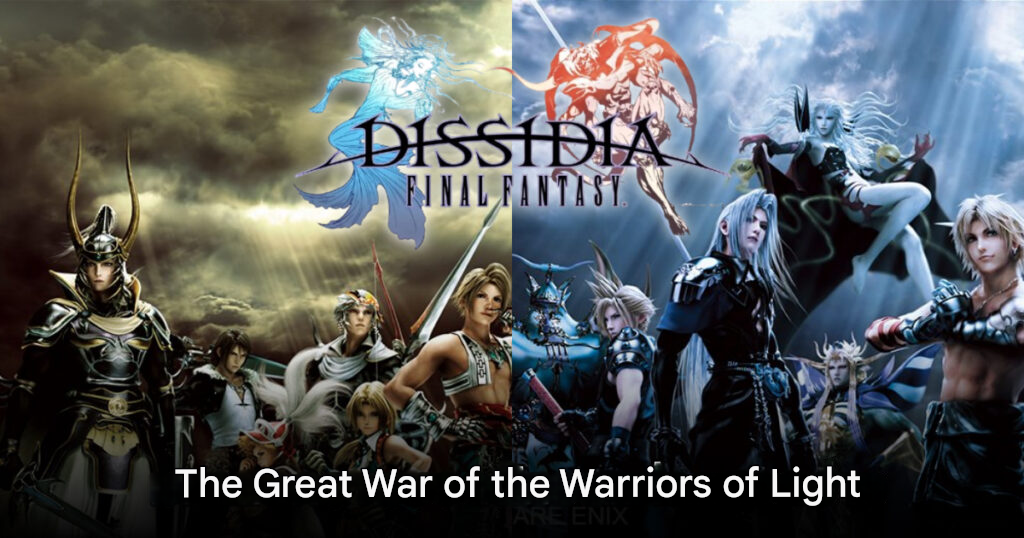
Dissidia Final Fantasy retrospective: the epic crossover battle of heroes and villains
Nearly four decades after its debut, the Final Fantasy series continues to evolve with new mainline entries and spin-offs. Over the years the franchise has explored everything from traditional RPG adventures to action combat, mobile strategy titles, and experimental side projects.
Among these spin-offs, one title stands out for bringing together heroes and villains from across the entire series into a single battlefield. That game is Dissidia Final Fantasy, originally released for the PlayStation Portable.
Rather than focusing on a single storyline or world, Dissidia creates a crossover universe where iconic characters clash in a battle between light and darkness.
A simple beginning that leads to an epic conflict
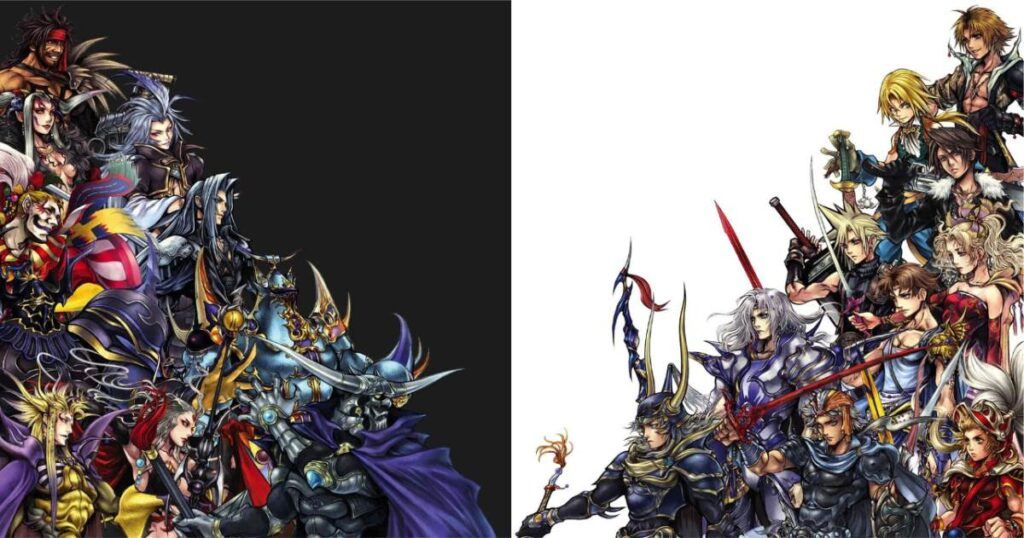
The story of Dissidia Final Fantasy revolves around two divine forces: Cosmos, the goddess of harmony, and Chaos, the embodiment of destruction.
As the balance of the world begins to collapse, Cosmos summons champions from various Final Fantasy worlds to fight in a war against Chaos and his followers. These warriors must battle enemies, face mysterious beings called Manikins, and ultimately defeat Chaos to restore balance.
While the premise seems straightforward at first, the central concept of the story is the Cycle, a repeating war between Cosmos and Chaos. The events of the original game take place during the 13th cycle, where heroes once again attempt to stop Chaos and break the endless conflict.
The story unfolds through a unique board-game style mode called Destiny Odyssey, where players move their character pieces across a map, collect items, fight enemies, and unlock new story scenes as they progress.
Real-time combat that blends action and strategy
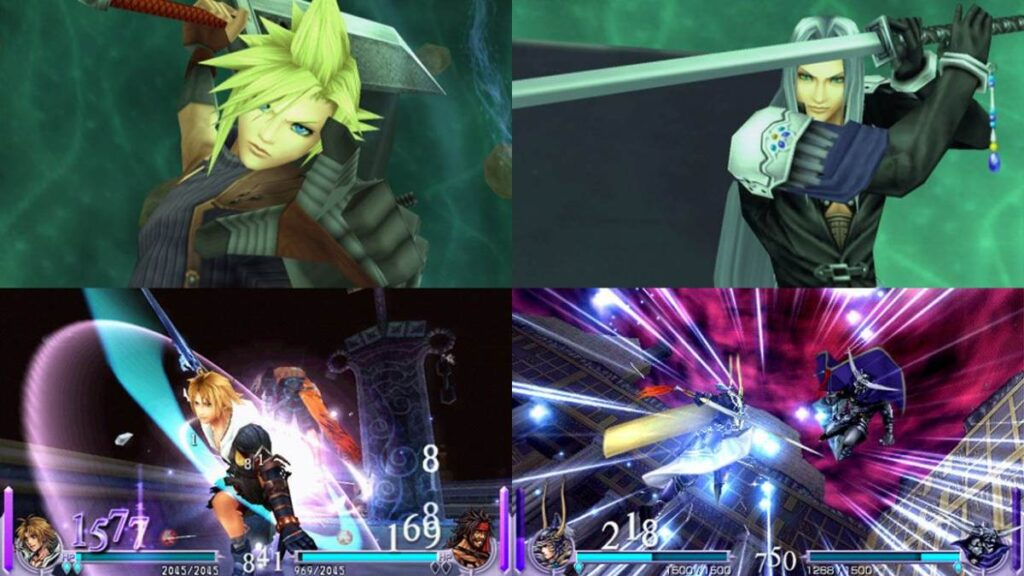
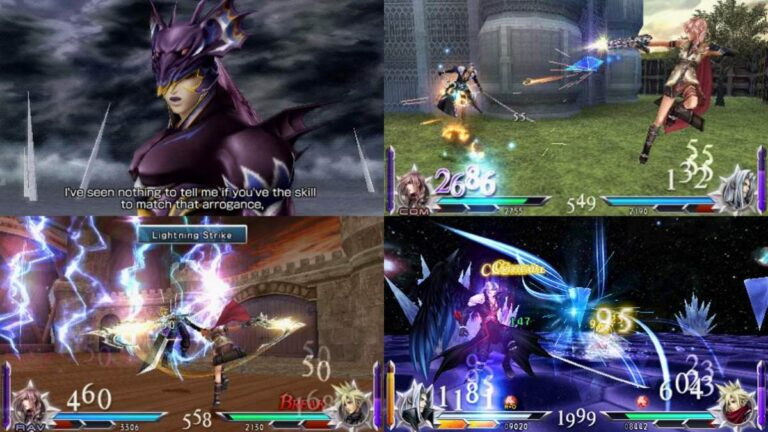
Dissidia Final Fantasy stands out because it combines elements of fighting games with traditional RPG mechanics.
Players control characters in large three-dimensional arenas inspired by locations from various Final Fantasy titles. The environments are interactive, allowing players to run along walls, slide across surfaces, and traverse vertical spaces during combat.
The battle system revolves around two main attack types.
Bravery attacks steal Bravery points from opponents. These points determine how much damage a character can deal with their next HP attack. The higher the Bravery value, the stronger the HP attack becomes.
However, using an HP attack resets the player’s Bravery to zero and requires time to rebuild it. If an opponent lands a hit during this vulnerable period, the player may enter a Break state, leaving them open to devastating damage.
Because of this system, combat becomes a constant balance between aggression and strategy.
Players must carefully manage their Bravery points while looking for opportunities to deliver powerful finishing attacks.
Special attacks can also be triggered when players collect silver EX cores in the arena, filling a gauge that allows characters to unleash devastating abilities.
RPG mechanics that stay true to the series
Even though Dissidia Final Fantasy is primarily a fighting game, it still retains strong RPG elements.
Characters gain experience points and level up over time, unlocking new abilities and improving their stats. Players can also equip weapons, armor, and accessories that provide passive bonuses or unique combat advantages.
Another classic Final Fantasy element appears in the form of summons.
Players can equip Summonstones that allow powerful creatures to assist them during battle. Each summon provides a different effect. For example:
- Ifrit increases the Bravery gained from attacks
- Shiva can freeze an opponent’s Bravery growth
- Odin greatly increases the chance of causing Break on enemies
More than twenty summons appear in the game, adding another layer of strategy to each fight.
Duodecim and the twelfth cycle of war
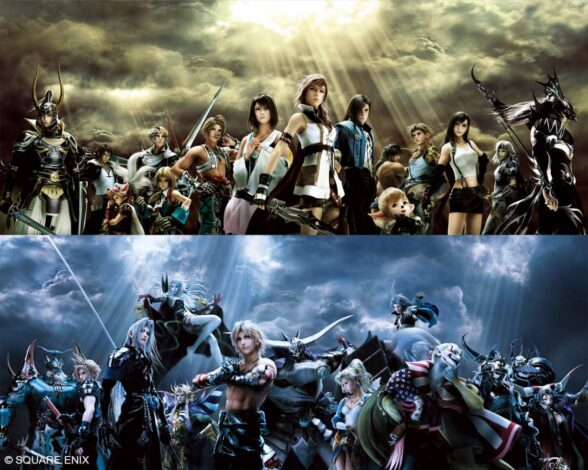
The original Dissidia was later expanded with Dissidia 012 Final Fantasy, often considered the definitive version of the experience.
Rather than continuing the story, Duodecim acts as a prequel that explores the 12th cycle of the war between Cosmos and Chaos.
During this earlier conflict, the forces of Chaos actually emerge victorious. Several heroes are permanently defeated, explaining why certain characters do not appear in the later cycle depicted in the original game.
Duodecim introduces new playable characters and a deeper narrative that explores shifting alliances between heroes and villains.
The game also adds a new Assist system, allowing players to temporarily call allies into battle. Assist characters can attack enemies, steal Bravery, or even intercept incoming attacks to protect the player.
One notable Assist-only character is Aerith from Final Fantasy VII, who provides support abilities during combat.
Another major improvement is the redesigned story mode. Instead of the board-game structure, Duodecim introduces a fully explorable 3D world map where players can travel between locations, complete missions, and uncover hidden treasures.
Expanding the Dissidia universe
As the series grew in popularity, Dissidia evolved into a larger spin-off franchise within the Final Fantasy universe.
One major entry was Dissidia Final Fantasy Opera Omnia, a mobile game that combined turn-based combat with the Bravery system. The game featured an enormous roster, often including entire character parties from different Final Fantasy titles.
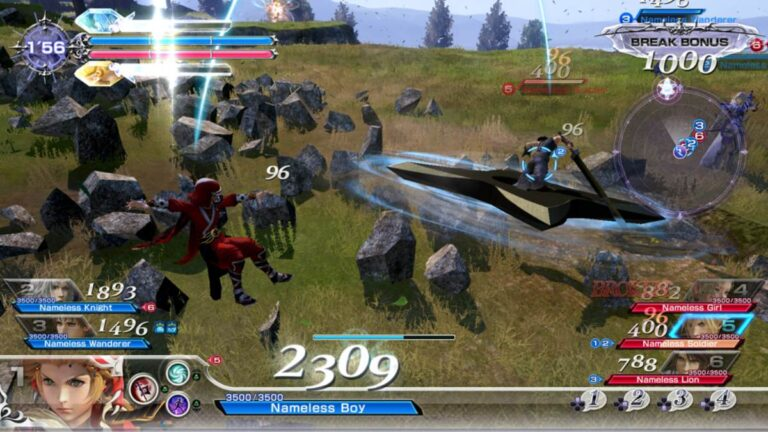
Another entry, Dissidia Final Fantasy NT, was developed with the help of Koei Tecmo. This version shifted the gameplay toward a team-based 3v3 format designed for arcade competition.
While NT introduced impressive visuals and large-scale battles, it focused heavily on teamwork and esports-style gameplay, which divided the fanbase.
A new future for the Dissidia series
The Dissidia franchise continues to evolve, with a new project titled Dissidia Duellum Final Fantasy currently in development.
This upcoming title will take place in a reimagined setting above modern-day Tokyo, where warriors of light appear in human form and battle mysterious monsters threatening the city. The game focuses on PvPvE gameplay and has already opened pre-registration on mobile stores.
Despite the arrival of new titles, many fans still remember the original Dissidia games on PSP as a unique and ambitious crossover experience.
Unfortunately, the classic PSP versions have never been widely ported to modern platforms, making them harder to revisit today. For now, players who want a taste of the series can still try the free-to-play version of Dissidia NT online, where dedicated fans continue to keep the community alive.
For many Final Fantasy fans, however, the original Dissidia remains a special chapter in the franchise’s long history, bringing together heroes and villains from across the series in a battle that truly felt legendary.