Samsung Admits Galaxy S26 Ultra Display Quality Drop via Privacy Display
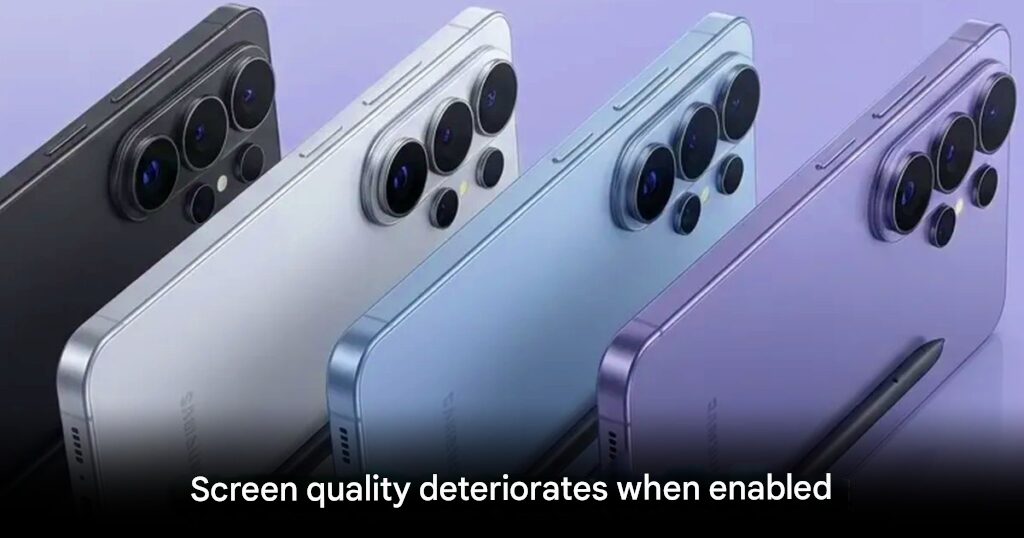
Samsung Admits Galaxy S26 Ultra Display Quality Dip Due to Privacy Hardware
The Samsung Galaxy S26 Ultra has been the talk of the town since its launch on March 6, 2026, primarily due to its headline-grabbing Privacy Display. While the feature which prevents bystanders from snooping on your screen is hailed as a gamechanger, early users noticed a slight dip in visual fidelity compared to the previous Galaxy S25 Ultra.
In a recent interview with TechRadar, Samsung officially acknowledged these “variations” in display quality, explaining that they are an inevitable trade-off of the specialized hardware required to make the feature work.
The Science of “Flex Magic Pixel”
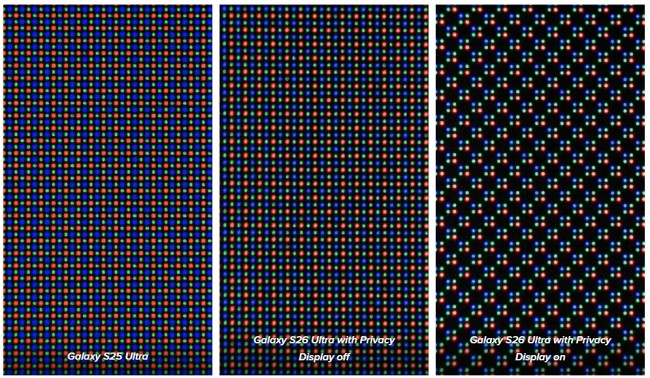
Unlike software-based filters, the Privacy Display on the S26 Ultra is a physical hardware innovation called the Flex Magic Pixel OLED panel. This technology uses two distinct types of pixels: Narrow and Wide.
- How it works: When Privacy Mode is activated, the “wide” pixels which disperse light at broad angles are effectively dimmed or turned off. Only the “narrow” pixels remain active, firing light directly toward the user’s eyes to prevent off-angle viewing.
- The Pixel Hit: Under a microscope, it is clear that half the pixels are disabled when the maximum privacy setting is engaged. This leads to a noticeable reduction in peak brightness and a perceived drop in resolution, as the pixel density is essentially halved in that state.
Even When “Off,” the Hardware Tax Remains
One of the more controversial findings from early tech reviews (including those from 9to5Google and GSMArena) is that the display quality is affected even when the privacy feature is turned off.
Because the screen must physically accommodate the “light-shielding” layers for the narrow pixels, some users have reported:
- Muted Vividness: A slight reduction in the “pop” of colors compared to the S25 Ultra.
- Color Shifting: Minor shifts in white balance when viewing the phone at even slight tilts.
- Grainy Texture: Some users have noted a subtle “screen-door effect” on bright, white backgrounds, likely due to the modified pixel grid.
Samsung’s Official Stance
Samsung remains confident that the benefits far outweigh these minor technical drawbacks. A company spokesperson stated:
“Privacy Display is designed to protect user’s privacy by providing a vivid visual experience in normal use cases. Some variation will be seen at certain angles and maximum brightness; however, the impact on actual usage should be negligible for most users.”
Is It a Dealbreaker?
Despite the admission, most experts agree that the Galaxy S26 Ultra still possesses one of the best displays on the market. The ability to hide banking apps, passwords, or private messages in public spaces is a functional leap that many find worth a 5–10% dip in raw pixel purity.
The Galaxy S26 Ultra is currently available globally starting at $1,299 (approx. 46,900 THB), maintaining its premium status despite the display controversy.
Origin: 9to5google