Why Today’s Online Games Lose Players So Quickly Now
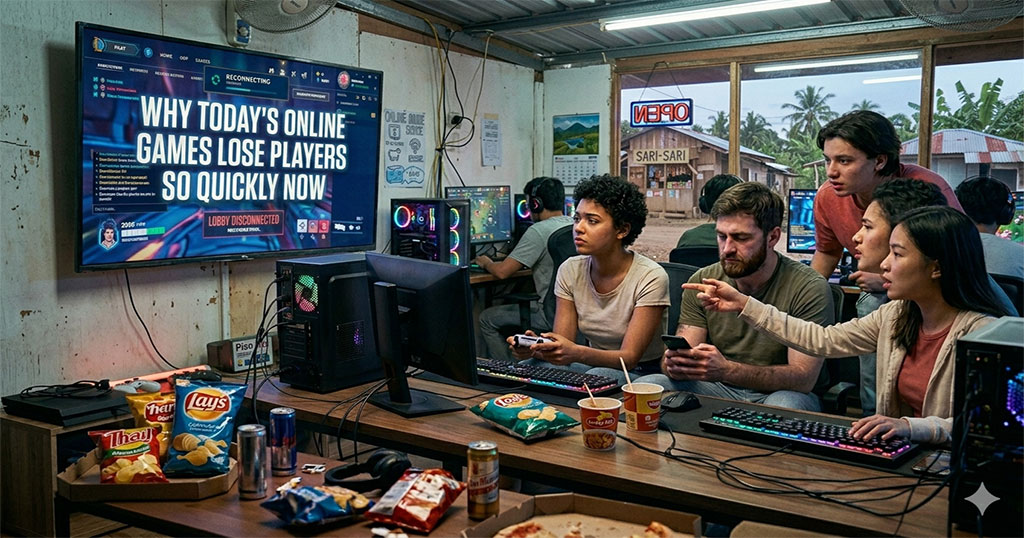
Why Online Gamers Quit Faster Now Than Ever Before?
Gamers today do not simply quit because they are impatient. They quit because online games now ask for more time, more emotional energy, and more daily commitment than many players can afford. The modern player also has more alternatives than ever, from mobile games and platform-style titles to social media, streaming video, and creator-led communities. Industry data supports this shift, as PC and console playtime dropped 26% from 2021 to 2023, while a small group of major titles captured a large share of total playtime.
The first session has become the real trial
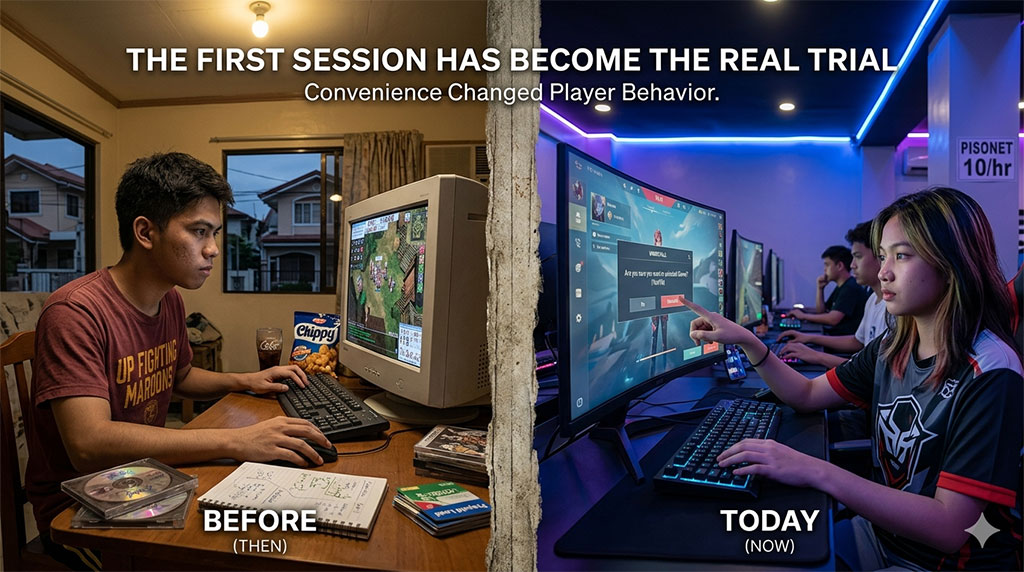
Before, buying a game often meant giving it more time. Players saved for a title, installed it, learned its systems, and stayed longer because switching was not always easy. Today, many online games are free, fast to install, and even faster to delete. That convenience changed player behavior.
Mobile data shows how brutal the early retention window has become. Adjust’s 2025 mobile app trends report found that Day 1 retention for gaming apps declined from 28% in 2023 to 27% in 2024, while Day 7 retention stayed at 13%. By Day 30, retention remained only 5%. In simple terms, most players decide very quickly whether a game deserves space in their routine.
This makes the opening hour more important than ever. A confusing tutorial, slow reward loop, weak matchmaking system, or aggressive monetization pop-up can push players away before the real game even begins.
Players now have too many choices
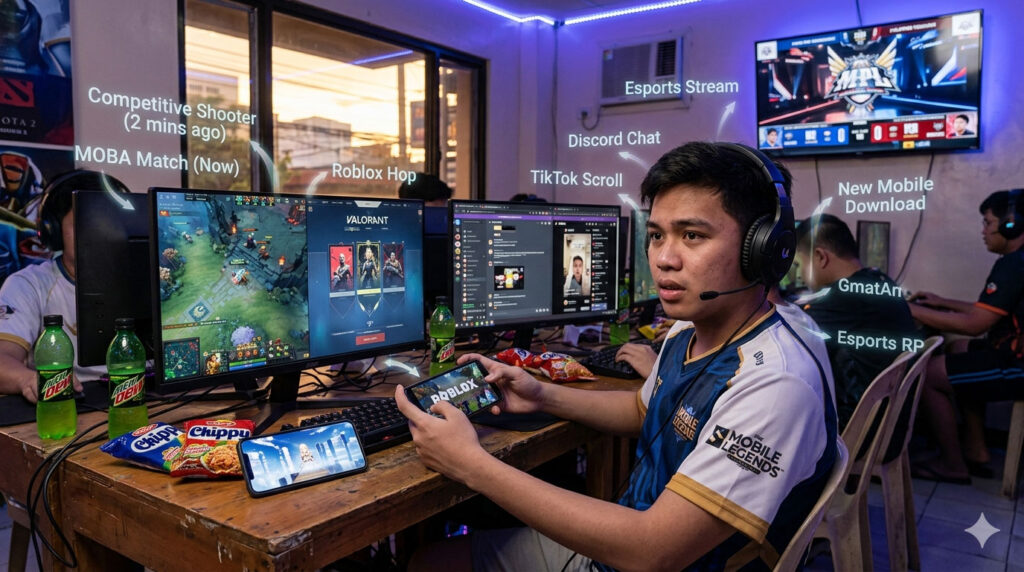
The old online gaming environment had fewer dominant options. Communities formed around specific titles because players had fewer places to go. Today, a player can jump from a competitive shooter to a MOBA, from a gacha RPG to Roblox, from Discord to TikTok, and from an esports stream to a new mobile download in minutes.
This is especially true in Southeast Asia, where gaming grew through mobile penetration, strong communities, esports culture, and high social media and video platform engagement. Niko Partners estimated that Southeast Asia had 285.82 million gamers in 2024 and expects the figure to reach 290 million in 2025. That scale gives developers opportunity, but it also creates a crowded battlefield for attention.
When players have too many choices, loyalty becomes harder to earn. A game no longer competes only with other games in its genre. It competes with every other digital habit on the player’s phone.
Live-service games made play feel like work

The live-service model helped many games survive for years, but it also created fatigue. Battle passes, daily quests, limited-time events, ranked resets, collaboration skins, login rewards, and seasonal missions can keep a game alive. They can also make players feel trapped.
GDC’s 2025 State of the Game Industry report showed that developers remain divided on live-service games. Around 33% of AAA developers work on live-service titles, but many respondents raised concerns about declining player interest, creative stagnation, predatory practices, microtransactions, developer burnout, and market oversaturation.
For players, this pressure becomes simple: miss one week, and the game makes you feel behind. Miss one season, and the game may feel like it moved on without you. At that point, quitting can feel easier than catching up.
Social value now matters as much as gameplay

Modern players do not only ask, “Is this game fun?” They also ask, “Are my friends here?” “Can I create something?” “Can I share this?” “Does this game give me a place to belong?”
Bain’s 2025 Gaming Report found that growth is increasingly concentrated among top games. It also noted that players in platform-style games value social features, creative tools, and gameplay, while graphics matter less than before. Bain also reported that 24% of players discover new games through online creators or influencers, while 14% discover them through social media.
This explains why some technically polished online games struggle. If the game lacks a strong social reason to stay, players leave when the novelty fades. A game can have good combat, clean visuals, and decent systems, but still fail if it does not create community momentum.
Toxicity pushes players away faster now
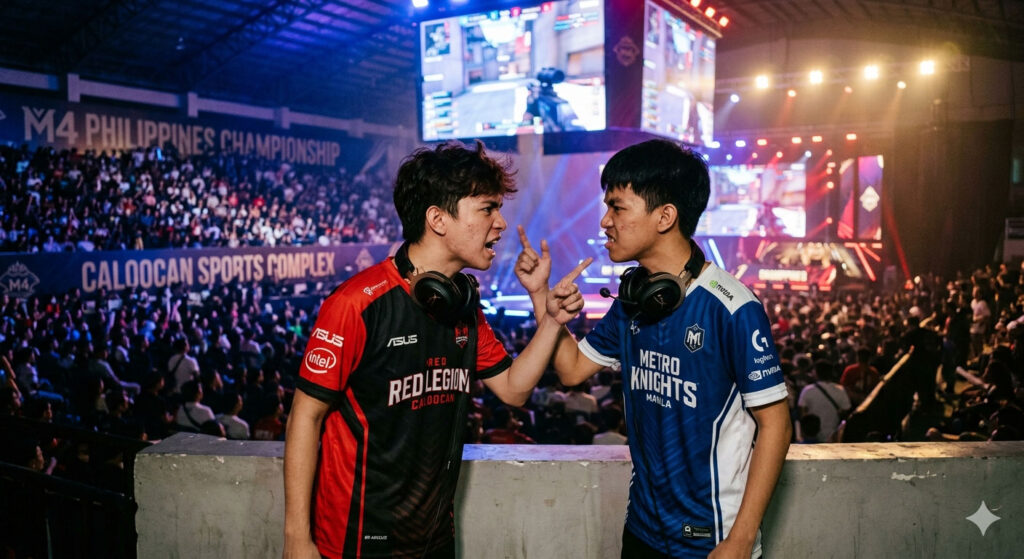
Online games still depend on community, but community can also become the reason people quit. Toxic voice chat, harassment, griefing, cheating, smurfing, and hostile ranked culture drain players faster than balance issues.
Take This and Nielsen’s research on toxicity found that 21% of players spent less time in a gaming community to avoid harassment. The same report found that 31% had left a game or match after it started, while 44% had turned off voice chat to avoid harassment.
This matters because online games rely on repeated emotional investment. If every session feels stressful, players eventually protect their peace. They do not always announce that they are quitting. They simply stop logging in.
Skill gaps became more punishing
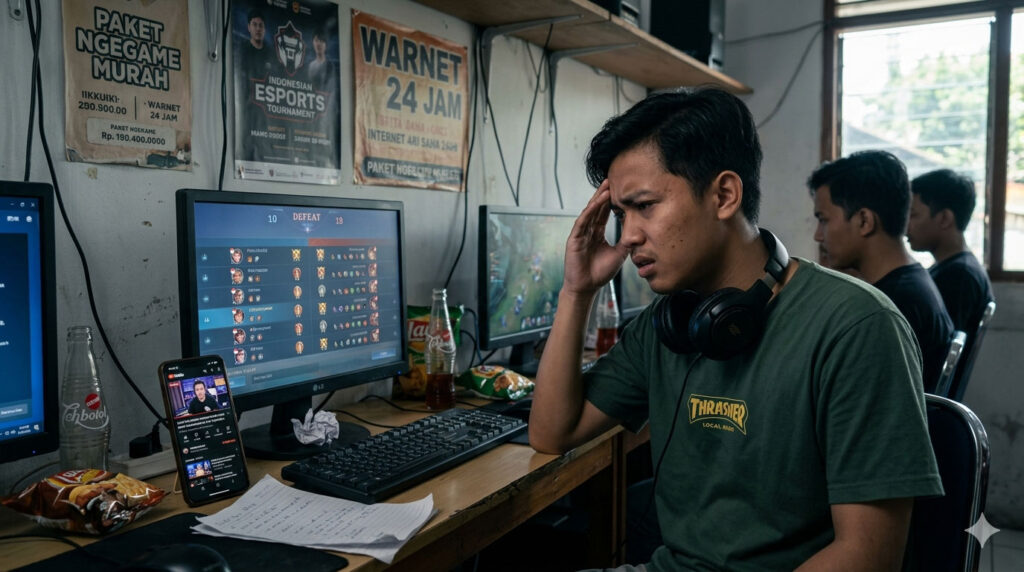
Another reason players quit faster is the speed of mastery culture. Guides, tier lists, meta builds, pro streams, esports clips, and patch breakdowns now appear almost instantly. That helps competitive players improve, but it also makes casual players feel late.
Before, players discovered strategies together. Today, a casual player may enter a match and face opponents who already know the strongest weapon, best route, ideal build, and latest exploit. The gap between “new player” and “informed player” has become much wider.
This creates skill anxiety. Some players do not quit because the game is bad. They quit because the community solved the game faster than they could enjoy it.
Monetization can break trust early

Players can accept monetization when it feels fair. They reject it when it feels like pressure. Many online games now ask for spending before they earn trust. Starter packs, limited banners, premium currencies, paid battle passes, upgrade materials, cosmetics, subscriptions, and event bundles can overwhelm new players.
The issue is not spending itself. The issue is timing and tone. When a player sees five store prompts before they understand the game’s identity, the relationship becomes transactional. Once trust breaks, uninstalling becomes easy.
Nostalgia also changed the comparison point
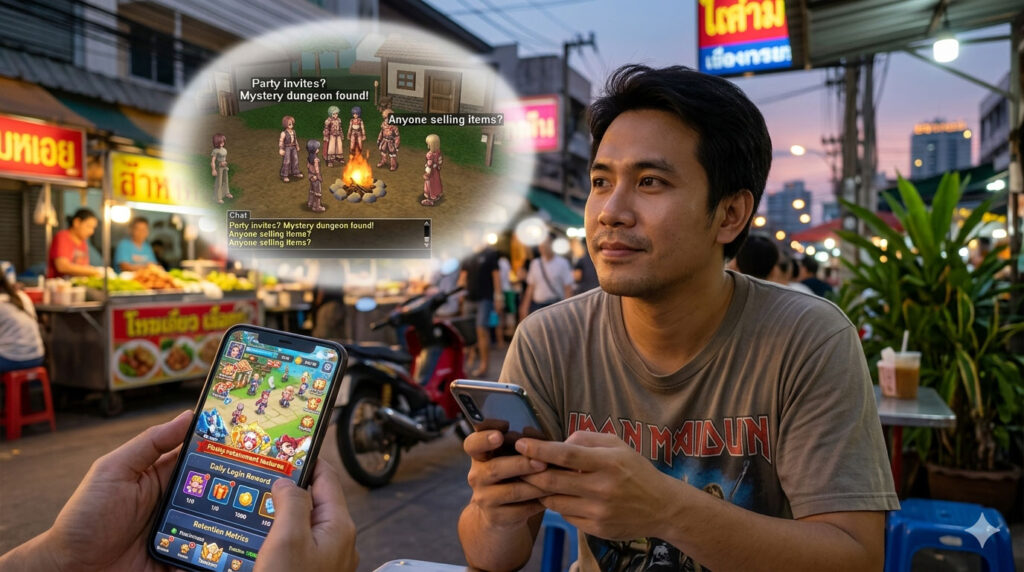
Many older gamers compare today’s online games to memories of older titles. Those memories are not always objective, but they are powerful. Earlier online games often felt more mysterious, more communal, and less optimized around retention metrics.
Today’s games may offer better visuals, smoother systems, and bigger content pipelines. Yet they can feel less personal when every screen asks players to claim, grind, buy, upgrade, queue, or return tomorrow.
That is why nostalgia matters. Players are not only comparing game quality. They are comparing emotional texture. They miss the feeling of playing because they wanted to, not because the game reminded them to.
So why do gamers quit faster now?
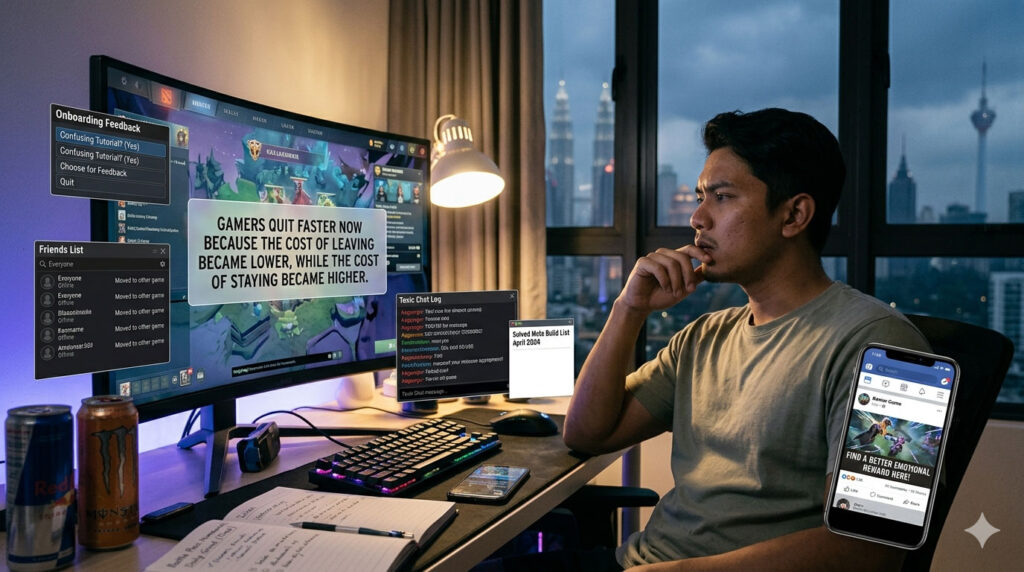
Gamers quit faster now because the cost of leaving became lower, while the cost of staying became higher.
A player can leave because onboarding feels weak. They can leave because friends moved to another game. They can leave because the battle pass feels like homework. They can leave because ranked feels toxic. They can leave because the meta feels solved. They can leave because another game, creator, platform, or community offers a better emotional reward.
The modern player is not necessarily less loyal. The modern player is more selective.
The next winning online games will not be the ones that simply demand daily activity. They will be the ones that respect player time, build safer communities, reduce unnecessary pressure, and give players a reason to return without making them feel punished for leaving. Retention should not feel like a trap. It should feel like a relationship worth coming back to.
References Used:
- Reuters – PC and console playtime decline
https://www.reuters.com/technology/pc-console-growth-lag-pre-pandemic-levels-gamers-clock-fewer-hours-report-says-2024-04-02/ - Adjust – Mobile App Trends 2025 Report
https://a.storyblok.com/f/47007/x/9a13feb8eb/mobile-app-trends-2025.pdf - GDC – 2025 State of the Game Industry Report
https://investgame.net/wp-content/uploads/2025/03/0794a269-d5c4-4994-9bcf-8c5730d0815e_2025_GDC_State_of_the_Game_Industry_report-1.pdf - Niko Partners – Southeast Asia Games Market Outlook
https://nikopartners.com/sea-of-opportunities-exploring-the-rise-of-southeast-asia-video-games-market/ - Bain & Company – Gaming Report 2025
https://www.bain.com/insights/gamer-survey-great-gameplay-is-no-longer-enough-gaming-report-2025/ - PR Newswire – Bain Gaming Report Summary
https://www.prnewswire.com/news-releases/platform-style-games-direct-to-consumer-distribution-drive-far-reaching-shake-up-of-global-gaming-marketbain–company-annual-gaming-report-302527791.html - Take This / Nielsen – Toxicity and Harassment in Gaming Report
https://www.takethis.org/wp-content/uploads/2024/03/ToxicityBottomLine_Final.pdf