Switch 2 Could Stay Strong Beyond 2030, Says DF
Digital Foundry Believes Nintendo Switch 2 Can Last Beyond 2030
Nintendo Switch 2 is approaching its first full year in the market, and its early performance has already impressed many players. The console has seen strong growth compared with the original Nintendo Switch from 2017, showing that fans were clearly waiting for Nintendo’s next hybrid system.
However, one question remains important. How long can Nintendo Switch 2 stay relevant when its hardware still does not match larger x86-based consoles?
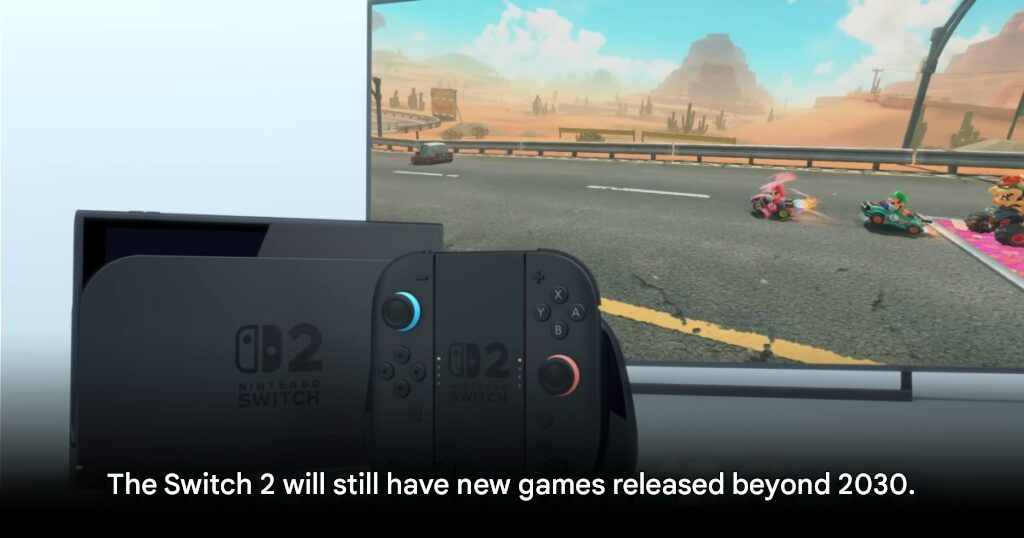
According to Digital Foundry, the answer may be longer than some players expect. The technical analysis group believes Nintendo Switch 2 can continue supporting new-generation games beyond 2030, or at least into the early 2030s.
Switch 2 Specs May Be More Future-Ready Than Expected
The main reason comes from the console’s more balanced hardware.
Digital Foundry believes Nintendo has done better preparation this time. Nintendo Switch 2 uses a more modern processor, stronger RAM, and faster storage that works close to SSD-like usage.
These upgrades help reduce the technical gap between the hybrid console and larger gaming platforms. While Nintendo Switch 2 still has clear limits, it now has enough modern features to support the basic needs of many next-generation games.
That includes technologies such as DLSS and ray tracing, which are no longer impossible targets for the system.
Modern Game Engines Help Switch 2 Survive Longer
Another important point comes from how game development works today.
Many studios now build games with scalable engines that can adjust across different devices. This means developers do not always need to rebuild a game from zero just to make it work on another platform.
Instead, they can lower certain settings, adjust assets, and scale performance based on hardware limits.
The article points to games such as Resident Evil and Final Fantasy VII Remake as examples of modern engine flexibility. With the right adjustments, large games can run across different platforms more smoothly than before.
This matters for Nintendo Switch 2 because it gives developers a more realistic path to bring new-generation titles to the platform.
Fast Flash Storage Could Reduce Porting Issues
Storage also plays a major role in the discussion.
Nintendo Switch 2 uses high-speed eMMC flash memory, which the article describes as close to SSD-style usage. This may help the console handle modern game loading and data movement better than the original Switch.
That does not mean it can fully match high-end consoles or gaming PCs. However, it gives developers more room to work with when optimizing games.
For players, this could mean more ports, better performance, and fewer cases where developers skip the system because of major technical barriers.
The Original Switch Already Proved Long Support Is Possible
The original Nintendo Switch also gives a strong reason to believe in the long-term life of its successor.
Even though the first Switch launched almost a decade ago, it continues to receive games and support. Some titles still launch alongside current-generation platforms such as PlayStation 5 and Xbox Series X|S, despite the old hardware foundation.
That makes Nintendo Switch 2 look even more promising. If the first Switch could survive this long with older technology, then the improved hardware of Switch 2 may have a much better chance of lasting into the next console cycle.
Because of that, it would not be surprising if Nintendo Switch 2 continues standing beside future platforms, possibly even during the era of PlayStation 6.
About Nintendo Switch 2
Nintendo Switch 2 is Nintendo’s next-generation hybrid console that continues the concept of playing both on a TV and in handheld mode.
The system features a 7.9-inch display with HDR support, 1080p resolution in handheld mode, and up to 4K output when connected to a TV. It also supports up to 120 FPS, includes voice chat and video call features, and offers 256GB of storage.
With stronger specs, improved convenience, and a familiar hybrid design, Nintendo Switch 2 aims to continue the success of the original system while giving developers more power to work with.
THIS IS our take
Nintendo Switch 2 may not compete with larger consoles through raw power, but Nintendo has never needed to win that battle. What matters more is whether developers can bring modern games to the system without painful compromises. Based on Digital Foundry’s view, the hardware now looks balanced enough to last well beyond 2030. If scalable engines, DLSS, and smart optimization continue improving, Switch 2 could become another long-lasting Nintendo success story.
SOURCE: Digital Foundry
This Is Game SEA