
Copilot Actions evolve into real task performing AI
Microsoft is rolling out a new Windows Insider build that introduces an experimental agent feature tucked inside the system Settings menu. This early version of Copilot Actions is designed to let AI handle multi step tasks automatically, giving Windows 11 users a digital assistant capable of managing everything from organizing files to scheduling meetings or sending emails. It signals a shift from AI that merely answers questions into AI that genuinely executes actions on behalf of its user, pushing Copilot closer to becoming a silent operator working behind the scenes of the operating system.
The company continues to expand its push toward agentic computing; a concept centered around AI models that take genuine initiative rather than passively reacting. With this experimental agent, Microsoft aims to elevate productivity by letting users focus on their core work while AI takes care of repetitive or logistical tasks. This direction positions Copilot as more than a helper and closer to a trusted executor capable of navigating Windows autonomously when allowed.
However, this capability introduces high stakes in the realm of security. Microsoft openly acknowledges the risks, from misunderstood instructions to potential external exploitation. To mitigate these threats, the agent runs in a separate account with strict permission boundaries, ensuring its actions remain fully visible and traceable. Users can monitor every activity it performs, reinforcing safety and accountability inside the system.
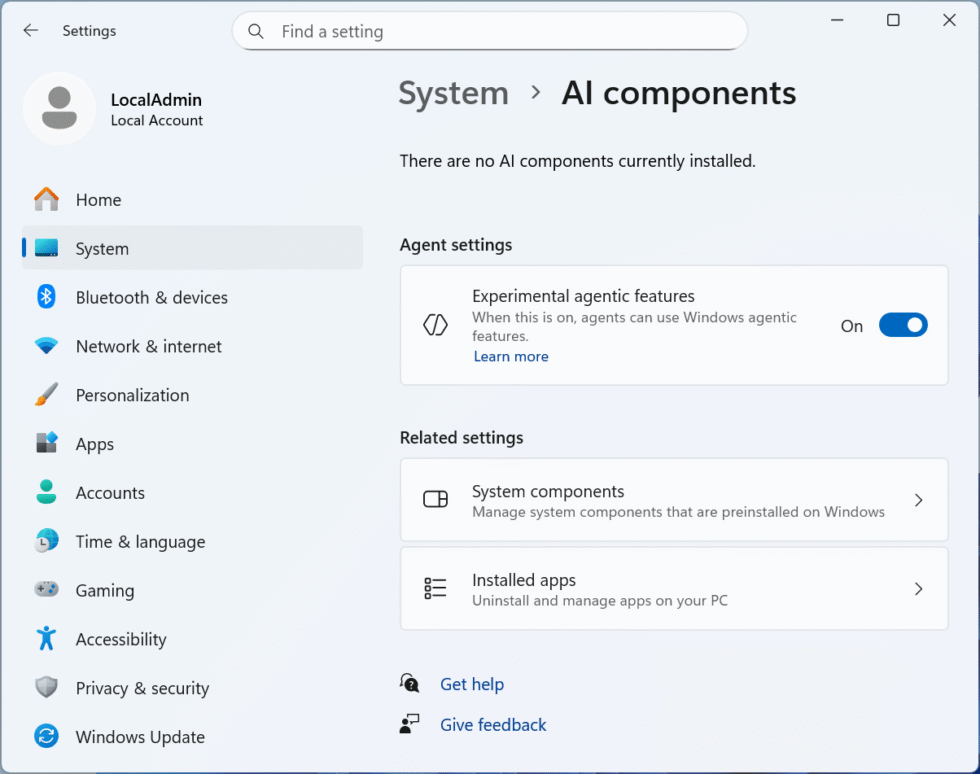
Even with multiple layers of safeguards, concerns surrounding privacy remain at the forefront. The experimental agent can request permission to access crucial folders such as Documents and Downloads, a decision that understandably raises eyebrows. Threats like cross prompt injection still linger and could potentially lead to data exposure or unauthorized software installations if vulnerabilities slip past the defenses.
Microsoft has chosen to keep the feature disabled by default. Users must manually opt in, accompanied by a clear risk disclosure meant to avoid a repeat of controversies like Windows Recall. The cautious approach shows a company more aware and more prepared as it experiments with features that touch sensitive personal data.
Alongside these technical additions, Microsoft also introduced a charming animated assistant named Mico, reminiscent of the nostalgic Clippy. Voice command recognition has also been upgraded for more natural interactions, making Copilot feel friendlier and more accessible to everyday Windows users.
THIS IS OUR SAY
Microsoft’s leap into AI agents marks a turning point for Windows 11, bridging old school productivity tools with a new generation of autonomous computing. The vision is ambitious and undeniably exciting, but the risks are equally real. If Microsoft can balance capability with safety, Copilot could become the most transformative Windows feature in years, and users may soon find themselves relying on an AI that feels less like a tool and more like a teammate.
Source: Arstechnica


