Violent Video Game Ban Discussions in the Philippines Needs a Reality Check

Violent Video Game Ban in the Philippines Needs a Reality Check
The violent video game ban in the Philippines debate is back in the spotlight after a rare and heartbreaking school shooting incident in Tacloban City.
Authorities have cited bullying as one possible motive. They are also investigating how the minors obtained the firearms. Reports said the guns were tied to adults, including a police officer’s relative and another adult connection. That detail alone should make everyone pause.
Because before we jump straight to “ban the games,” maybe we should ask the harder question first:
How did children get access to real guns?
Violent Video Game Ban Philippines: The Easy Target
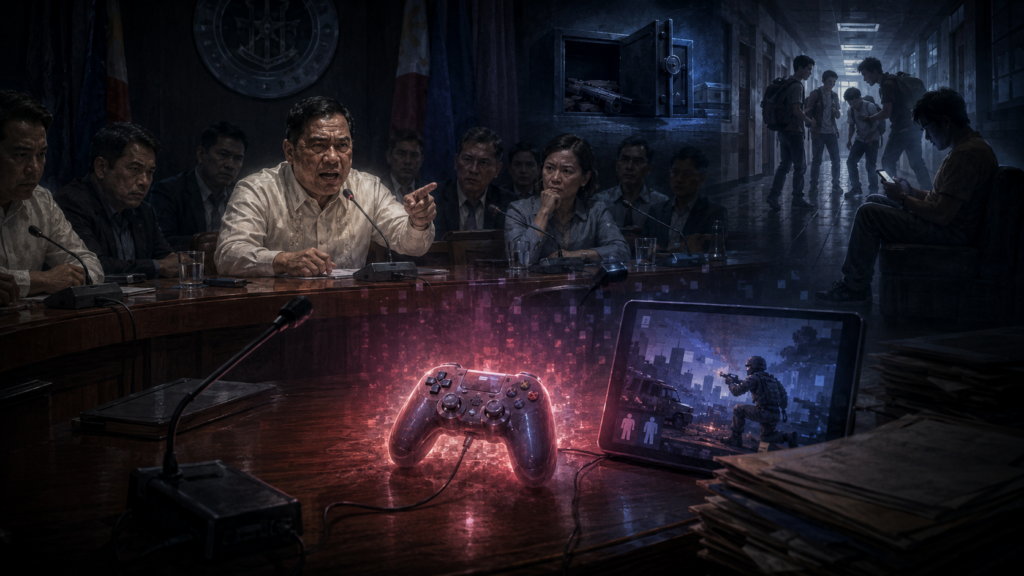
After the incident, the government moved quickly toward the familiar target: violent games.
One game was temporarily blocked. Officials raised concerns about online influence. Some lawmakers also opened the door again to regulating or banning violent video games for minors.
That reaction is understandable. People are scared. Parents are angry. Schools are grieving. The country wants an answer fast.
But speed is not the same as wisdom.
Violent games may be worth discussing. Age ratings matter. Parental controls matter. Online communities matter. However, treating video games as the main villain may turn a national tragedy into a very convenient shortcut.
It is easier to blame a screen than to audit a gun owner.
It is easier to blame a game than to ask why bullying was not stopped.
It is easier to blame a digital world than to examine the adults in the real one.
Bullying Is Not an Excuse, But It Is a Warning
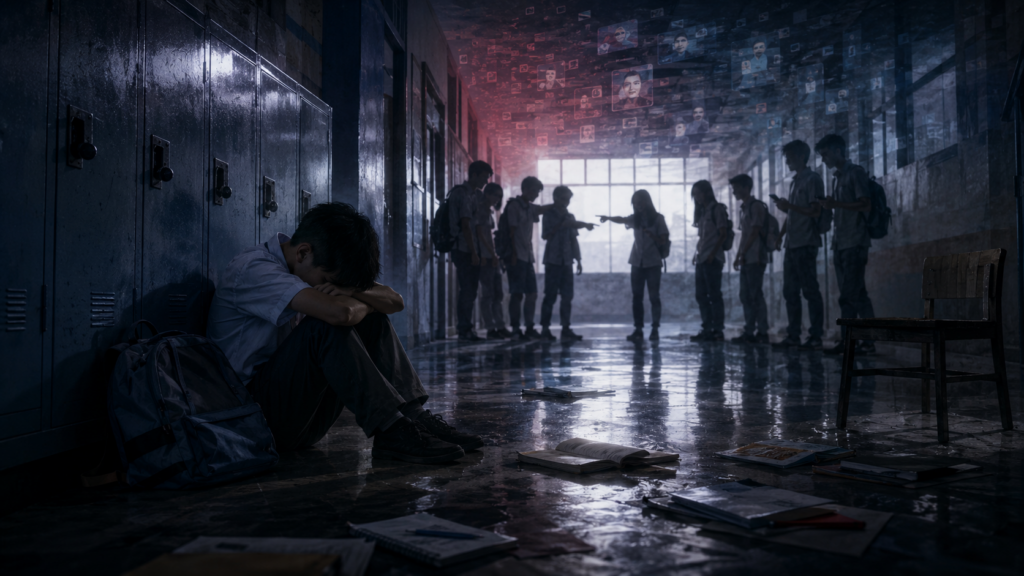
Bullying should never be used to excuse violence. Let us be clear about that.
But bullying should also never be dismissed as “normal school drama.”
If children feel cornered, humiliated, isolated, or ignored for years, something has already failed before the crime happens. The school failed. The community failed. The adults around them failed. Sometimes, even the system failed.
That does not remove responsibility from the suspects. It simply reminds us that violence usually grows from more than one root.
A child does not become dangerous because of one game, one song, one shirt, or one bad day. Usually, the story is darker and longer than that.
The KMFDM Question Should Be Investigated Carefully
Some online discussions have also pointed to alleged references to KMFDM, the German industrial band often translated as “No Pity for the Majority.”
If that detail is accurate, it deserves careful investigation. Not because a band automatically causes violence, but because symbols can sometimes reveal what a person is consuming, admiring, copying, or trying to signal.
Still, we should be careful.
A shirt is not a conviction. A band name is not proof. A playlist is not a motive by itself.
The better question is not, “Did music make them do it?”
The better question is, “Were they copying a pattern, absorbing harmful online spaces, or trying to belong to something darker?”
That is where investigators, psychologists, schools, and digital safety experts should step in.
Lowering the Criminal Age Is Another Complicated Debate
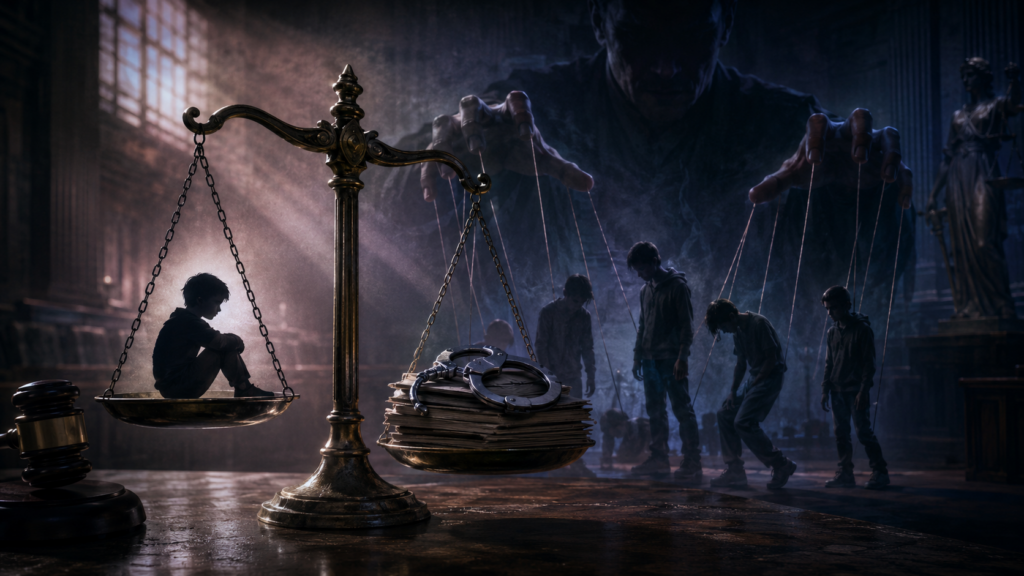
The incident also revived talk about lowering the age of criminal responsibility.
Supporters argue that criminal syndicates exploit minors because children below the current threshold are harder to prosecute. That concern is not imaginary. Many Filipinos know how gangs and syndicates can use minors as shields.
But lowering the age alone does not magically solve exploitation.
If adults are using children to commit crimes, then the adults should be hunted harder. The networks should be dismantled. The handlers should face the full weight of the law.
Otherwise, we may end up punishing children at the bottom while the adults behind them continue recruiting the next batch.
A justice system that only catches the smallest hands in the crime is not justice. It is poor targeting.
What About Online Gambling?

Now here is where the national conversation becomes strangely selective.
If the government wants to talk about harmful digital influence, then why does the energy suddenly become softer when the topic is online gambling?
Illegal iGaming, online casinos, and gambling-style platforms can quietly destroy lives over time. They drain savings. They damage families. They normalize risk addiction. They turn desperation into a business model.
Worse, many gambling platforms wrap themselves in “responsible gaming” messages.
“Play moderately.”
“Stop when unlucky.”
“Know your limits.”
That sounds like a public service announcement until you remember who is saying it.
It is like a candy store warning children about sugar while offering a buy-one-take-one promo at the door.
Yes, responsible gaming reminders are better than nothing. But let us not pretend they erase the business model. The machine still wants people to keep playing.
So if the government can move quickly against a violent video game after one tragedy, can it also move with the same fire against illegal gambling systems that damage households every single day?
That is not anti-business. That is pro-priority.
Games Need Regulation, But So Does Reality
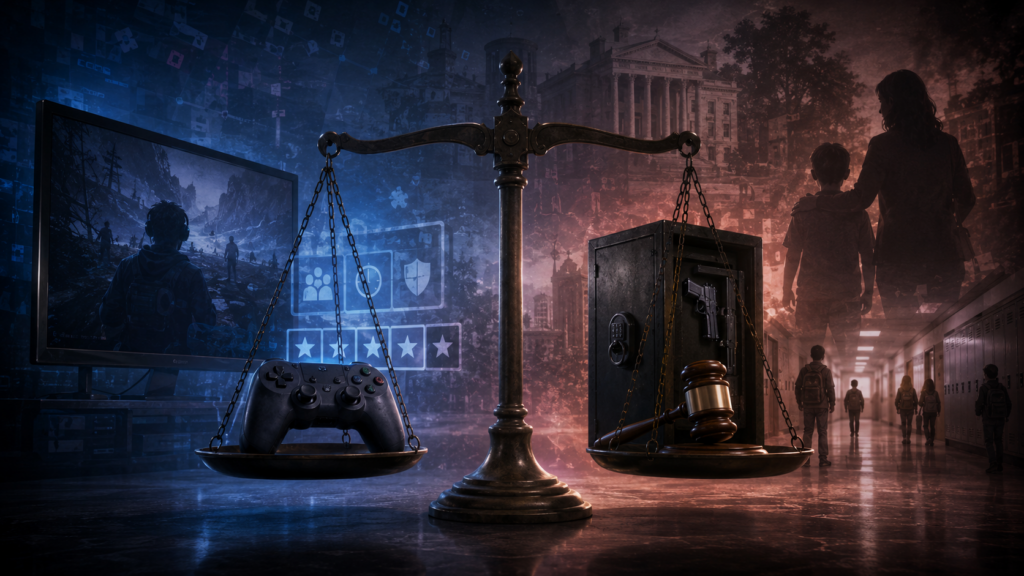
This is not a defense of every violent game.
Children should not have easy access to extreme violent content. Parents should use age ratings. Platforms should enforce safeguards. Schools should teach digital literacy. Developers should take safety seriously.
But regulation should be smart, not theatrical.
A blanket moral panic will not fix the real problem if guns remain accessible, bullying remains ignored, gambling remains aggressive, and parents remain absent from what children watch, play, and consume.
The uncomfortable truth is simple:
A game may influence a child.
But so can neglect.
So can bullying.
So can online extremism.
So can irresponsible adults.
So can easy access to firearms.
So can a culture that teaches children they can do something terrible and still somehow escape the full weight of consequence.
Failed Parenting or Failed System?
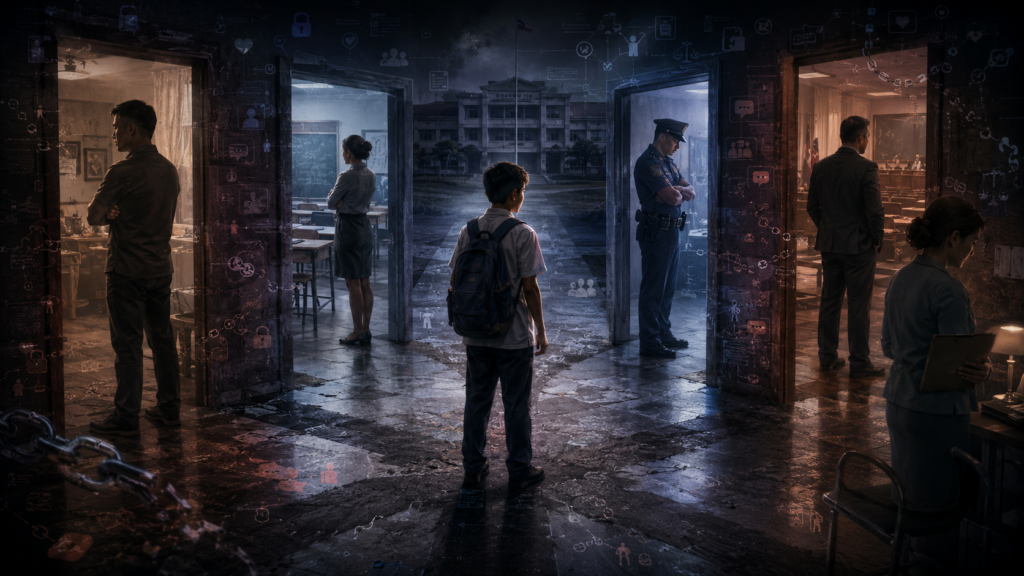
People love saying “failed parenting,” and sometimes that is true.
But parenting does not happen in a vacuum.
Parents need schools that respond to bullying. Schools need security that works. Communities need mental health support. Police need to secure firearms. Regulators need to go after harmful digital businesses. Lawmakers need to focus on root causes, not just easy headlines.
If a child reaches the point of carrying a gun into school, many doors were left open before that final door was crossed.
The home door.
The school door.
The gun cabinet door.
The algorithm door.
The accountability door.
The question is not which one matters. The question is why so many were open at the same time.
Stop Blaming the Loudest Thing in the Room

Video games are loud. They are colorful. They are easy to screenshot. They are easy to blame.
But the loudest thing in the room is not always the deepest problem.
If leaders want to protect children, then they should start with the roots. Secure firearms. Stop bullying early. Strengthen school reporting systems. Build real mental health support. Investigate harmful online communities. Enforce age ratings. Regulate illegal gambling. Hold irresponsible adults accountable.
Then yes, review violent games if needed.
But do not use games as a curtain.
Because behind that curtain may be a much uglier picture: adults failing children, systems failing families, and leaders choosing the easiest villain instead of the hardest truth.
This Is Our Take
The violent video game ban Philippines debate should not be dismissed, but it should not become a national scapegoat either. Games can influence behavior, especially when children consume the wrong content without guidance. However, games do not load real guns, ignore bullying reports, normalize illegal gambling, or leave minors without supervision.
If people in power want real answers, they must look past the surface and face the root causes. That is harder, less dramatic, and less convenient. It is also the only way forward.
AP News – Philippines temporarily blocks gaming app after school shooting
Reuters – Philippines rethinks school safety after rare shooting
Philippine News Agency – CICC temporarily bans GoreBox
Lawphil – Republic Act No. 9344
Philippine News Agency – PAGCOR imposes stricter online gambling regulations