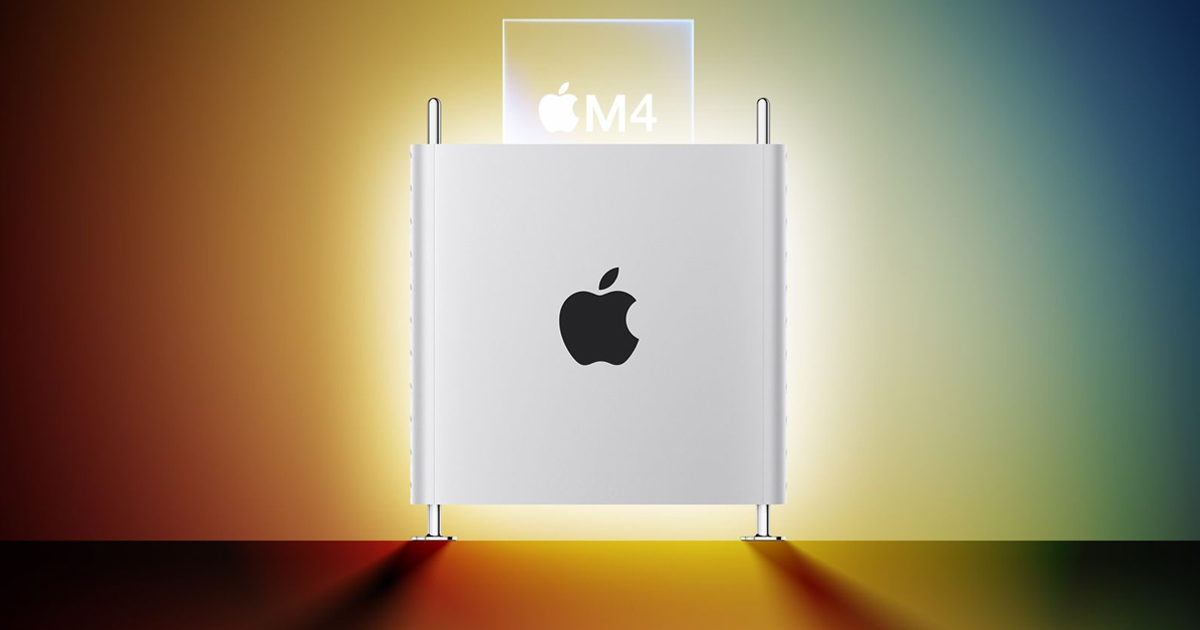
Apple’s once iconic Mac Pro continues to fade from the spotlight as the company shifts its attention toward more commercially successful machines such as the MacBook Air, MacBook Pro, and the increasingly central Mac Studio. Over the past fifteen years, the Mac Pro has received only four hardware updates, a far cry from the innovation pace that defined its early Power Mac era. Even the 2012 model showed almost no difference from its 2010 predecessor. When Apple introduced the M2 Ultra powered Mac Pro in mid 2023, many users hoped it signaled a return to consistent updates, similar to the upgrade rhythm of the Mac Studio. However, recent reporting from Mark Gurman suggests that Apple has effectively placed the Mac Pro behind the rest of its hardware priority list while the Mac Studio moves forward with plans for the M5 Ultra.
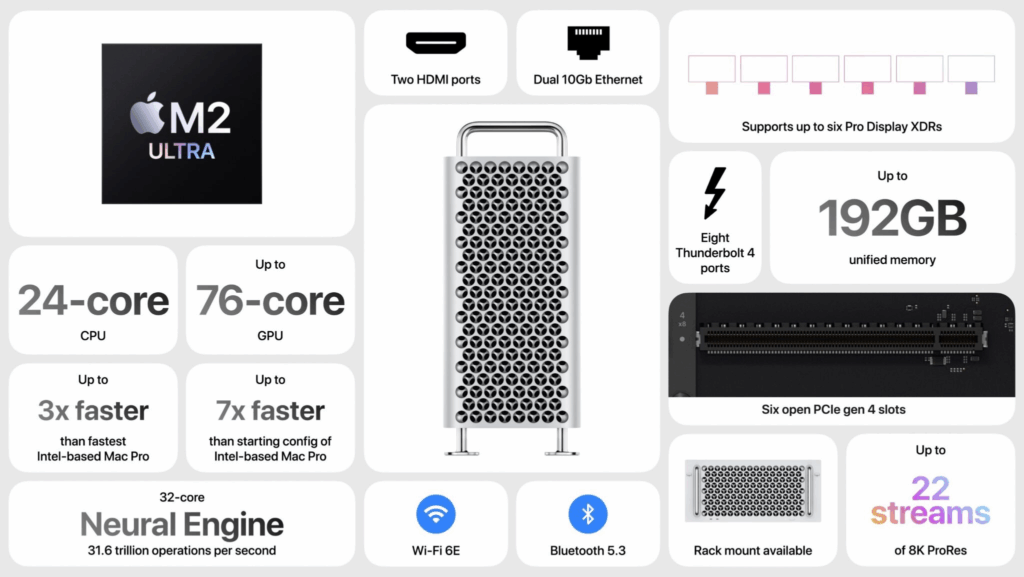
Gurman stopped short of declaring the Mac Pro dead, but internal sources indicate that Apple may have already stepped away from it. The Mac Pro still runs the older M2 Ultra instead of the M3 Ultra, highlighting Apple’s decision not to refresh each machine in line with every new chip generation. Apple has a history of skipping desktop chip generations and has even canceled the planned M4 Ultra for Mac Pro entirely, pushing its roadmap forward to the M5 Ultra which is now expected to debut with the Mac Studio in 2026.
A major question emerges for professionals today. Do we still need the Mac Pro in the Apple Silicon era. Its key advantage during the Intel generation was the freedom to upgrade internal components, but that benefit has disappeared. The current Mac Pro includes six PCIe slots, yet memory cannot be upgraded and third party GPUs are not supported. Thunderbolt 5 storage solutions now offer more than enough performance for professional workflows. With a starting price of 7000 dollars, the Mac Pro becomes difficult to justify when the Mac Studio priced at 4000 dollars delivers newer chips, stronger graphics, and more than 32GB of unified memory. The value gap grows wider each year and the reasons to choose the Mac Pro continue to shrink.
While the future of the Mac Pro may seem uncertain, the broader Mac lineup heading into 2026 is full of momentum. Nearly every Mac notebook is expected to adopt the M5 generation including Pro and Max variants, followed by updates to the iMac, Mac mini, and Mac Studio. The first half of 2026 is projected to introduce models powered by M5 Pro and M5 Max chips before the M5 Ultra arrives mid year. This roadmap positions the Mac Studio as the new flagship for professionals replacing the role once held by the Mac Pro.
Apple is also preparing a new entry level MacBook designed to compete in the affordable PC market with pricing targeted under 1000 dollars. This model is expected to use a chip similar to the iPhone’s A18 Pro and will replace the aging M1 MacBook Air that is currently available through select retailers. The device may debut in the first half of 2026 and could arrive with a smaller display than the 13.6 inch Air, colorful finishes, and a clear focus on competing with low cost Chromebooks and Windows laptops. Early projections suggest this new line could account for up to 28 percent of total MacBook sales and may initially launch through Walmart before expanding to broader retail channels.
Apple’s transition into the M5 era signals a clear direction. The company is prioritizing compact, efficient, and high performance machines for the majority of users while the Mac Pro risks becoming a relic of an older philosophy. If current trends continue, the Mac Studio will stand as Apple’s true professional desktop and the symbol of its next generation hardware strategy.
Reference: Arstechnica