[Retro Vault] Phantasy Star Online Opening a New Frontier Beyond the Stars
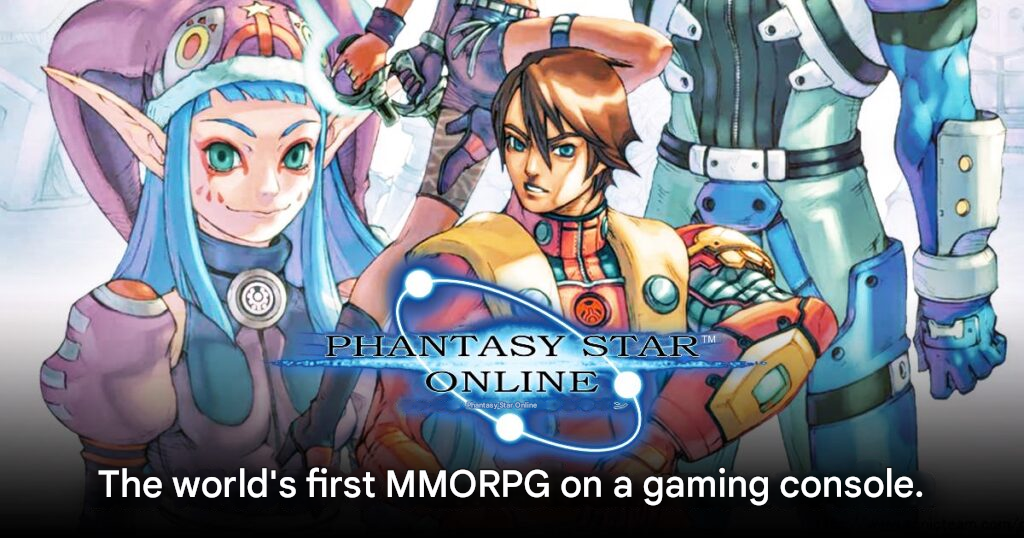
The legendary MMORPG that became the world’s first on a home console
When talking about SEGA’s Dreamcast, the first thing many people remember is its built-in modem port, a feature far ahead of its time. SEGA envisioned the Dreamcast as a pioneer of online console gaming, and remarkably, they succeeded. Over time, players gained access to downloadable content, web browsing, and popular online titles such as Bomberman and Unreal Tournament.
However, SEGA’s online ambitions went far beyond short multiplayer sessions. The true milestone was the creation of a shared online world where players could adventure together, and that vision materialized in Phantasy Star Online. As the first console MMORPG in the world, it introduced an experience that laid the foundation for everything that followed. Today, ThisIsGame Thailand revisits this historic title.
The Birth of the First Console MMORPG
By the late 1990s, MMORPGs were not a new concept. Titles like EverQuest and Ultima Online had already paved the way on PC. These games inspired Yuji Naka, SEGA’s legendary producer, along with Sonic Team, to imagine an MMORPG designed specifically for consoles. They wanted it to be a Japanese-developed title, and the Dreamcast’s built-in internet capabilities made the idea perfectly timed.
Development moved quickly, and by 1999 the game was publicly unveiled. At the time, Japanese gamers were largely unfamiliar with online play. Most players were accustomed to local console gaming or visiting friends’ homes. Suddenly, Phantasy Star Online promised a vast science fiction world filled with other real players. Anticipation skyrocketed, and upon release in 2000, the game earned widespread praise and numerous awards.
A Journey That Defined Online Adventure
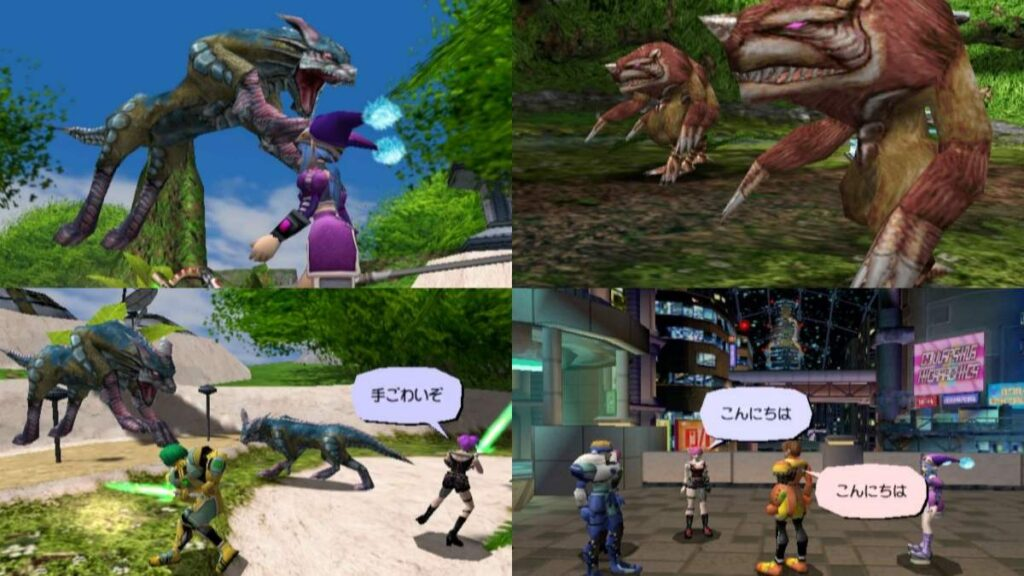
Each copy of Phantasy Star Online included a unique serial number and access key, functioning much like an early login system. These credentials were required to create an account with the Hunter’s Guild. After entering the information, players were greeted by a futuristic loading sequence that felt like warping through space before reaching character creation.
Unlike other online games, character creation required more than choosing gender and class. Players selected a race before choosing a profession, and the combination directly affected gameplay. Humans offered balanced stats, Newmans specialized in techniques and TP recovery, while Androids gained immunity to poison and paralysis. Weapon types were tied to class, but equipment could be obtained through drops or purchases.
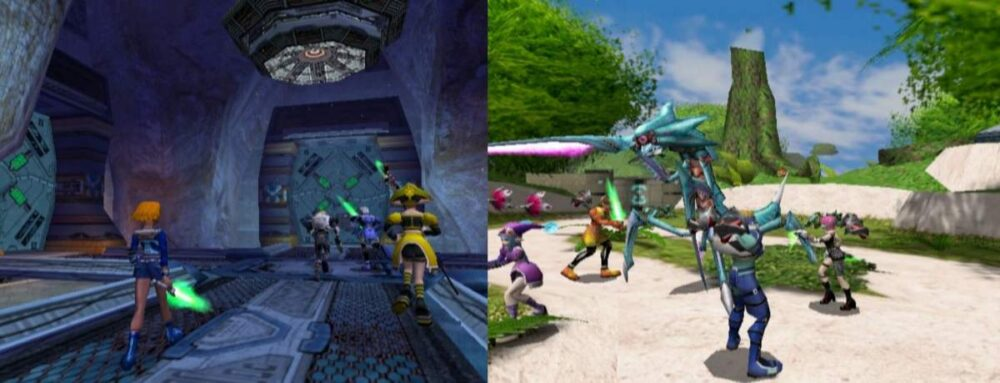
The game’s interface and atmosphere felt strikingly futuristic. Rather than bright or flashy visuals, it leaned toward cool tones, dark-themed menus, and immersive sci-fi music. The central hub, Pioneer 2, served as a gathering place where players accepted quests, traded items, and communicated via keyboard chat. Party formation and social interaction happened naturally within this shared space.
Structured Storytelling in an Online World
Quests were accessed through the Hunter’s Guild, forming the core gameplay loop. Each quest transported players to different areas, advancing the story. Players could also explore unlocked zones freely to farm enemies. Unlike modern MMORPGs with open-world designs, Phantasy Star Online followed a structured approach due to technical limitations, but it maintained a strong narrative focus similar to classic RPGs.
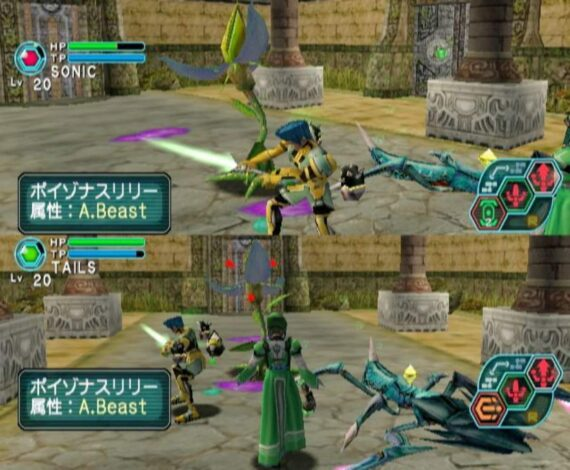
Despite being part of a long-running franchise, Phantasy Star Online told a standalone story. New players required no prior knowledge of the series. The premise centered on humanity and allied races fleeing a destroyed homeworld aboard the Pioneer spacecraft, searching for a new planet to inhabit. When disaster strikes the first ship, players aboard Pioneer 2 are tasked with uncovering the truth, leading to deeper mysteries.
A Strong Foundation Despite Technical Limits
Even as a console-based online game, Phantasy Star Online featured a remarkably robust structure. SEGA continued updating the game with new versions that expanded dungeons, refined balance, and raised level caps, though each update required purchasing a new disc. Later versions became the basis for PC and other console releases.
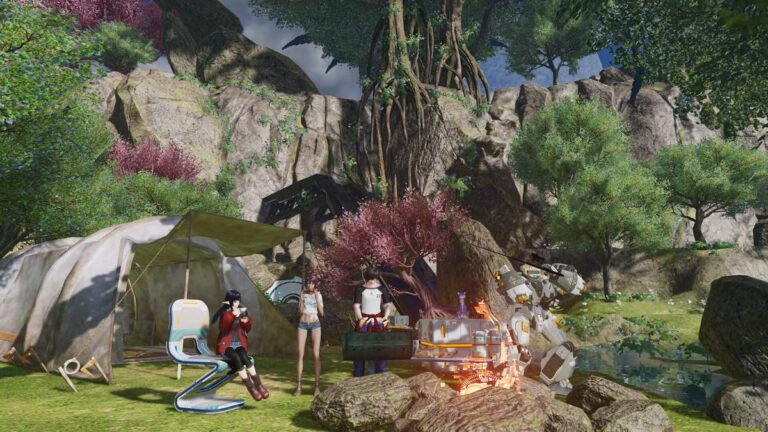
Among console versions, the GameCube edition stood out as the most advanced. SEGA’s strong partnership with Nintendo during the early 2000s resulted in exclusive content, including a unique turn-based card spin-off.
Playing On Even After Servers Closed
Like all online services, Phantasy Star Online eventually faced its end. The Dreamcast’s commercial failure limited the game’s reach, though it was later ported to other platforms including PC. Despite this, the Dreamcast version remained online until 2007, far longer than many expected.
By that time, internet technology had evolved dramatically. Smartphones, Wi-Fi, and high-definition consoles like the Xbox 360 and PlayStation 3 had already entered the market. Yet Dreamcast servers still had a dedicated player base, highlighting the game’s lasting appeal.
The Legacy of the Pioneers
The longest-running version of the original game was Phantasy Star Online Blue Burst, which later influenced the massively popular Phantasy Star Online 2. Although official Blue Burst servers have shut down, fan-operated private servers continue to thrive, hosting seasonal events and maintaining active communities.
Players who still own Dreamcast or GameCube copies can even connect to private servers through modifications. For those who prefer offline play, both versions offer single-player campaigns with adjusted balance. The GameCube version even supports local split-screen multiplayer.
Phantasy Star Online remains a powerful reminder of what console online gaming once aspired to be, and it raises an important question for modern premium online games. When the servers eventually go dark, how will developers preserve the experiences players paid for and cherished?
Phantasy Star Online