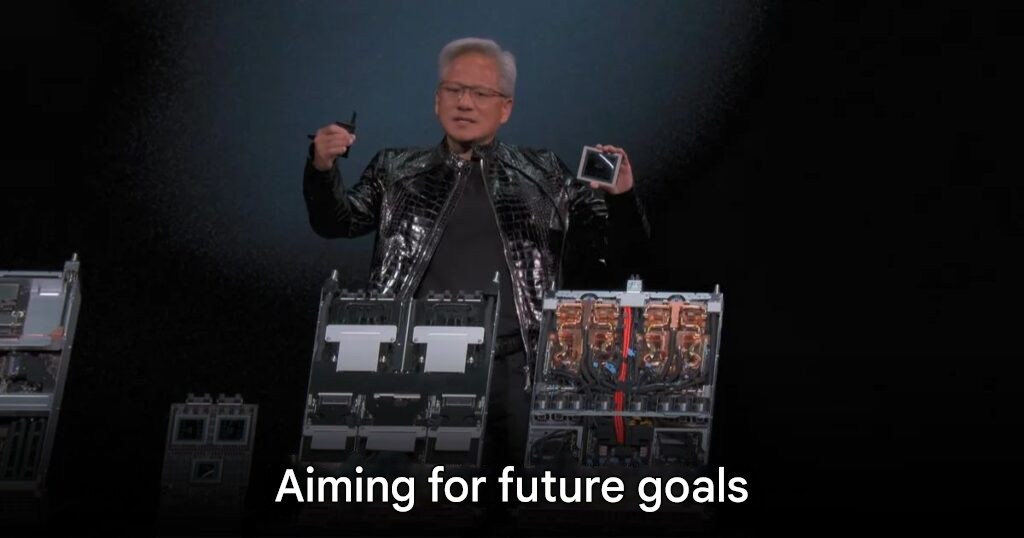
Nvidia Envisions AI-Driven Graphics Beyond Reality at CES 2026
At CES 2026, the spotlight was full of robots and data center technology, yet Nvidia’s CEO Jensen Huang reassured gamers that the heart of AI innovation remains rooted in GeForce. He shared how Nvidia plans to push past physical limitations of GPU hardware with the upcoming RTX 5090 and the Rubin architecture, aiming to deliver unprecedented game experiences.

Huang explained that Moore’s Law has reached its end, noting the physical constraints of chip sizes. This limitation is why DLSS emerged, shifting processing from brute force to intelligent AI-powered calculations. Future GPUs, particularly the RTX 60 series, will leverage Neural Rendering, allowing the AI to compute only selected pixels but produce incredibly realistic images.
The most remarkable advancement is the integration of Generative AI with real-time rendering. Nvidia’s lab demonstrations showcased graphics approaching photo-realistic quality at 500 frames per second, where players can hardly distinguish between virtual and real visuals.
Beyond visuals, ACE AI Robotics will enhance in-game characters and NPCs, giving each entity autonomous behavior. Game physics, including water and fire simulations, will be fully AI-driven, reducing the reliance on resource-heavy traditional calculations. Huang emphasized that this approach could mitigate the rising costs of GPU memory, relying on AI computation rather than raw hardware specs alone.
When asked about rumors of reviving the RTX 3060, Huang acknowledged it could be feasible to integrate modern AI into older chips with some engineering adjustments, offering an affordable option for gamers without sacrificing innovation.
On a lighter note, fans questioned Huang’s iconic leather jacket. He jokingly confirmed that it’s just what was provided to him, with no hidden strategy. Regardless, the key takeaway from CES 2026 is clear: Nvidia is shaping a future where gaming worlds feel alive, human-like, and extraordinarily immersive.
Source: Tomsguide