GDC 2026 Survey Reveals Rising Game Industry Layoffs as AI Adoption Accelerates
The global game industry is facing another challenging year, according to the State of the Game Industry 2026 survey released by the GDC Festival of Gaming. Based on responses from more than 2,300 industry professionals, the survey paints a concerning picture of rising layoffs, growing anxiety among new graduates, and increasing reliance on artificial intelligence across development pipelines.
One of the most alarming findings is the continued rise in layoffs. The survey reports that 17% of respondents were laid off within the past 12 months, with overall industry layoff rates climbing to 6%, up from previous years. Large AAA studios were hit harder than indie developers, reinforcing concerns about long-term job stability at major publishers. This uncertainty is already affecting the next generation, with 74% of students nearing graduation expressing serious concern about their future careers in game development.
As job security weakens, support for labor unions has reached historic levels. In the United States, 82% of surveyed developers support unionization, with the strongest backing coming from younger professionals aged 18 to 24. Notably, there were virtually no objections within this age group. Membership in various labor organizations continues to grow as developers seek better protection, clearer contracts, and safeguards against sudden layoffs in an increasingly volatile industry.
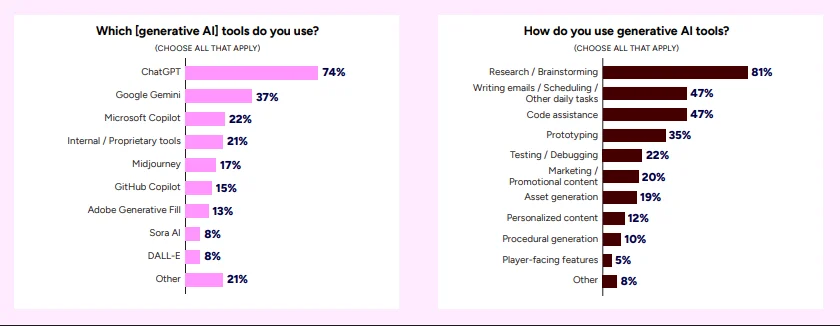
Artificial intelligence has become another major focal point. The survey found that 36% of developers are already using AI tools in their workflows, primarily among management, production, and marketing teams. At the same time, negative sentiment toward generative AI has risen to 52%, particularly among artists and narrative designers. Common concerns include the erosion of creative value, unauthorized use of training data, and the environmental cost associated with large-scale AI systems.
Beyond workforce issues, the survey also highlights a significant shift in development tools. Unreal Engine has become the most widely used engine, with 42% adoption, overtaking Unity, which now stands at 30%. Unreal Engine is especially dominant among AA and AAA studios, while Unity remains popular with established indie teams and free-to-play developers focused on large-scale accessibility.
In terms of compensation, while the survey does not disclose exact averages, it notes that developers earning below USD 200,000 per year are the most vocal in calling for industry-wide reforms. These demands focus on better benefits, clearer labor protections, and mechanisms to prevent sudden job losses, underscoring persistent inequality within the game development workforce.
The 2026 outlook for the game industry is one of rapid transformation. Developers are being pushed to adapt to new tools, navigate the growing influence of AI, and cope with ongoing instability in employment. For those considering entering the industry, the message is clear: success will depend on flexibility, upskilling, and readiness to face a faster and more uncertain future than ever before.
Source: GamesIndustry