Roblox vs. Traditional Classrooms: How Gen Alpha is Learning to Build
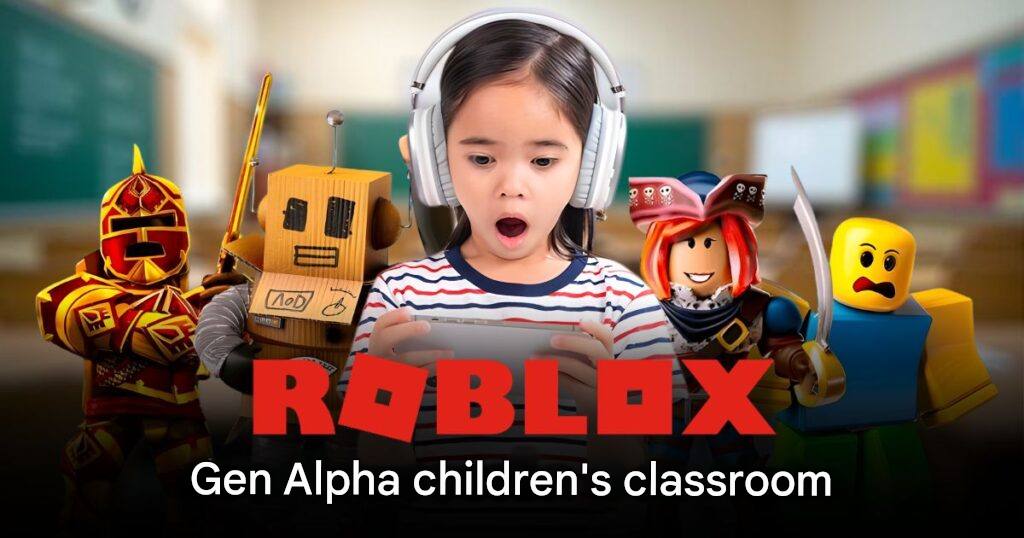
Roblox: The New Classroom for Generation Alpha
“Why do we still have to learn Boy Scout knots or sword fighting?”
This is a common question whispered among Gen Alpha kids before putting on their heavy scout uniforms or bringing wooden swords to school. To many adults, this sounds like a generation that lacks patience or doesn’t want to study. But in reality, this question stems from a deeper feeling: What does this have to do with my life, and why am I learning it?
Generation Alpha consists of children who grew up with screens, touching the internet before they could even read or write. For them, the online and offline worlds are not separate entities like they were for previous generations.
When these children are placed in a classroom that still operates on a 50-year-old structure—where the curriculum is predetermined, content is chronological, grades are the ultimate judge, and exams are the final conclusion—it is no wonder they question the relevance of what they are learning.
Yet, when they come home, open their iPads, and log into Roblox, those questions vanish. Instead, the questions come from the adults: “Why are you playing games instead of doing your homework?”
Perhaps the problem isn’t that kids are lazy. Perhaps it is because they are learning in an environment where questions of relevance don’t need to be asked.
Classrooms that Focus on “Correctness” Over “Growth”
The traditional education system has its merits in terms of structure, order, and standardizing basics for everyone. But on the flip side, it is a system that predetermines the answers.
- Children are the receivers of content, explanations, problems, and grading criteria.
- Mistakes carry a clear cost. Being slower than others means you aren’t smart; thinking outside the box is often labeled as “not answering the question.”
Learning becomes a mission to “pass” rather than a space to “explore.” In a world where career paths were static, this system worked. But in a world where new jobs are created every year, and the most vital skills are adaptability, experimentation, and problem-solving without a manual, a system focused on a single correct answer is no longer enough.
What Exactly is Roblox?
At a glance, Roblox looks like a blocky, brightly colored game with simple animations and that iconic “Oof” sound when a character falls. Many assume it is just another online game kids play to kill time.
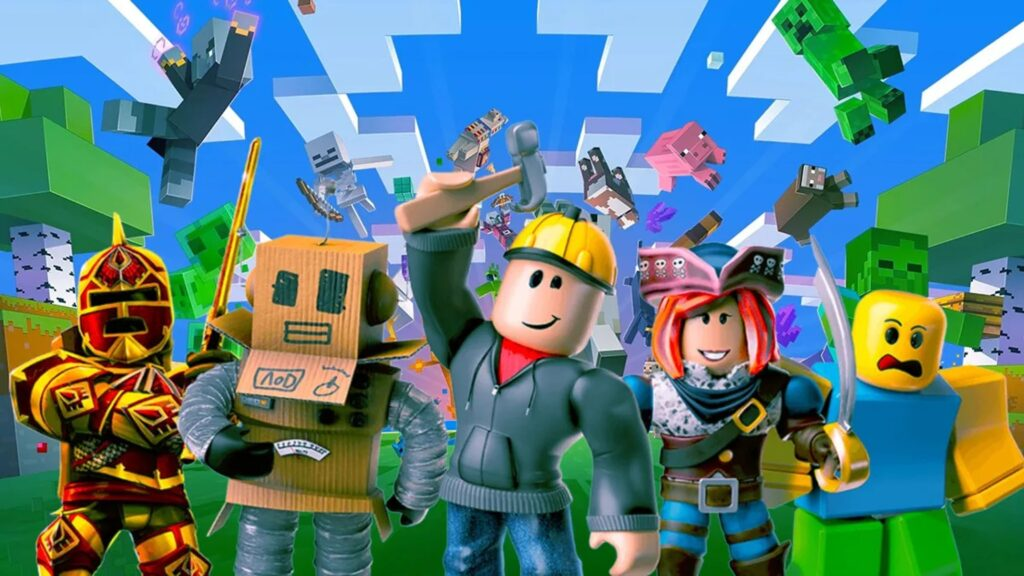
In reality, Roblox is not a “normal game” with set levels and a single developer controlling the system. Roblox is a platform that allows players to create their own games freely. To put it simply, Roblox is a hub containing millions of games, but most of them aren’t made by a corporation—they are made by the kids themselves. From survival games and school roleplays to restaurant management and custom fantasy worlds, the core of the platform isn’t just “playing”; it is the opportunity to become a “Creator.”
Players can design levels, set rules, write scripts, and design item systems. Roblox acts more like a world-building tool than a game with a fixed narrative. Therefore, the issue isn’t why kids are addicted to this game, but what kind of learning space this game provides.
Act First, Understand Later
A key difference between a traditional classroom and Roblox is how knowledge is acquired. In a classroom, knowledge is usually transmitted through explanations before children follow set steps. In Roblox, many kids start by doing and then learn from the results.
- If the game they build isn’t fun, players won’t return.
- If the system has bugs, players will complain.
- If the level is too hard, players will quit.
Problem-solving happens in real situations, not on paper. Roblox trains kids in systemic thinking, analyzing player behavior, time management, and team communication. While adults might not call these “lessons,” it is a learning process born from a genuine desire to make their creation the best it can be.
Grades vs. Ownership
Many schools use grades, certificates, and evaluations as the primary motivators. Conversely, Roblox uses a sense of ownership over one’s work as the driving force.
When a child sees real players playing the game they built, leaving compliments or even criticism, their effort gains tangible meaning. They aren’t working to pass a test; they are working to improve something they believe is “theirs.” This intrinsic motivation is often far more powerful than external pressure and forms the foundation for lifelong learning.
A Non-Simulated Simulated World
Roblox isn’t just about fun; it has its own social and economic structures.
- Competition
- Reputation
- Influence
- A revenue system via the Robux currency
- A developer exchange program
These systems teach kids that creating a good product isn’t enough; they must learn to communicate and promote it so others can see it. Some learn that revenue-sharing models aren’t always fair. Others realize that existing on a massive platform means operating under rules they didn’t write. This is a scaled-down lesson in power structures and economics.
Rejecting the Format, Not the Learning
The phenomenon of Gen Alpha dedicating thousands of hours to Roblox does not mean they are rejecting education. It means they are looking for a learning format that gives them more choices.
In a world where uncertainty is the norm, the ability to choose and adapt is more important than memorizing one correct answer. If schools continue to design learning experiences where children are merely receivers, while platforms like Roblox allow them to be both players and creators, the difference in appeal is unavoidable.
The Question Schools Must Answer
Roblox is not a perfect, ready-made answer for the education system, and it certainly has its own issues. But it clearly reflects that children are ready to learn if the environment truly allows them to participate.
If a child can spend thousands of hours developing skills on their own, handle failure, work with others, and build something people actually use, the question might not be whether kids lack discipline or hate learning. The question might be: Are we designing learning environments that give kids too few choices?
When children are given the chance to choose for themselves, they might just learn deeper and go further than adults ever expected.