Microsoft Open-Sources 86-DOS 1.00, the Origin of Windows
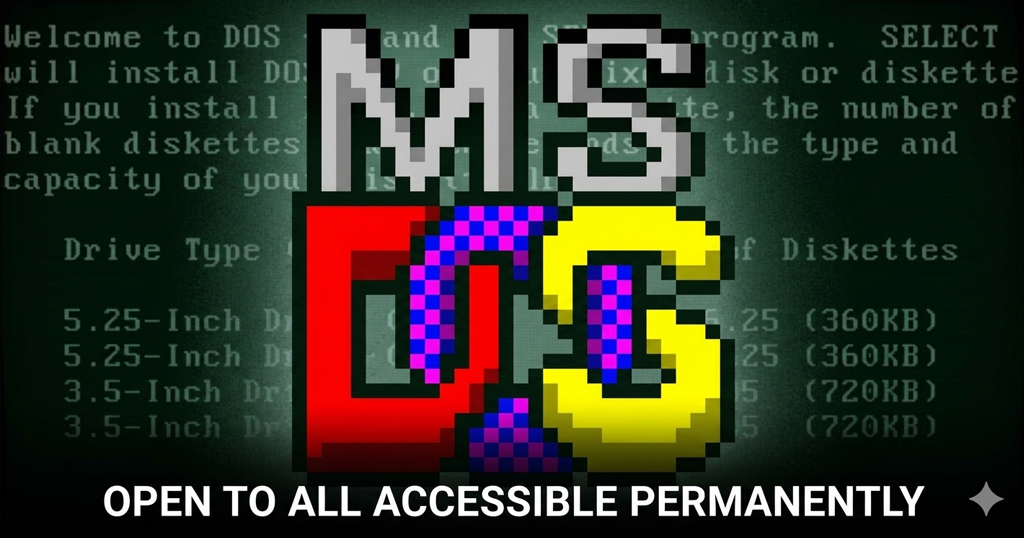
Microsoft has officially released the source code of 86-DOS 1.00 as an open-source project on GitHub, marking the 45th anniversary of one of the most influential operating systems in computing history.
This move offers a rare opportunity for developers, historians, and tech enthusiasts to explore the roots of MS-DOS and Windows.
A Look Back at the Origins
Originally developed by Tim Paterson, 86-DOS served as the foundation for what would later become PC-DOS for IBM and eventually MS-DOS.
By releasing this early version, Microsoft is essentially opening a window into the late 1970s and early 1980s, a time when operating systems were built under extreme technical limitations yet laid the groundwork for modern computing.
Preserving Computing History
Microsoft emphasized that this release is intended for education and historical preservation.
While the company has previously shared source code for later versions of MS-DOS, including 1.25, 2.11, and 4.0, this marks the earliest version ever made publicly available.
The project was made possible through collaboration between engineers and digital preservationists, who worked to:
- Locate original source materials
- Scan and digitize legacy documents
- Reconstruct and transcribe the codebase
What’s Inside the Release
The open-source package includes more than just the operating system kernel. It also contains:
- Core system components of 86-DOS 1.00
- Early utility tools such as CHKDSK
- Even the assembler used to build the system itself
This provides a complete snapshot of how an early OS was designed and implemented from the ground up.
The Business Story Behind the Code
Beyond the technical significance, the history of 86-DOS is closely tied to one of Microsoft’s most pivotal business decisions.
In 1980, Bill Gates acquired 86-DOS (then known as QDOS) from Seattle Computer Products for around $75,000.
The system was later refined into PC-DOS 1.0, released alongside IBM PCs in August 1981.
What truly shaped Microsoft’s future, however, was its decision to retain licensing rights and distribute the software as MS-DOS to other manufacturers — a strategy that helped turn Microsoft into a global tech giant.
Why This Matters Today
For modern developers, this release is more than just nostalgia. It offers a chance to:
- Understand low-level system design
- Learn how early engineers solved complex problems with limited resources
- Gain inspiration from the foundations of modern computing
Final Thoughts
By open-sourcing 86-DOS 1.00, Microsoft is not just celebrating a milestone — it’s preserving a piece of digital history and making it accessible to the world.
For anyone curious about how today’s operating systems evolved, this is a rare and valuable glimpse into the past.