The current technology world cannot escape Generative AI, but Apple appears to be slightly behind several rivals in this race.
The company has delayed its smarter Siri upgrade several times since 2024. However, the good news is that users may finally see the combination of Apple’s intelligent assistant and Google Gemini within this year.
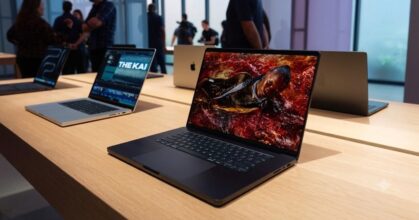
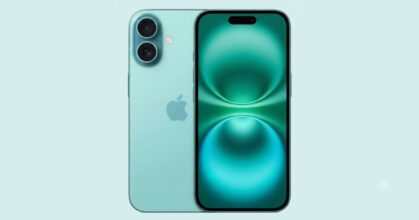
Ahead of the next Worldwide Developers Conference, Apple is reportedly working hard to bring a much smarter AI experience to its notebooks and smartphones. Still, the final result may not be exactly what many users expect.
Siri may need Google Gemini and Nvidia cloud power
Apple has always placed strong importance on privacy, especially through the idea of running AI directly on the device.
However, the latest report suggests that the new version of Siri with Gemini integration may not be able to rely only on on-device processing. Instead, Apple may need to use cloud power from Google and Nvidia.
This would mark a major shift from Apple’s earlier focus on keeping AI tasks inside the device as much as possible.
The reason is simple. Even though modern smartphones and notebooks now include chips designed for AI workloads, they still do not have enough RAM and processing power to run massive AI models completely on their own.
Large AI models remain difficult for mobile devices
Running a large AI model directly on a phone remains extremely difficult.
Models built for portable devices need to be smaller and heavily compressed. However, once a model becomes smaller, its accuracy and overall intelligence can drop.
That is very different from cloud-based models such as Google’s large-scale Gemini systems, which can run with far greater processing power.
Even on Android, Google does not try to run a full conversational chatbot entirely on the device. Instead, requests usually go through the cloud.
Because of this, Apple may need to use distillation, a process that makes a smaller model learn from and imitate a much larger model. This allows the device to gain some intelligence from a larger system while still keeping the local model light enough for real-world use.
Apple’s Private Cloud Compute faces a hard challenge
After reaching an agreement with Google, Apple reportedly began working immediately.
However, placing Gemini into Apple’s Private Cloud Compute infrastructure has not been easy. Apple’s Private Cloud Compute uses its own M-series chips, but the system reportedly struggles to run Google’s larger AI model smoothly.
Because of this, more complex tasks may need to move through Google’s cloud infrastructure instead.
Even so, Apple has reportedly chosen not to use Google’s TPU chips directly. This suggests that Apple wants to keep more control over how the system appears and how privacy protections are presented to users.
Nvidia may help Apple protect its privacy image
To maintain its privacy-focused image, Apple has reportedly partnered with Nvidia.
The company may use Nvidia’s Confidential Computing platform, which allows data to stay encrypted inside Nvidia GPUs while being processed in the cloud.
This setup could help Apple continue using its Private Cloud Compute branding, even if some of the actual processing relies on partner technology behind the scenes.
In other words, Apple may still present the experience as private and secure, while using Google and Nvidia systems to provide the raw AI power needed for smarter Siri responses.
Users may not know what runs locally or in the cloud
For regular users, the final experience may feel seamless.
The system will likely try to hide whether a command is handled directly on the device or sent to the cloud for processing. Apple’s goal would be to make Siri feel smooth and natural no matter where the actual AI work happens.
However, there may still be some limitations.
Generating answers from large AI models can take time. Adding Nvidia’s encrypted cloud processing layer may also create extra complexity. Because of that, some users may notice slight delays in certain moments, especially when Siri handles more complicated requests.
Apple is changing its AI direction
This reported Siri upgrade shows how difficult the AI race has become.
Apple wants to keep its strong privacy reputation, but modern AI assistants need powerful large models to stay competitive. That means the company may need to depend on outside partners, even while trying to preserve its own ecosystem and brand identity.
If Apple can make the system feel fast, private, and reliable, users may not care much about what happens behind the scenes. However, if the experience feels delayed or inconsistent, the company may face more criticism for being late to the AI assistant race.
Apple’s reported Siri upgrade sounds like a necessary but complicated move. The company wants smarter AI while protecting its privacy image, but powerful assistants now demand cloud-scale processing. Using Google Gemini and Nvidia Confidential Computing could help Apple catch up faster, yet it also shows that fully on-device AI still has major limits. The real test will be simple: can Siri finally feel smart, fast, and useful without making users worry about privacy?
Origin: Arstechnica