30 Billion Images: How Pokémon GO Players Are Mapping the World for Robots
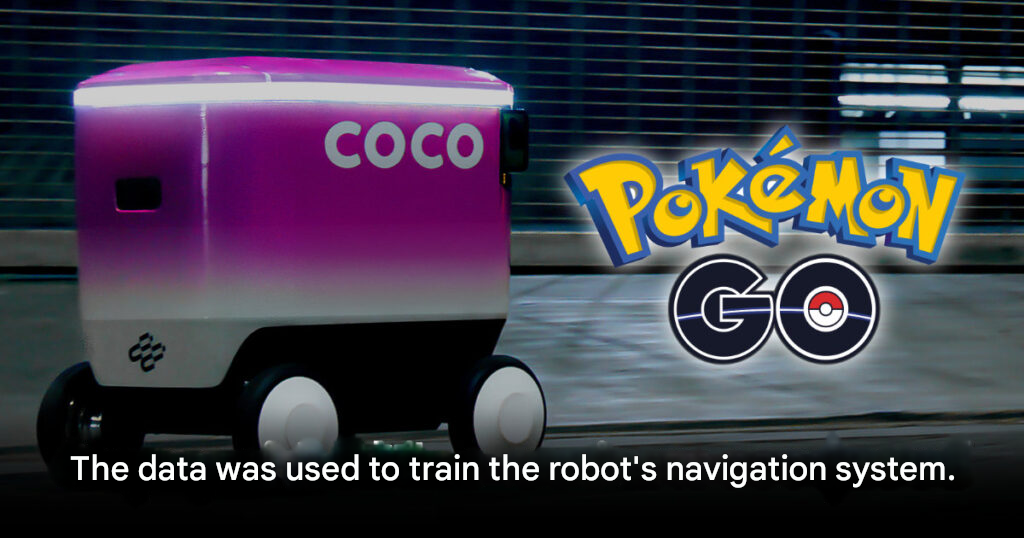
Pokémon GO Data Now Used to Train Food Delivery Robot Navigation
Your quest to “catch ’em all” is officially helping robots find their way through the concrete jungle. While Scopely acquired the Pokémon GO game from Niantic for $3.5 billion last year, the spinoff entity Niantic Spatial retained the rights to the massive treasure trove of geospatial data collected over nearly a decade of gameplay.
On March 10, 2026, Niantic Spatial announced a landmark partnership with Coco Robotics, a startup specializing in sidewalk delivery bots. The goal? To turn billions of player-contributed images into the ultimate navigation brain for autonomous machines.
Beyond GPS: The Need for Visual Positioning
Coco Robotics currently operates a fleet of roughly 1,000 suitcase-sized robots designed to navigate high-density urban environments. In these “urban canyons,” standard GPS signals often bounce off skyscrapers, leading to significant positioning errors.
To solve this, robots require a Visual Positioning System (VPS). By comparing what their cameras see to a pre-existing 3D map of the world, the robots can determine their exact location down to the centimeter. This is where the Pokémon GO community comes in.
30 Billion Images and Counting
The partnership grants Coco Robotics access to a dataset unlike any other in the world. Because Pokémon GO gameplay encourages players to congregate at specific landmarks (PokéStops and Gyms) and scan environments for AR features, Niantic Spatial possesses:
- Multi-Angle Views: Billions of photos of the same buildings and streets from every possible angle.
- Variable Conditions: Visual data captured during different times of day, seasons, and weather conditions.
- Scale: A massive library exceeding 30 billion images, providing a level of detail that traditional mapping cars simply cannot achieve.
From PokéStops to Sidewalk Navigation
Niantic Spatial’s AI models process these player-captured images to create a “digital twin” of urban centers. For Coco Robotics, this serves as a reference library. When a delivery bot encounters a complex intersection or a crowded plaza, it can cross-reference its live feed with the Niantic AI model to confirm its path, drastically reducing the risk of the robot getting lost or stuck.
While Pokémon GO continues to thrive as a free-to-play AR game on iOS and Android, its legacy is clearly expanding far beyond entertainment, laying the literal groundwork for the future of autonomous logistics.
Origin: gamerant