6 Things Our Brains Need from Playing the Same Game Over and Over
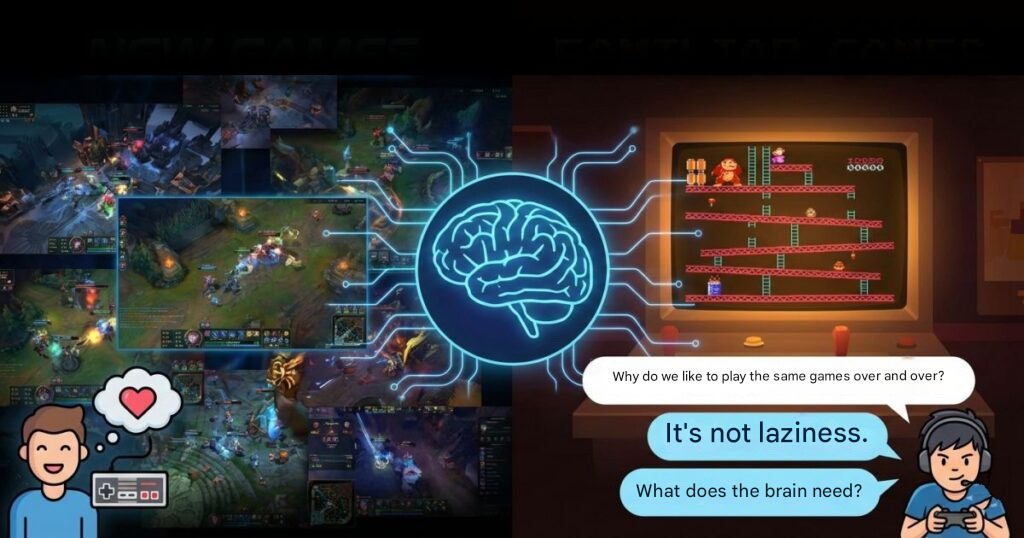
Hello fellow gamers. Have you ever noticed that even with countless new games being released, you still find yourself booting up the same old title, replaying the same stages, or looping the same systems again and again? Even when you know there is nothing new left to discover, you still feel drawn back to it.
This behavior is not about laziness or a lack of growth. There are real psychological and neurological reasons behind it. What we often interpret as desire may actually be a signal from our brain asking for something specific. This article takes a closer look at what our brains truly need when we keep returning to the same game repeatedly.
1. Familiarity Creates a Sense of Safety

One of the strongest reasons our brains guide us back to the same game is familiarity. For the brain, predictability equals safety. Games we already know well, systems we understand, and mechanics we have mastered reduce cognitive load. The brain does not need to stay alert for surprises or uncertainty like it does when starting a new game.
Especially during stressful or pressure filled periods in real life, returning to a world where we understand the rules and control the outcome provides comfort. It feels similar to going back home to a familiar place. The brain interprets this as an emotionally safe space where it can relax.
2. The Brain Wants Stable Dopamine

Replaying the same game gives the brain rewards that are predictable. This is very different from new games, where enjoyment is uncertain. Dopamine, the chemical linked to pleasure and satisfaction, is released when we complete actions with expected outcomes such as clearing a stage, farming successfully, or executing a planned combo.
Because the brain already knows the reward is coming, it prefers this stable source of pleasure rather than risking disappointment with something unfamiliar. On low energy or emotionally drained days, the brain naturally chooses games it knows will make it feel good.
3. Activating Autopilot Mode to Rest
When we play the same game repeatedly and become skilled at it, the brain reduces effort in decision making and analysis. This allows us to enter a state similar to autopilot. Our hands move, reactions flow, and actions happen almost automatically.
This state gives the brain a break from constant decision making, which dominates our daily lives. Playing in autopilot mode is not mindless or pointless. It is a recovery process where the brain rests while staying engaged in something familiar and controlled.
4. The Need to Feel Competent

Games we replay often are usually spaces where we feel capable. We understand the systems, know the timing, and handle challenges effectively. The feeling of competence, the sense of “I can do this well,” is a powerful emotional reward.
During times when real life does not offer clear success or recognition, the brain seeks environments where our abilities are validated. Games become places where our skills are visible and meaningful. This reinforces self worth and restores confidence that may have been shaken elsewhere.
5. Avoiding New Learning for Now
Starting a new game requires learning new systems, mechanics, rules, and mental frameworks. This demands more mental energy than we often realize. When the brain is tired, overwhelmed, or overstimulated, it naturally avoids adding more cognitive load.
Choosing a familiar game is not about refusing growth. It is a temporary energy saving strategy. The brain still wants enjoyment, but without the extra effort of learning something new. Familiar games allow fun without additional mental strain.
6. Emotional Memory Attachment

Some games go beyond entertainment and become emotional memory containers. They are tied to moments of happiness, comfort, companionship, or survival during difficult times. The brain links these emotions with the game’s visuals, music, and atmosphere.
When we return to the same game, the brain is not just seeking gameplay. It is seeking the emotional state associated with it. Replaying becomes a way to revisit feelings that once soothed or supported us. It is a form of emotional self care through familiarity.

Final Thoughts
In the end, replaying the same game over and over is not strange or regressive. It is one of the ways our brain communicates its needs, whether for safety, stability, rest, or emotional comfort. Understanding these reasons helps us view our gaming habits with more self awareness and less guilt.
Sometimes, the same old game is exactly what the brain needs at that moment.