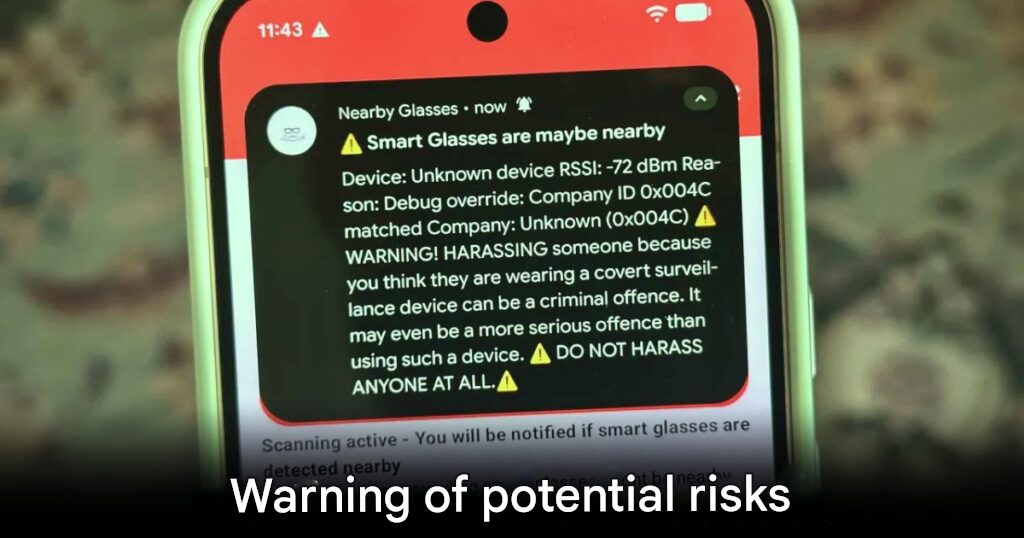
Nearby Glasses app detects smart glasses cameras nearby
As wearable technology becomes more advanced, concerns about privacy in public spaces are growing. A new Android application called Nearby Glasses aims to address that concern by helping users detect nearby smart glasses that may contain cameras.
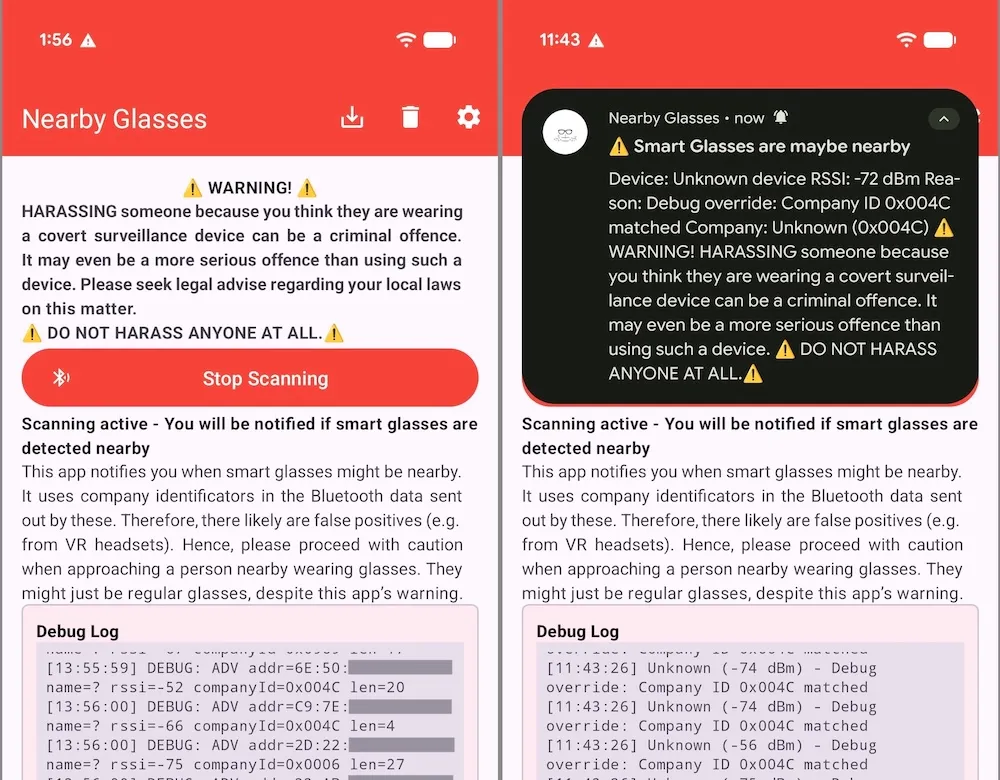
The app functions like a radar system that scans for Bluetooth signals from smart glasses devices. If a compatible signal is detected nearby, the app alerts the user so they can become aware of the device’s presence.
In a world where cameras are becoming smaller and harder to notice, tools like Nearby Glasses are emerging as potential privacy safeguards.
Created to counter hidden camera glasses
Nearby Glasses was developed by independent developer Yves Jeanrenaud. The project was inspired by growing reports of smart glasses being used in questionable ways, including unauthorized recording in public environments.
Some of these concerns involve devices such as Ray Ban Meta Smart Glasses, which combine wearable eyewear with built in cameras and wireless connectivity.
According to the developer, the goal of the app is to give ordinary people a way to detect potential recording devices around them and decide whether they feel comfortable remaining in a particular space.
How the app detects smart glasses
The app works by scanning for Bluetooth manufacturer identifiers commonly used by smart glasses devices. These identifiers can belong to companies such as Meta, Luxottica, or Snap.
When the app detects a signal that matches one of these identifiers, it immediately notifies the user.
Nearby Glasses can typically detect devices within:
- 3 to 10 meters indoors
- 10 to 15 meters outdoors
Although the app cannot determine exactly who is wearing the device, it can indicate that a potential smart glasses device is nearby.
Limitations and false alerts
Like many detection tools, Nearby Glasses is not perfect. One of its limitations is the possibility of false positives.
Since the app scans manufacturer identifiers, it may detect other devices made by the same companies. For example, nearby hardware such as Meta Quest could trigger a warning because it shares the same manufacturer identification.
However, the developer notes that encountering someone wearing a VR headset in public is far less common than encountering someone wearing normal looking smart glasses.
Privacy concerns continue to grow
The launch of Nearby Glasses comes at a time when privacy concerns around wearable technology are intensifying.
There have been reports suggesting that future smart glasses models could include Facial Recognition, allowing users to identify strangers by analyzing faces and matching them with online data.
Because of these developments, tools like Nearby Glasses and hardware solutions such as Spectre I are gaining attention as potential ways for consumers to defend their personal privacy.
A small step toward protecting personal space
Nearby Glasses may not solve every privacy issue related to wearable cameras, but it represents an early attempt to empower users with awareness.
As cameras become smaller and increasingly integrated into everyday devices, tools that help detect hidden recording technology could become more common.
For those concerned about privacy in public spaces, the app is currently available for download on Android through Google Play and its open-source repository on GitHub.
Origin: Morningbrew