The End of an Era: Apple Officially Discontinues the Legendary Mac Pro
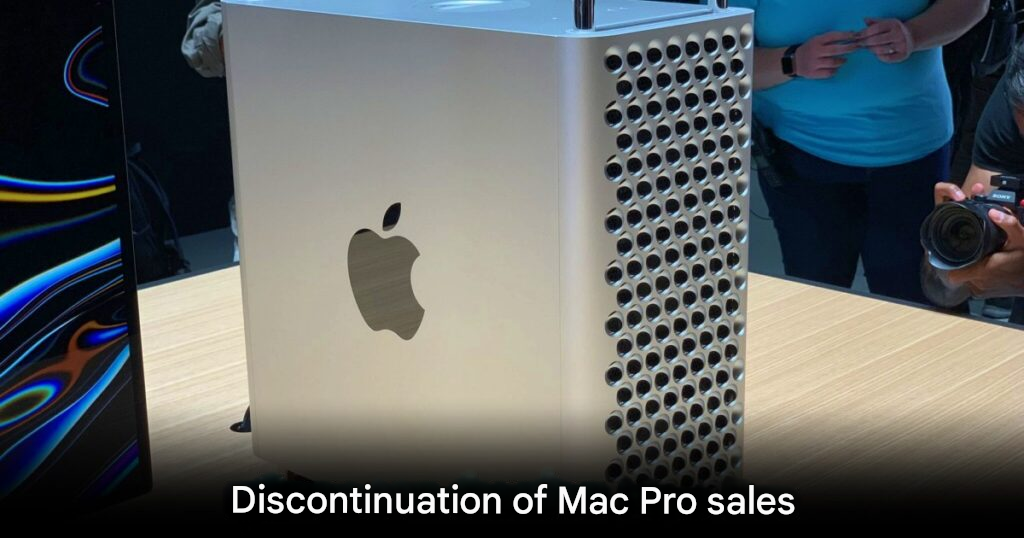
It is officially time to say goodbye to a true heavyweight in the computing world. Apple has confirmed that it is officially discontinuing the sale of the Mac Pro desktop computer. The M2 Ultra model, which launched in mid-2023, will serve as the final descendant of this iconic family line. Even more surprisingly, the company stated that it currently has no plans to develop a direct successor anytime soon, closing the chapter on a decade-long legacy of the ultimate tower desktop.
A Gradual but Inevitable Decline
This decision does not come as a massive shock to those who closely follow tech news, as the Mac Pro has steadily been losing its spotlight for a while now.
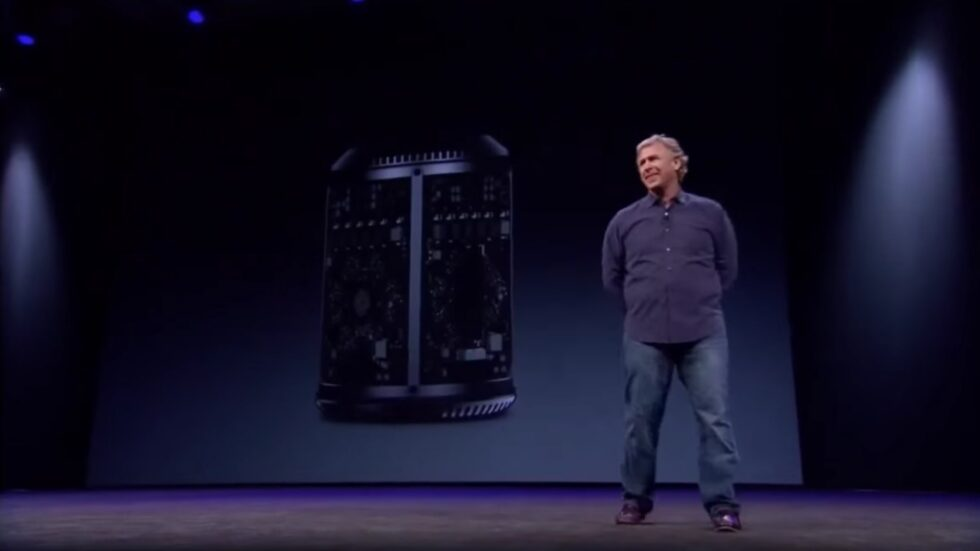
The struggle began between 2013 and 2019 when the futuristic “trash can” design severely limited thermal cooling and completely stalled hardware upgrades. While Apple attempted to course-correct in 2019 by returning to the classic, highly modular tower design, the computing landscape was already shifting. Once Apple fully transitioned into the Apple Silicon era, the traditional concept of a massive desktop rig that required constant manual graphics card upgrades began to look incredibly outdated.
Why Apple Silicon Killed the Tower
If you look back to 1997 when Steve Jobs returned to save the company, he laid out a simple four-quadrant product grid. One of those critical pillars was the “Pro Desktop,” which birthed the Power Mac and eventually evolved into the Intel-based Mac Pro. In that era, manually upgrading RAM or swapping out massive hard drives was standard practice for professional users.
However, the architecture of Apple’s M-series chips completely changed the rules:
- Unified Memory: Apple Silicon integrates the memory directly into the chip itself, making aftermarket RAM upgrades physically impossible.
- No Third-Party GPUs: The new architecture completely dropped support for discrete graphics cards from companies like AMD and Nvidia.
- Wasted Space: Because of these architectural shifts, the ultimate selling point of the Mac Pro—its vast expandability—vanished. The latest Mac Pro essentially became a supersized Mac Studio with massive amounts of empty, unusable space inside its chassis.
Pricing and Powerful Alternatives
Price also played a massive role in pushing the Mac Pro into an extremely niche market. While the original generations launched around $2,200 to $2,500, the 2019 tower model saw its base price skyrocket to a staggering $6,000, with fully maxed-out configurations costing as much as a luxury car. This was in stark contrast to the Mac Studio, which offered incredibly similar processing power at a fraction of the cost and took up significantly less desk space.
For professionals who still demand top-tier processing power, Apple now officially recommends shifting over to the Mac Studio (equipped with the M4 Max or M3 Ultra chips) or the newly updated Mac mini (featuring the M4 Pro), which offer more than enough power for today’s most demanding creative workflows. The departure of the Mac Pro is a definitive acknowledgment that the era of massive, modular desktops has ended, and Apple is moving fully toward compact, hyper-efficient computing.
(Source: Ars Technica)