Google Introduces Gemini Intelligence For Android
Google has announced Gemini Intelligence, a major AI upgrade designed to make Android more proactive and helpful.
The new system brings deeper Gemini AI features into smartphones and other Android-powered devices. Instead of working like a simple assistant, Gemini Intelligence aims to complete multi-step tasks across apps.
Google says the update will first roll out in waves to eligible Google Pixel and Samsung Galaxy phones this summer. Other devices are expected to follow later.
This marks a major shift for Android. The platform is moving from a traditional operating system into a smarter, more connected AI experience.
Multi-Step AI Tasks Take Center Stage
The biggest promise of Gemini Intelligence is automation.
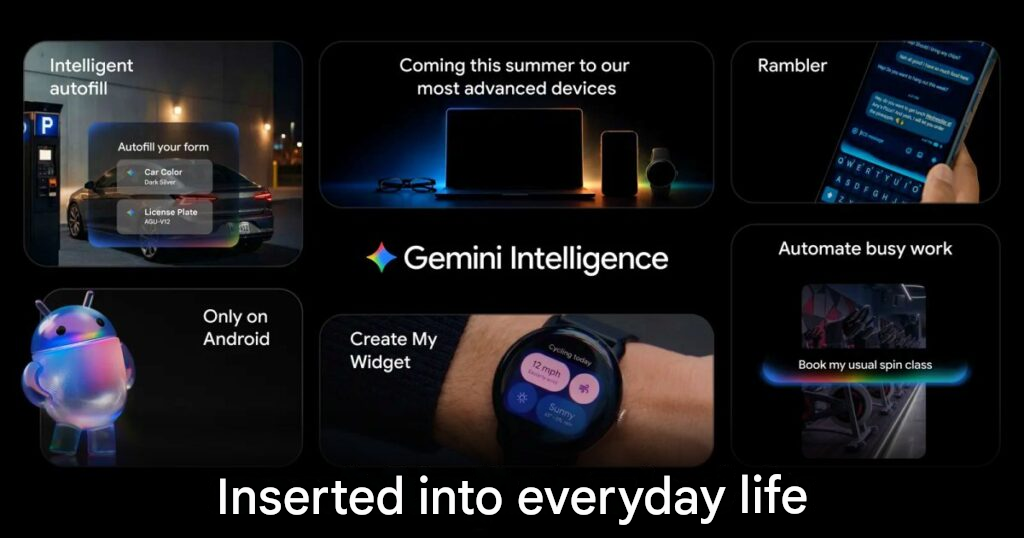
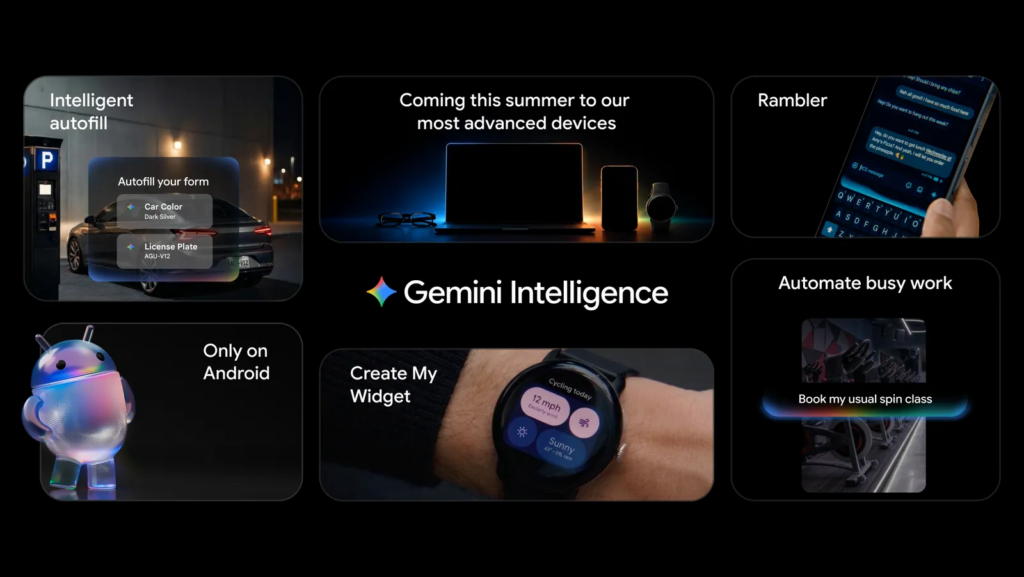
Google wants Gemini to handle digital busywork that usually takes several taps across different apps. Examples include booking a spin class, reading a syllabus in Gmail, finding required books, or adding items from a grocery list into a shopping cart.
This makes Gemini Intelligence more action-focused than older assistant features.
Instead of only answering questions, it can help complete real tasks. Users can also track progress through live notifications while Gemini works.
That could save time for students, workers, travelers, shoppers, and busy mobile users.
Gemini in Chrome Makes Browsing Smarter
Google is also bringing Gemini in Chrome to Android.
This feature aims to make mobile browsing more useful. It can help users research topics, summarize web content, compare information, and complete more complex browsing tasks.
Reports also note that Gemini can help with complicated form filling by using relevant information from connected apps.
This could be useful for booking, shopping, travel planning, and online research.
For Southeast Asia (SEA) users, this may become a strong everyday tool. Many people handle banking, travel, shopping, messaging, and work tasks directly from their phones.
A smarter browser assistant could make those mobile workflows faster.
Rambler Upgrades Voice Typing In Gboard
Google also introduced Rambler, a new Gboard feature powered by Gemini Intelligence.
Rambler improves voice-to-text by listening to natural speech and turning it into cleaner writing. It can remove filler words like “um,” “ah,” and “like” while keeping the important message.
This is useful because people rarely speak in perfect sentences.
Instead of forcing users to dictate carefully, Rambler lets them speak more naturally. It then creates clearer and more concise text.
Reports also say the feature supports smoother multilingual switching during speech. That could matter a lot in SEA, where many users switch between English, local languages, and regional phrases in daily conversation.
Custom Widgets Add More Personal AI
Gemini Intelligence also powers new custom widget creation.
Google is preparing a feature called Create My Widget. Users can describe the widget they want, and Android will try to generate it.
Examples include meal-planning widgets, weather widgets focused on wind and rain, sports score widgets, or other personalized information displays.
This makes Android customization more practical.
Instead of searching for a widget that almost fits, users can ask Gemini to create one based on their needs.
The feature will first launch on the latest Samsung Galaxy and Google Pixel phones this summer.
Material 3 Expressive Gets Smarter
Gemini Intelligence also comes with a refreshed visual language.
Google says the design builds on Material 3 Expressive. The goal is not only to look better, but also to reduce distractions and help users focus.
The system uses purposeful animations to show when Gemini is listening, thinking, or working.
This matters because AI features can feel confusing when users do not know what the system is doing. Clear visual feedback can make the experience feel more trustworthy.
A cleaner UI also helps avoid overload. If Gemini will work across many apps, users need simple signals and less screen clutter.
Android Expands Beyond Phones
Google is not limiting Gemini Intelligence to smartphones.
The company plans to bring the experience across more device types, including watches, cars, glasses, and laptops.
Google also announced Googlebook, a new Android-based laptop platform built with Gemini at its core. These devices are expected to launch in the fall with partners such as Acer, Asus, Dell, HP, and Lenovo.
This shows Google’s bigger plan.
The company wants Gemini Intelligence to become a connected AI layer across Android devices. Phones, laptops, watches, and cars could eventually share a more unified assistant experience.
Why This Matters For Android Users
Gemini Intelligence could make Android feel more useful in daily life.
Many current AI tools still feel separate from the main phone experience. Users open an app, ask a question, then return to their normal workflow.
Google wants to make AI part of the workflow itself.
If Gemini can read context, move across apps, complete tasks, and summarize information, Android could become much more proactive.
That also raises privacy and trust questions. Users will need clear controls over what Gemini can access and when it stops working.
Reports note that users can monitor active tasks through notifications, and commands stop after the pending task finishes.
Those controls will matter as AI becomes more active across personal apps.
A Major Step Toward AI-First Android
Google is clearly pushing Android into an AI-first direction.
Gemini Intelligence combines multi-step automation, smarter browsing, cleaner dictation, custom widgets, and a refreshed interface.
The update could make Android phones feel more personal and more useful. It could also make everyday tasks faster for users who depend on their phones for work, school, travel, and communication.
The real test will come when the feature reaches users this summer.
If it works smoothly, Gemini Intelligence may become one of Android’s biggest upgrades in years.
Gemini Intelligence sounds like Google finally wants Android to stop waiting for instructions and start helping before we get annoyed. The best part is not one flashy feature. It is the idea that Gemini can move across apps, clean up messy speech, help in Chrome, and build widgets from plain requests. If Google gets privacy and reliability right, Android phones could feel much less like tools and much more like actual assistants.
Source: Google