Final Fantasy VII Remake Trilogy Was Inevitable
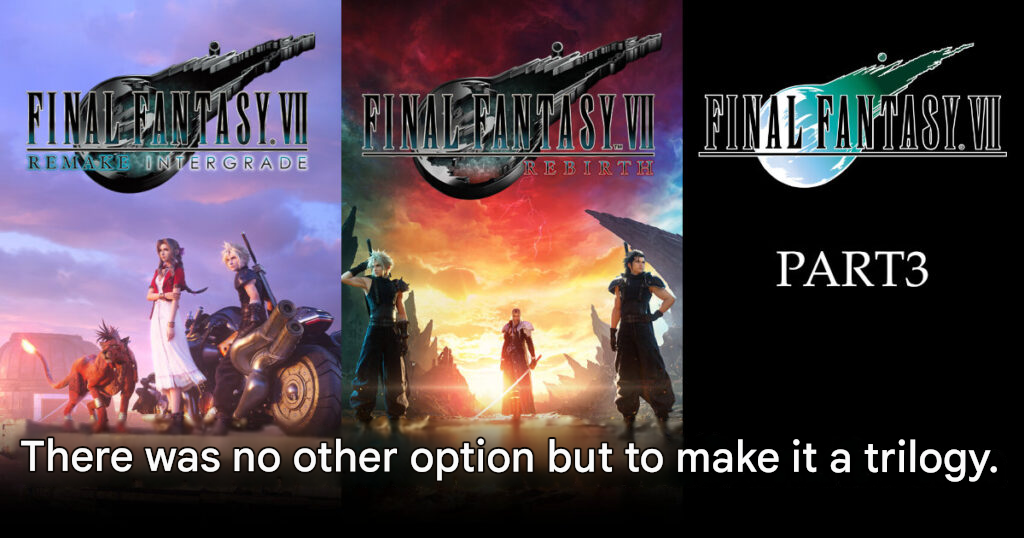
Final Fantasy VII Remake Needed A Trilogy
Final Fantasy VII Remake turned one legendary PlayStation 1 game into a massive modern trilogy.
The first part, Final Fantasy VII Remake, launched in 2020. The second part, Final Fantasy VII Rebirth, launched in 2024. The third part still has no official release date or final public title.
That long development cycle has made some fans wonder why the remake needed 3 full games. Now, Naoki Hamaguchi has given a clearer answer.
In an interview with ntower, Hamaguchi explained that the trilogy structure was already decided before he joined the project. However, after looking back at the scale of the original story, he believes it was the only realistic option.
It Was Not Just About Wanting 3 Games
Hamaguchi said the decision was not simply about wanting to make a trilogy.
The team had to evaluate the volume of story and content that needed to appear in a modern remake. After that review, he felt there was no realistic path other than 3 full games.
That point matters because the original Final Fantasy VII was already huge in 1997.
A direct modern remake would not only need better graphics. It would also need expanded environments, cinematic storytelling, voice acting, animation, modern combat, deeper character scenes, and stronger world detail.
That kind of remake changes the scale completely. What once took minutes in the original can become hours in a modern game.
Midgar Became A Full Game For A Reason
One major example is Midgar.
In the original Final Fantasy VII, Midgar was only the opening section of the larger journey. However, it carried massive weight.
It introduced Cloud, Barret, Tifa, Aerith, Shinra, Mako, and the social divide that defines the city.
Hamaguchi explained that Midgar may have looked short in the original, but it contained crucial information about the world, characters, and themes. That made it strong enough to stand as one complete modern game.
This is why Final Fantasy VII Remake focused so heavily on the city.
It gave players more time to walk through its streets, understand everyday life, and see how Shinra shaped society. It also made the class divide between upper plates and lower sectors more personal.
For new players, this created a stronger entry point. For longtime fans, it expanded a world they already loved.
Choosing Where Each Game Ends Was Difficult
Splitting the remake into 3 parts created another challenge.
The team had to decide where each game should end. That choice matters because each part needed a satisfying structure.
A trilogy cannot simply stop anywhere. Each entry needs a dramatic break, emotional peak, and clear reason to continue.
Hamaguchi said the team carefully analyzed the story to find natural stopping points. One of the most important decisions involved Final Fantasy VII Rebirth and the Forgotten Capital.
Aerith’s Fate Became A Natural Breakpoint
Hamaguchi said he suggested to producer Yoshinori Kitase that Aerith’s fate would work as the natural ending point for Rebirth.
He believed it made sense from a storytelling perspective. After that, the structure of the trilogy reportedly came together more smoothly.
This choice makes sense because Aerith’s fate remains one of gaming’s most famous emotional moments.
It is not only a plot event. It changes the feeling of the entire journey.
For the remake trilogy, placing that moment near the end of the second game gives the story a heavy emotional bridge into the finale.
Hamaguchi Also Felt That Moment As A Fan
Hamaguchi has also spoken about how strongly Aerith’s original scene affected him as a player.
He said he once searched seriously for a way to reverse that iconic death when he played the original game. That reaction mirrors what many fans experienced in the late 1990s.
That personal connection adds weight to his role as director.
He is not only managing a famous remake project. He is also handling a scene that shaped his own memory as a fan.
That may explain why the remake trilogy treats this part of the story with such care, ambiguity, and emotional focus.
The Trilogy Also Affected DLC Plans
The trilogy structure also shaped how Square Enix handled extra content.
Hamaguchi said the team seriously considered story DLC for Final Fantasy VII Rebirth. However, they decided not to make it because it could affect the third game’s schedule and overall quality.
That decision shows how tightly connected the 3 games are.
Adding DLC to the second entry may sound exciting, but it could slow work on the final chapter. For a trilogy already taking many years, the team chose to protect the finale.
Hamaguchi has not ruled out possible DLC for the third installment. He said that depends on continued support from fans.
Why Some Fans Still Feel The Wait
The trilogy approach makes creative sense, but it also comes with a clear problem.
The wait between entries is long. Final Fantasy VII Remake arrived in 2020, while Rebirth followed in 2024.
The third entry still has no release date. That means fans have already waited years for the full remake project to conclude.
This long gap also connects to broader worries about the Final Fantasy franchise. Some players feel newer generations have less attachment to the series because major releases take many years to arrive.
Still, Final Fantasy VII has enough legacy to survive that wait. The challenge now is making the final part feel worth the time.
Part 3 Remains The Biggest Question
Final Fantasy VII Remake Part 3 has not received an official launch date.
The title has also not been publicly revealed. Fans are still waiting to learn how Square Enix will close the trilogy.
The final entry must resolve the emotional weight of Rebirth. It must also handle the remake trilogy’s new mysteries, expanded lore, and altered expectations.
That is a huge task.
The team must satisfy longtime fans of the 1997 original while also serving players who entered the story through the remake trilogy.
A Massive Remake With A Clear Reason
Hamaguchi’s explanation makes the trilogy decision easier to understand.
A one-game remake may have forced Square Enix to cut too much. A 2-game structure may have rushed major story arcs.
A trilogy gives the world, characters, and themes more breathing room.
That does not mean every fan will agree with every pacing choice. However, the reasoning is clear.
Final Fantasy VII was not only remade with new visuals. It was rebuilt as a modern cinematic RPG saga.
For Southeast Asia (SEA) fans who grew up with the original, the trilogy can feel like a long emotional reunion. For newer players, it may become their first full journey into one of the most important JRPGs ever made.
Now, all eyes are on the final chapter.
Final Fantasy VII Remake becoming a trilogy may sound excessive until you remember how massive that world really is. Midgar alone carries enough politics, trauma, class conflict, and character drama to fill a full game. The wait is painful, yes. But if Part 3 lands the ending properly, this trilogy could become one of the boldest remake projects in JRPG history.
Source: GamesRadar,