SEA Game QA and Testing the Grabber Media Way
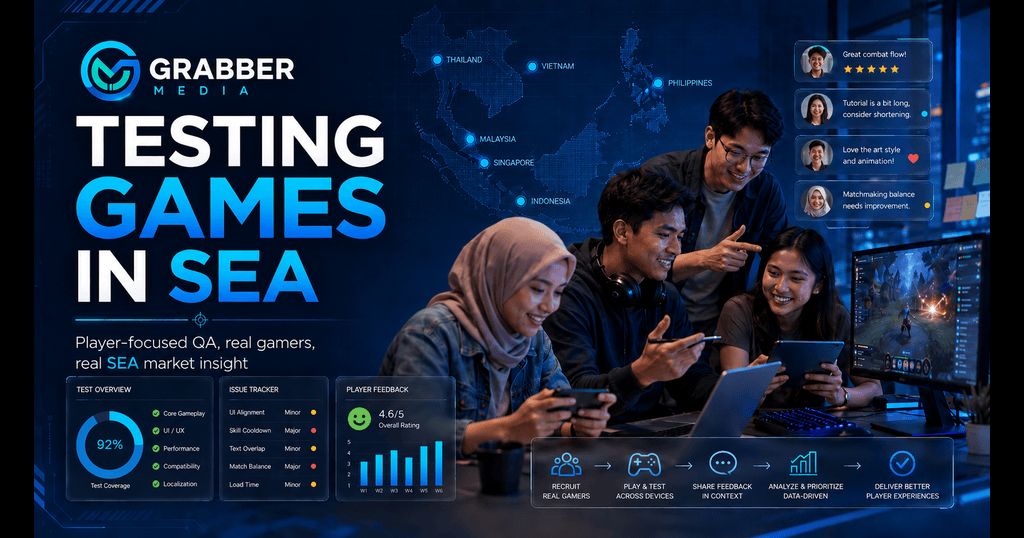
Testing SEA Games the Grabber Way
Testing games in Southeast Asia requires more than basic QA. It demands a real understanding of local players, gaming habits, culture, spending behavior, and market expectations.
That is why Grabber Media approaches SEA game QA and testing not only as a technical process, but as a gamer-driven service built around real player experience.
Grabber Media is made up of gamers themselves. The team understands what players notice, what frustrates them, what excites them, and what makes them continue playing. This gives the company a stronger foundation when testing games for Southeast Asia’s diverse markets.
QA That Goes Beyond Forms and Checklists
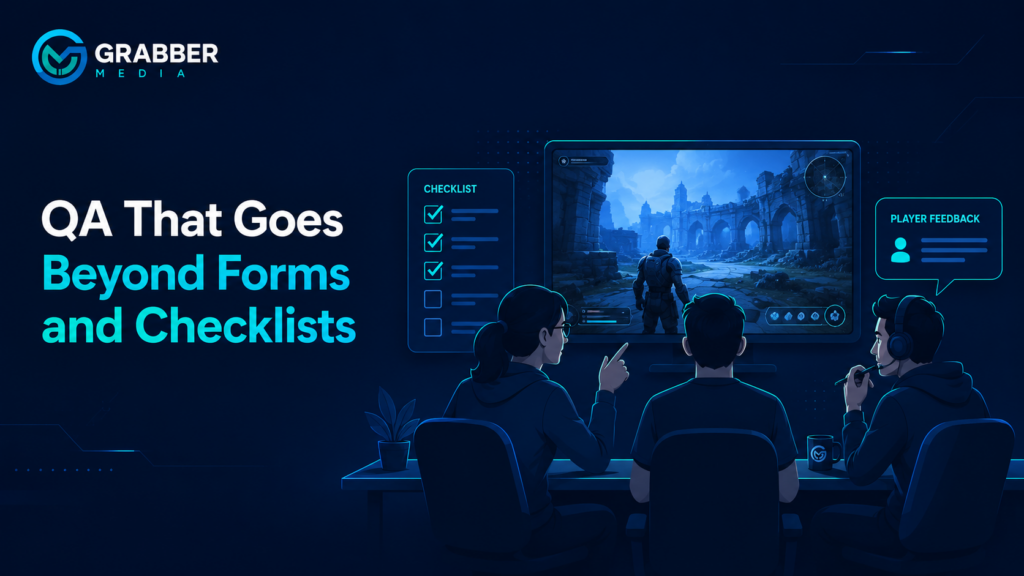
For Grabber Media, testing is not just about submitting forms, answering sheets, and marking boxes.
Those tools are useful, but they do not always show how players truly feel. A player may rate a system as “okay” on paper, but through a personal conversation, the team can discover that the tutorial felt too long, the rewards felt weak, the UI felt confusing, or the gameplay loop lost excitement after a few sessions.
That human layer matters.
Grabber Media talks directly with testers to understand their reactions, frustrations, enjoyment, and honest impressions. This helps publishers see the game not only through technical results, but through real player emotion.
Finding the Right Testers for the Right Game
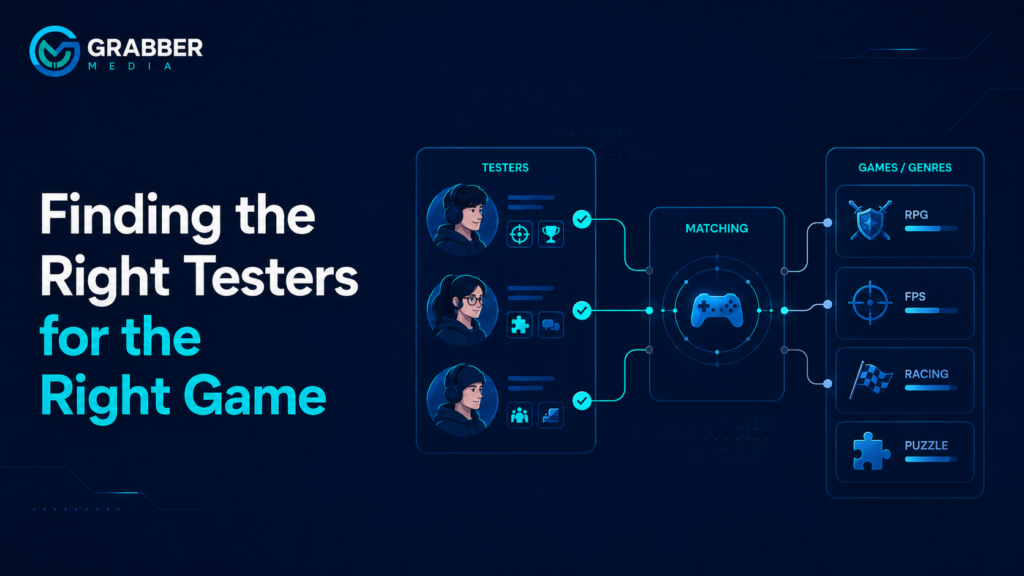
Accurate feedback starts with the right people.
Not every gamer is the right tester for every title. A competitive shooter player, a mobile RPG fan, a gacha spender, a casual puzzle player, a strategy gamer, and a cozy game player will all experience a game differently.
Grabber Media helps find the right testers and the right gamers based on genre, platform, target audience, market, and player behavior.
This makes the feedback more accurate, relevant, and useful for developers. Instead of random comments from random players, publishers receive insights from people who actually understand the type of game being tested.
Built for Southeast Asia’s Diverse Markets
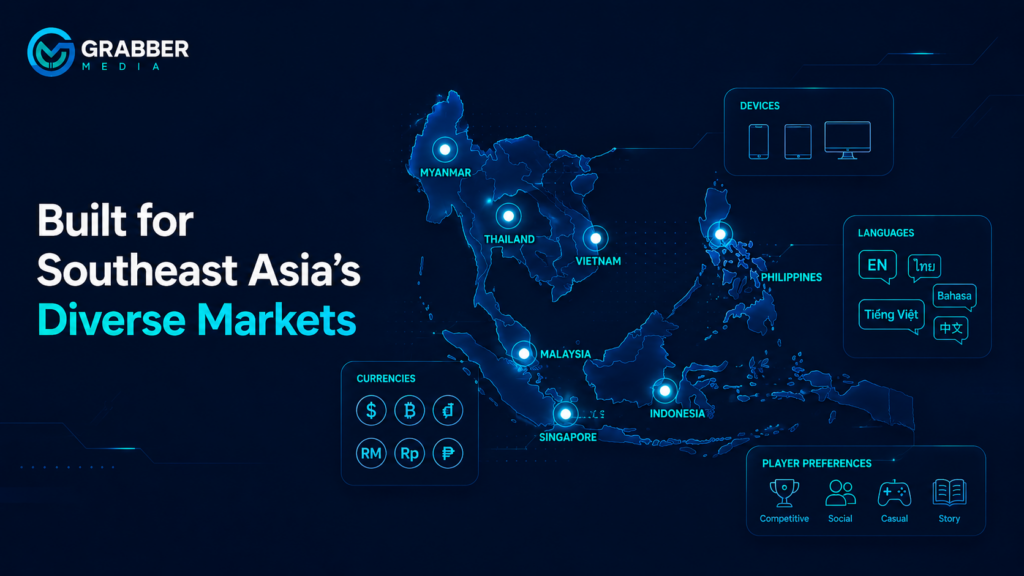
Southeast Asia is not one single market.
Players in the Philippines, Indonesia, Malaysia, Singapore, Thailand, and Vietnam have different preferences, payment habits, language expectations, devices, culture, and content sensitivities.
Grabber Media’s regional approach helps evaluate whether a game feels natural and enjoyable across these markets. The team reviews user interfaces, in-game events, monetization systems, payment flows, localization quality, onboarding, and overall player experience.
The goal is simple: make sure the game is not only functional, but also appealing, understandable, and culturally relevant.
Real Playtests With Real Conversations

Grabber Media combines structured playtests with personal feedback sessions.
During testing, players experience the game like real users. Afterward, the team goes deeper by asking how they felt, what confused them, what kept them interested, what made them stop, and what they would change.
This gives developers a clearer view of the player journey.
A spreadsheet can show a score. A conversation can explain the reason behind that score.
That difference can lead to stronger engagement, better retention, improved monetization, and a more successful launch in SEA.
Technical, Cultural, and Commercial Review
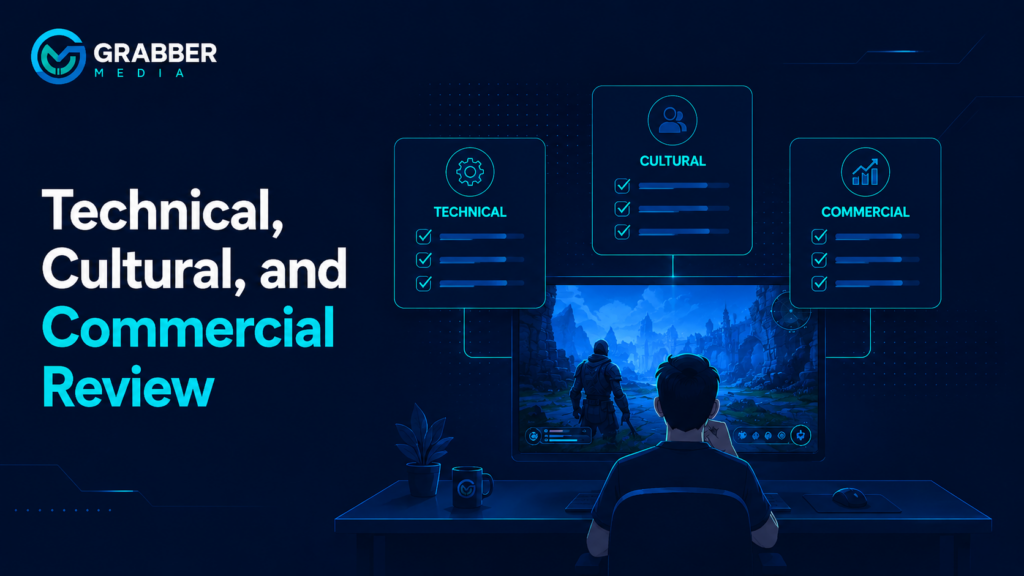
Grabber Media reviews every game from multiple perspectives.
The technical side checks if the game works properly. The cultural side checks if the content connects with local players. The commercial side checks whether events, pricing, payment systems, and player motivation make sense for the target market.
By combining these perspectives, Grabber Media gives publishers practical and actionable insights before launch.
This helps developers correct issues early, adjust mechanics, improve localization, and prepare a stronger regional strategy.
Helping Games Truly Connect With SEA Players
The Grabber Media way is personal, practical, and player-focused.
The company does not treat QA as a distant process. It brings in the right gamers, listens to how they feel, studies how they play, and turns their feedback into useful recommendations for publishers.
In a region as diverse as Southeast Asia, that approach matters.
A game does not succeed in SEA just because it launches here. It succeeds when players understand it, enjoy it, trust it, and feel that it was made with their market in mind.
That is the value of SEA game QA and testing the Grabber way.