Japanese Developers Supported Xbox to Prevent Sony Market Dominance
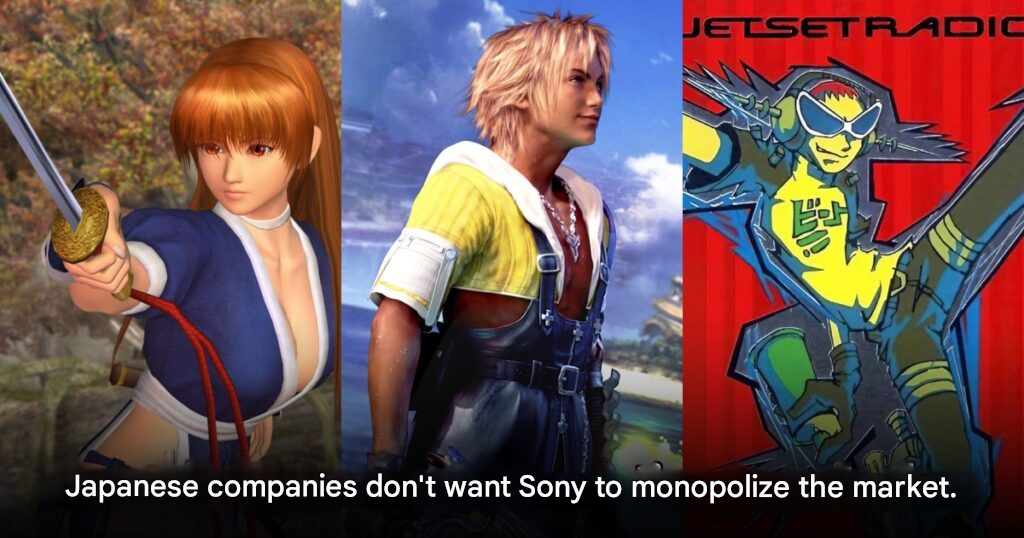
Japanese Developers Once Backed Xbox to Challenge Sony’s Dominance
Former Xbox executive reveals the mindset behind early exclusive deals.
Today’s console market is led by three major players: Microsoft, Sony, and Nintendo.
In the past, however, the competition between Microsoft and Sony was much more intense. This rivalry became widely known as the Console War.
In recent years, tensions have eased. Microsoft, in particular, has shifted strategy. It now focuses on publishing games across multiple platforms, giving players more options.
Early Xbox Era Saw Strong Support from Japanese Developers
During the early 2000s, Microsoft entered the console market with the original Xbox. The goal was clear. Compete directly with Sony’s PlayStation.
At the time, many Japanese developers surprisingly supported Xbox.
Companies such as CAPCOM, SEGA, and Tecmo released exclusive titles for the platform. Some of these games remain unavailable on other systems even today.
Insight from Former Xbox Executive Ed Fries
Former Xbox executive Ed Fries shared new details in a podcast with The Expansion Pass.
He explained that when Microsoft approached Japanese studios, many showed interest in supporting Xbox.
The reason was strategic.
Developers did not want Sony to dominate the market alone.
Squaresoft’s Careful Support
One notable example mentioned was Squaresoft.
The company wanted to release new games on Xbox. However, it preferred to do so quietly.
Developers were cautious. They did not want Sony to clearly see their support for a competing platform.
Tecmo’s Strong Statement Through Game Releases
Tecmo took a more visible approach.
The company released multiple Dead or Alive titles on Xbox, including:
- Dead or Alive 3
- Dead or Alive 4
- A remake of Dead or Alive 2
They also launched the spin-off Dead or Alive Xtreme Beach Volleyball.
According to Ed Fries, this was more than just business. It was a symbolic move.
Tecmo wanted to show that they did not support Sony having complete control over the market.
This aligns with the views of Tomonobu Itagaki, who preferred Xbox due to its superior hardware power at the time.
SEGA’s Transition and Platform Strategy
SEGA was also in a unique position during this era.
After stepping away from console development, the company shifted to software publishing.
Its strategy varied by platform:
- On GameCube, SEGA focused on titles like Sonic the Hedgehog
- On Xbox, it released more mature experiences such as Crazy Taxi 3: High Roller and Jet Set Radio Future
Squaresoft Legacy and Future Influence
While Squaresoft did not heavily support Xbox at first, its legacy still played a role later.
After leaving the company, Hironobu Sakaguchi, creator of Final Fantasy, worked with Microsoft.
He developed Blue Dragon for Xbox 360, continuing the connection between Japanese creators and the platform.
The Original Xbox Hardware Advantage
The first Xbox launched in 2001. It marked the return of a U.S.-based console after many years.
Its hardware stood out at the time:
- Intel Pentium III processor
- NVIDIA GeForce 3 GPU
- Modified Windows-based operating system
It also introduced features ahead of its time:
- Built-in 8GB storage
- Support for DVD and CD media
- Internet connectivity
These capabilities made it attractive to developers looking for more power and flexibility.
A Strategic Balance in the Console Market
This period highlights an important moment in gaming history.
Japanese developers were not just choosing platforms based on popularity. They were also thinking about market balance.
By supporting Xbox, they helped prevent a single company from controlling the entire console space.