Dishonored Was Born From Thief 4 and Blade Runner
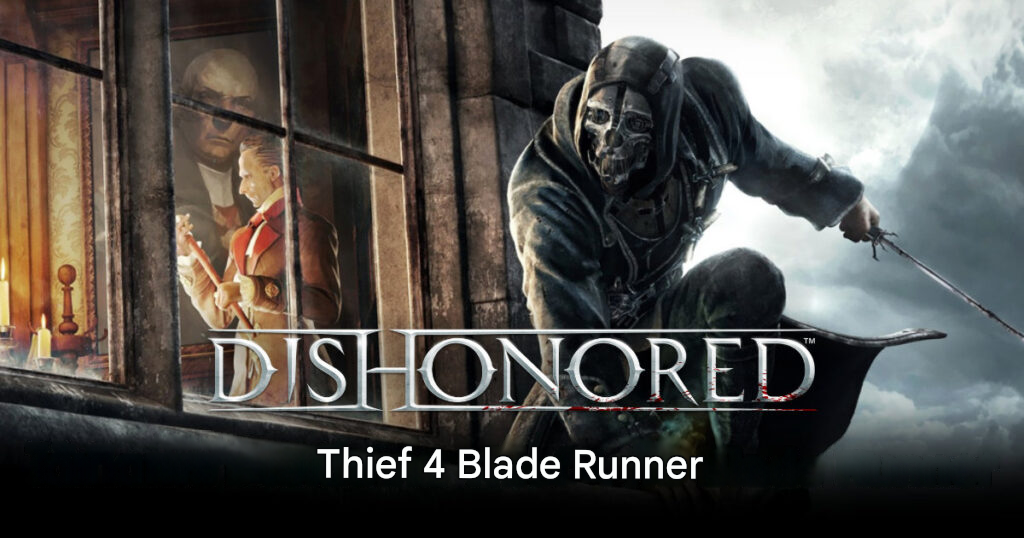
Sometimes, a cancelled idea does not really die. It only waits for the right form.
That seems to be the case with Dishonored, the beloved first-person stealth franchise from Arkane Studios. While many players now remember the game for its supernatural powers, grim world, and flexible assassination design, its origin story came from something very different.
According to former Arkane Studios co-directors Raphael Colantonio and Harvey Smith, the ideas that eventually shaped Dishonored came from earlier plans connected to Thief 4 and Blade Runner.
Bethesda offered Arkane two dream projects
During a recent conversation while revisiting the first Dishonored, Colantonio and Smith looked back on how Bethesda approached Arkane Studios.
At the time, Bethesda reportedly had the Thief franchise and believed Arkane was the right team to continue it. The studio was also offered a possible Blade Runner project, creating a rare situation where two beloved properties landed in front of developers who deeply admired both.
Smith described the moment with humor, comparing it to offering two cats separate piles of catnip and asking which one they wanted. For a studio that loved both Thief and Blade Runner, the opportunity sounded almost too good to be true.
It also came during a difficult business period for Arkane Studios. Bethesda was not only helping support the company, but also offering intellectual properties that the team genuinely wanted to work on.
Thief 4 and Blade Runner ideas moved forward
The team had already developed ideas for Thief 4 to a meaningful point. Smith said some video material had already been created for the project.
The Blade Runner concept had also moved into experimentation. Arkane worked with an animator experienced in first-person combat and collaborated with designers to test possible combat scenes.
Smith said he personally liked the ideas the team had pitched. With both projects carrying strong creative appeal, Arkane seemed to be facing a dream opportunity.
However, the situation was not simple.
Arkane could not fully carry both projects
At that time, Arkane Studios had not yet been acquired by Bethesda. That made the future of these projects uncertain.
The team also understood that handling both Thief 4 and Blade Runner at the same time would be extremely difficult. Both concepts demanded attention, resources, and strong creative commitment.
Instead of forcing the studio to split itself across two huge licenses, Bethesda eventually allowed Arkane to continue developing what it already had and transform that work into something original.
That project became Dishonored.
A failed path created a stronger identity
In the end, Dishonored carried traces of both inspirations while becoming its own franchise.
From Thief, it inherited a love for stealth, player choice, and shadowy infiltration. From Blade Runner, it seemed to draw a darker sense of atmosphere, world decay, and morally complex power structures.
Yet Dishonored did not feel like a simple copy of either. Arkane used those early ideas to create a world of plague, empire, betrayal, supernatural gifts, and brutal choices.
That may be why the game still stands out. It came from the remains of projects that never happened, but it found an identity strong enough to survive on its own.
Dishonored is a great reminder that cancelled projects can still leave something powerful behind. Arkane Studios may not have delivered Thief 4 or Blade Runner, but those ideas helped shape one of the most memorable stealth-action games of its era. Sometimes, the best result is not the original plan. Sometimes, it is the strange new thing created when several abandoned dreams collide.