Final Fantasy VII Rebirth Shines on Nintendo Switch 2
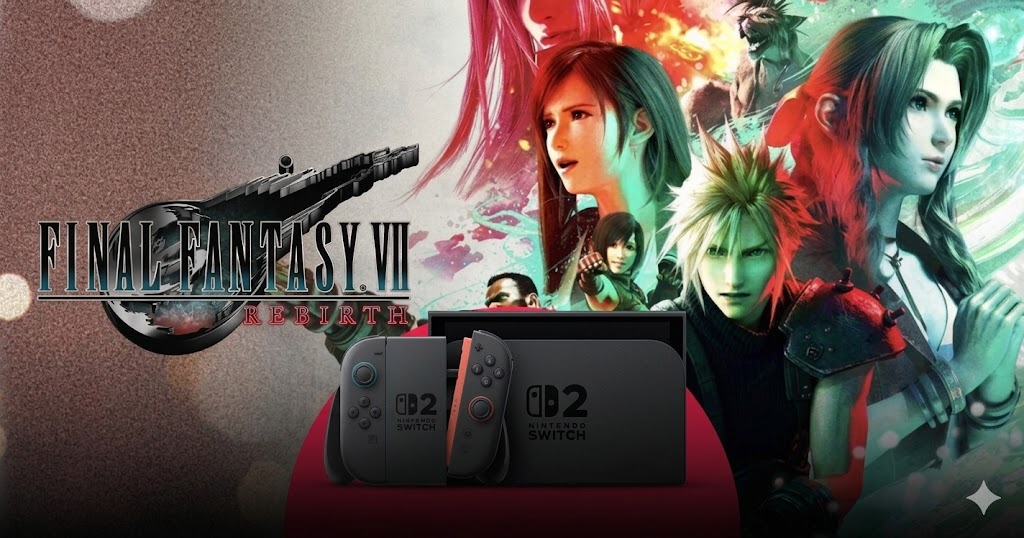
Final Fantasy VII Rebirth Nintendo Switch 2 Review
Final Fantasy VII Rebirth has arrived on Nintendo Switch 2, bringing the second chapter of the Final Fantasy VII Remake trilogy to a hybrid platform.
This review is based on the Nintendo Switch 2 version of the game. Player experience may vary depending on playstyle and display setup.
After Final Fantasy VII Remake Intergrade already became one of the strongest ports on Nintendo Switch 2, Final Fantasy VII Rebirth follows closely behind. This time, the challenge feels even bigger because Rebirth is a fuller next-generation experience with larger areas, more content, and heavier technical demands.
The big question is simple. Can Nintendo Switch 2 handle this massive JRPG without losing the feeling of the original experience?
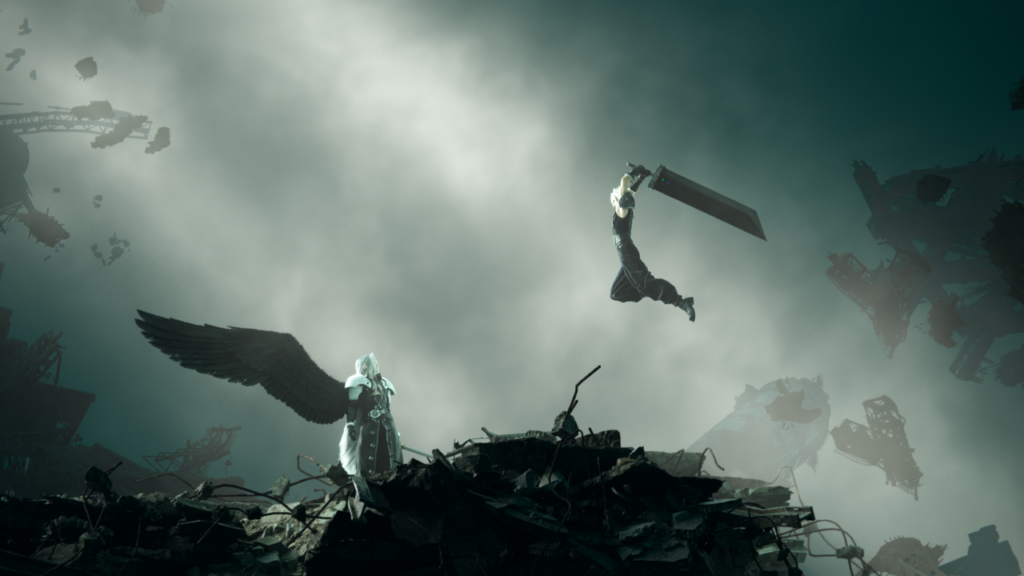
Presentation
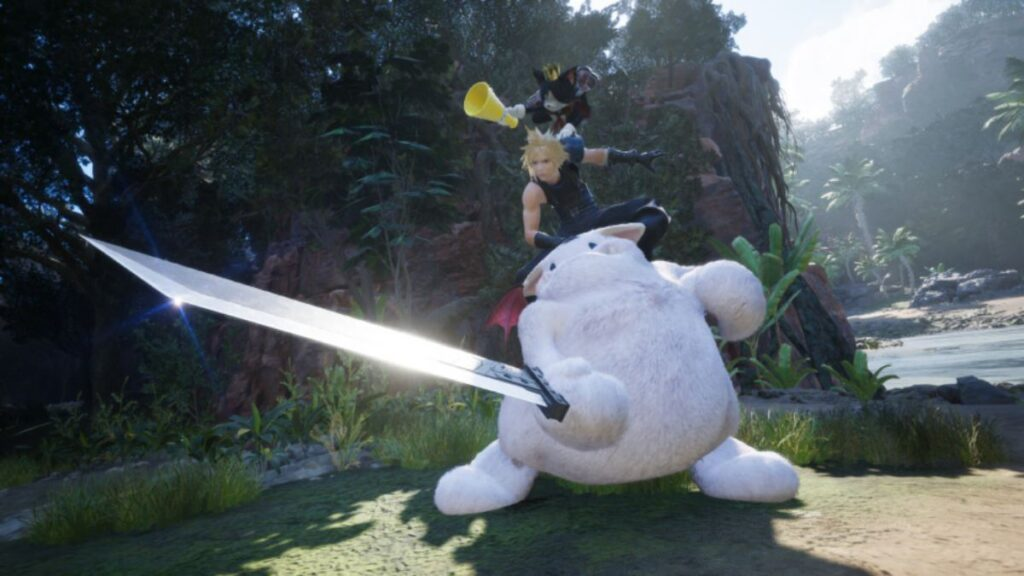
Since Final Fantasy VII Rebirth continues directly after the events of Remake, players once again follow Cloud, Tifa, Barret, and Aerith. This time, Red XIII officially joins the party, while Yuffie and Cait Sith also appear during the story.
The game was designed so players can begin here without playing Remake first. However, it still feels better to experience the first game before jumping into Rebirth. The story begins in Kalm, and players will understand the emotional weight more clearly if they already know why the main characters are there.
For players who cannot play the first game, the included recap video does enough to explain the previous events.
The menu design still feels familiar, but several systems have received more detail. The Nintendo Switch 2 version also includes the game’s previous QoL updates. These include lighting adjustments, improved progression options, and support features such as stronger attacks, unlimited money, immortality, and Head Start options.
These additions make the game friendlier for players who want a smoother second playthrough or a less stressful experience.
Controls and Exploration
Players who enjoyed the gameplay of the previous entry will likely enjoy this one even more.
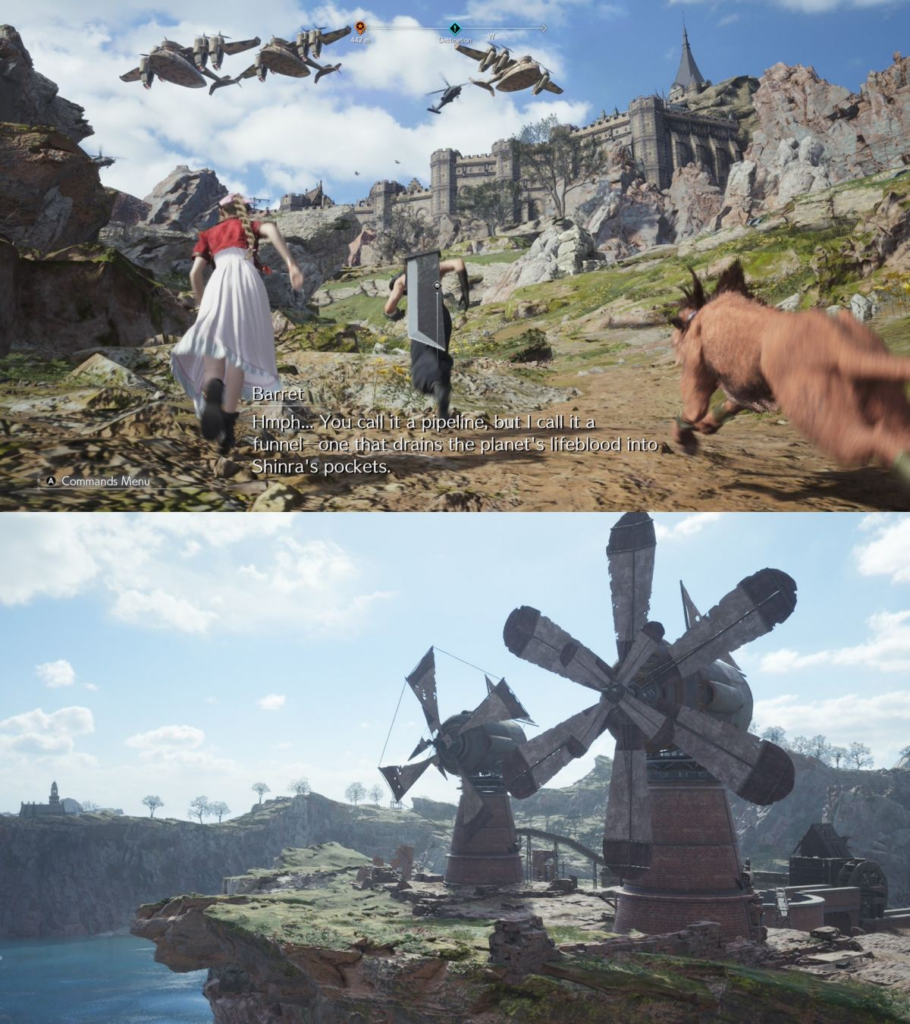
Final Fantasy VII Rebirth gives characters more freedom of movement through Terrain Command. When characters reach slopes, ledges, or climbable areas, they move through them more naturally and automatically.
This change fits the larger scale of the game. Unlike Remake, which used more linear paths and hub-style areas, Rebirth gives players much larger maps to explore. It is not a full open-world game, since some locations unlock based on chapter progress, but it feels far more open than the previous entry.
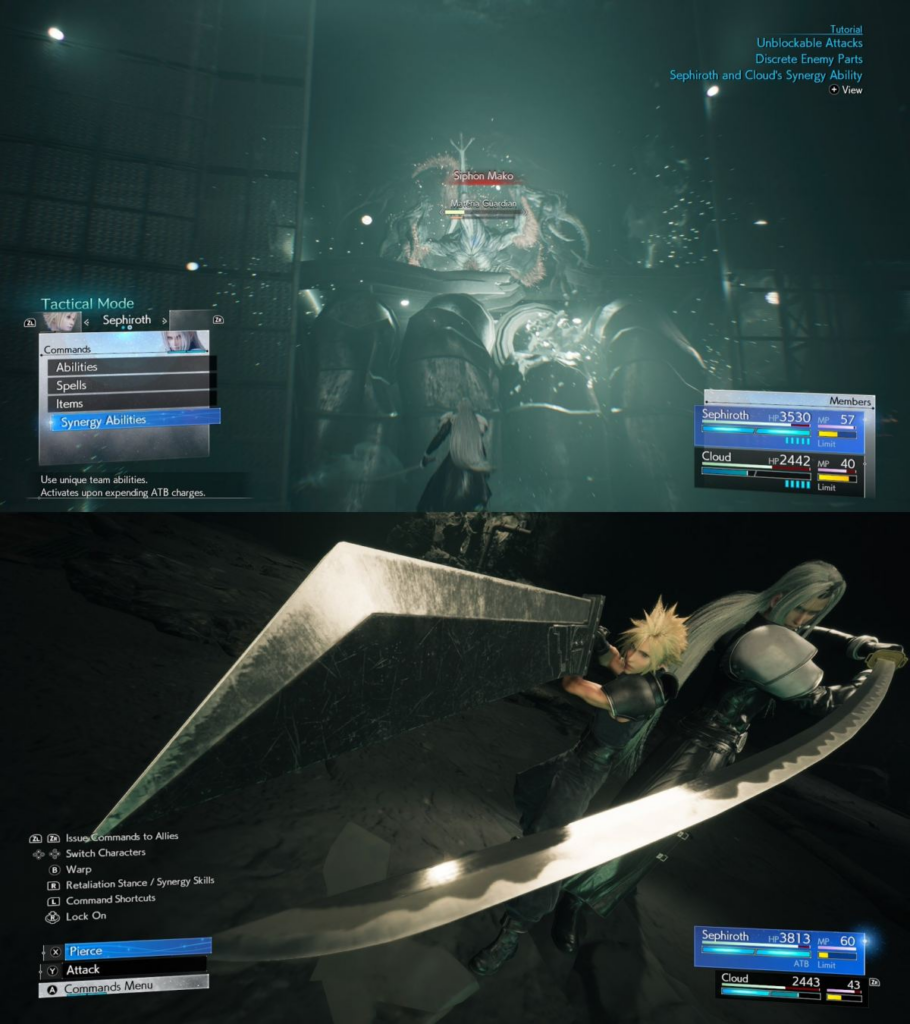
The battle system still combines real-time action with Active Time Battle elements. Players can attack enemies directly, then enter Tactical Mode to slow the action and select commands.
The game also adds First Strike, which lets players quickly close the distance and attack enemies at the start of combat. Skilled players can also hold the L button to issue commands to individual party members, although Tactical Mode remains easier to manage during busy fights.
Exploration also feels more rewarding because of the crafting system. Materials and ingredients are scattered across the map, encouraging players to explore areas they might normally ignore. Even in early locations like the Grasslands, players can find useful resources by roaming around carefully.
Deeper Customization and Richer Content
Rebirth expands character customization in several ways.
Weapon upgrades, Materia, equipment, and item setup are still here, but the game also adds the Folio system. This works like a character-specific skill tree where players can unlock abilities and special techniques.
One of the most important additions is Synergy, which allows characters to perform coordinated attacks. These moves are not only flashy in combat, but also connect to relationship systems between party members.
Builds from the previous game do not carry over here. Players will need to set up Materia and accessories again. However, each character already has a clear role, so this does not feel like a major problem.
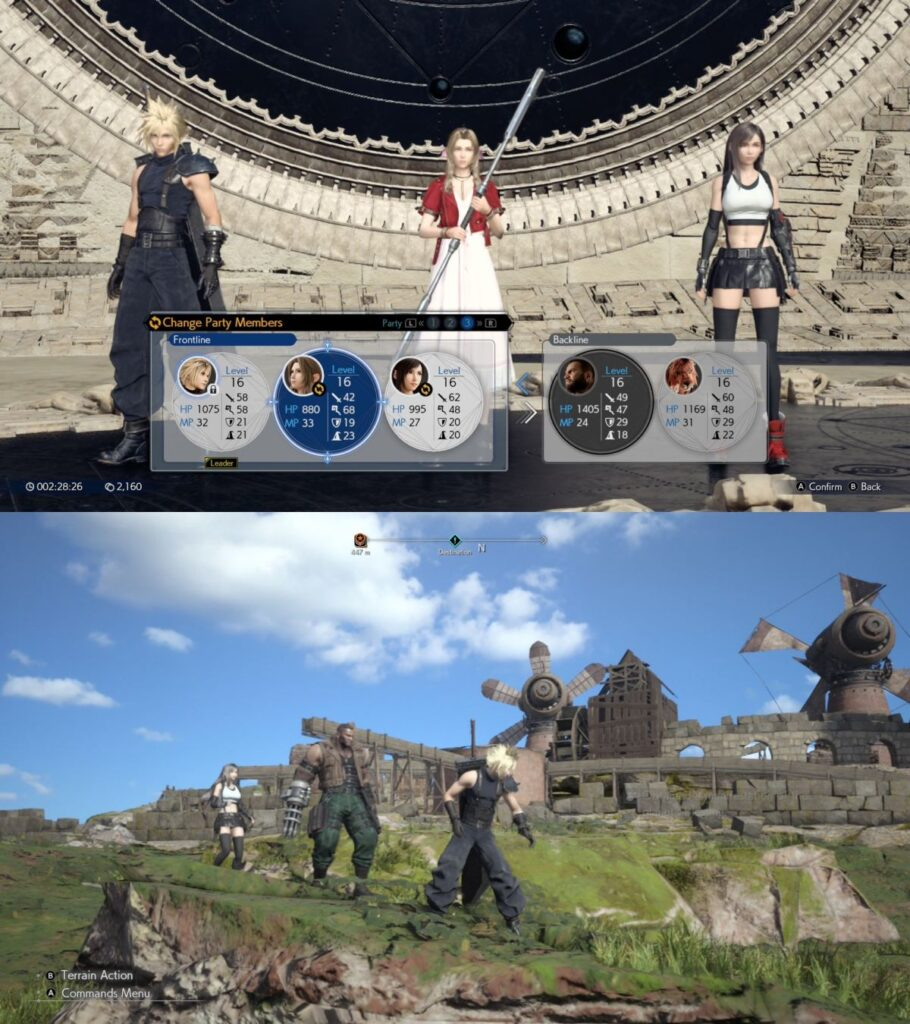
Because the party is larger this time, team selection becomes more important. Players can bring 3 characters into battle, including the controlled character. The game also lets players create up to 3 party templates, making it easier to switch team setups depending on the situation.
The game also feels smoother overall. Movement, climbing, and aerial attacks flow better than before. On top of that, Rebirth offers a much larger story and more activities, including the memorable Gold Saucer and its many mini-games.
Playing Final Fantasy VII Rebirth on Nintendo Switch 2
Playing Final Fantasy VII Rebirth on Nintendo Switch 2 feels impressive because this is a true next-generation RPG built for more powerful hardware.
The game features large environments, wide landscapes, dense areas, and visually demanding locations. Seeing this kind of experience running on a hybrid system is already worth appreciating.
In handheld mode, the experience works better than expected. Text remains clear, and the display benefits from the system’s HDR support. Compared with earlier demo impressions, several character models and visual elements also appear improved in the final playable build.
The system clearly has lower processing power than larger home consoles, and players will notice that throughout the game. However, the stable 30FPS performance makes the experience feel solid for portable play.
Graphics and Audio
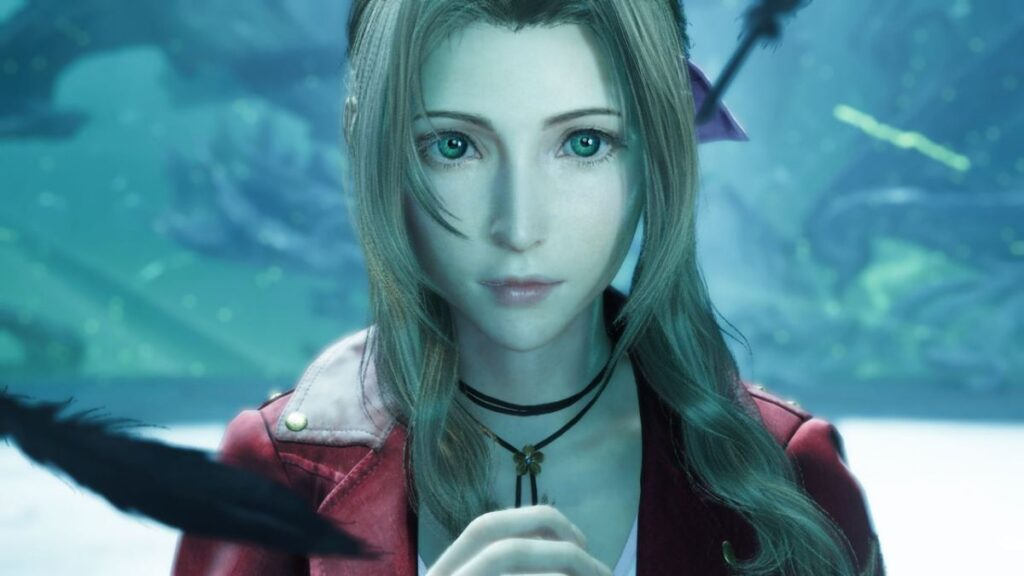
On Nintendo Switch 2, the game outputs at 1080p in both handheld and docked modes through upscaling.
The image is not razor-sharp, but DLSS helps preserve much of the game’s original atmosphere, especially in lighting and shadows. The lighting setup also feels strong, and compared with the earliest PS5 version, this release benefits from newer lighting improvements.
Still, the game has visible compromises.
Character models look good during cutscenes, especially when the camera focuses on them. However, buildings and environmental details can look much lower in quality. Some walls, wooden pillars, roofs, and objects appear flat or lack texture detail.
Pop-in also appears often, with objects loading into view during exploration. This issue can pull attention away from the scene. Brightness adjustment when moving in and out of buildings can also feel unstable, although setting brightness around 3 or 5 may help reduce the issue.
The soundtrack remains excellent. The music keeps its grand orchestral sound, and the audio does not feel heavily compressed despite running on a hybrid system.
Tracks such as Those Who Fight and Aerith’s Theme return in several arrangements, changing style depending on the situation. The music remains one of the strongest parts of the experience.
Final Fantasy VII Rebirth on Switch 2 Is Still Worth Playing
After spending time with this version, Final Fantasy VII Rebirth feels like another strong release for Nintendo Switch 2.
The visual compromises are real. Pop-in and lower environmental detail can be noticeable. However, if players can accept those limits, this version still delivers a massive and satisfying RPG experience.
The fact that players can enjoy a game of this scale in handheld mode makes the port feel special. It may easily become one of the best RPG experiences available on Nintendo Switch 2 during the first half of the year.
Final Fantasy VII Rebirth is available on Nintendo Switch 2 from June 3 in both standard and Digital Deluxe editions. The game is also available on PlayStation 5, Xbox Series X|S, and PC.
Final Fantasy VII Rebirth on Nintendo Switch 2 is not a perfect visual showcase, but it is a highly impressive portable version of a massive JRPG. The stable 30FPS performance, full content, improved systems, strong music, and handheld convenience make it easy to recommend. If players can look past pop-in and lower texture detail, this is still one of the strongest RPGs on the platform.