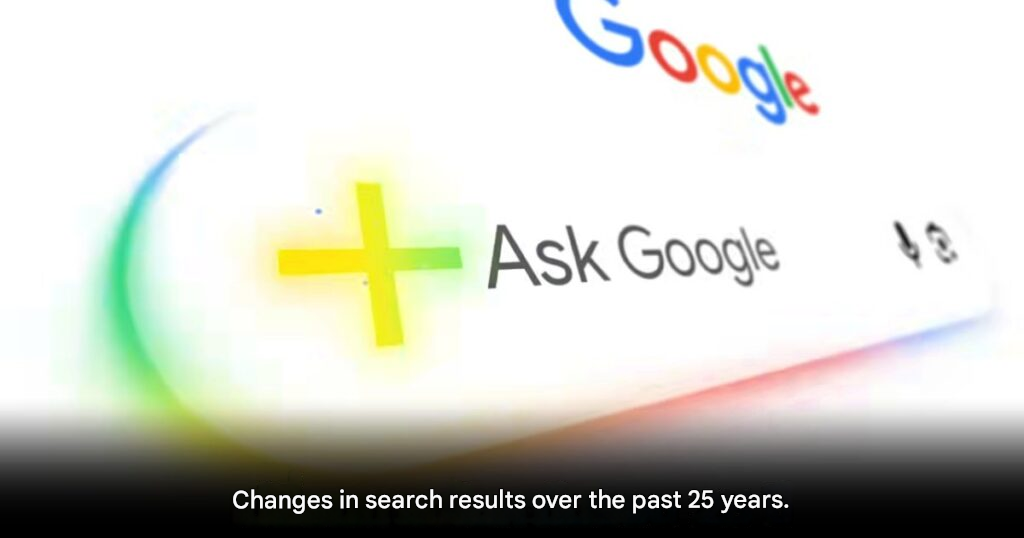
Google has announced one of the biggest upgrades to Search in more than 25 years.
The company is now integrating advanced AI deeper into Search, giving users more ways to ask complex questions, use multimodal input, and receive smarter answers.
The upgrade comes after AI Mode reached more than 1 billion monthly users worldwide within just 1 year.
Because of that rapid growth, Google is now making Gemini 3.5 Flash the default model for all users.
A smarter Search box
The new Search box is designed for more detailed questions.
It can automatically expand in size, giving users more room to explain what they need.
Instead of only guessing keywords, the system can suggest smarter question ideas based on user intent.
This makes Search feel less like a short keyword tool and more like a flexible AI assistant.
Multimodal input support
Google is also making Search work with many input types.
Users can ask questions using text, images, files, documents, videos, and information from Chrome tabs.
They can also continue asking follow-up questions from summary pages.
The system will remember the earlier context and search for the most relevant links and articles across desktop and mobile.
AI agents arrive in Search
Google is also moving Search into the age of AI agents.
Users will be able to create and manage multiple agents for different tasks.
The first focus will be information agents that can work quietly in the background 24 hours a day.
These agents can monitor websites, blogs, news, social posts, shopping updates, sports updates, and financial information.
For example, users looking for an apartment can enter their full requirements once.
The agent can then keep searching and notify them when a suitable listing appears.
This feature will first launch for Google AI Pro subscribers at $19.99 per month and Ultra subscribers around the middle of the year.
Search can help with bookings
Google is also expanding agent features into everyday services.
Users can describe specific needs, such as finding a private karaoke room for 6 people on a Friday night with late-night food service.
Search can then gather prices, available time slots, and booking links from different providers.
For selected businesses in the United States, such as home repair shops, salons, and pet care services, Google’s system can even call businesses on the user’s behalf.
Interactive tools and mini apps
Google is also bringing Antigravity and Gemini 3.5 Flash coding abilities into Search.
This allows Search to create simulations, charts, interactive tables, and small tools in real time based on user questions.
For long-term projects such as wedding planning or moving houses, Search may even generate a personal dashboard or mini app.
These tools can combine fresh information such as reviews, maps, and weather into one useful experience.
The mini app feature will first become available to Pro and Ultra users in the United States within the next few months.
Personal AI context expands globally
Google is also expanding personal AI features to nearly 200 countries and territories.
The system supports 98 languages worldwide.
Users can connect apps such as Gmail and Google Photos to Search.
Future support for Google Calendar is also planned.
This will help AI understand personal context more accurately.
However, Google says users will stay in control and can choose whether to connect, disconnect, or manage app access at any time.
THIS IS our take
Google Search is no longer just trying to answer questions. It is becoming a task engine that can search, compare, monitor, build tools, and take action. The real challenge now is trust: users need powerful AI help, but they also need clear control over what Search can access and do.
SOURCE: https://blog.google