Echoes of Aincrad Review: Return to Sword Art Online’s Death Game
Introduction
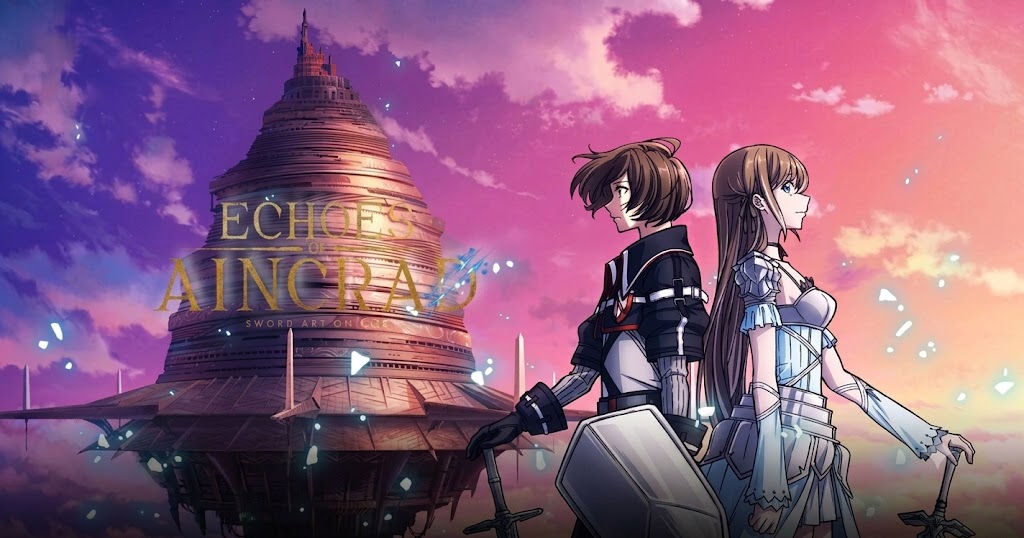
Echoes of Aincrad takes players back to the beginning of Sword Art Online, when thousands of people entered a virtual MMORPG only to discover that they could no longer log out. Death inside Aincrad also means death in the real world, transforming what appeared to be an exciting adventure into a desperate fight for survival.
Developed by Game Studio Inc. and published by Bandai Namco Entertainment, the single-player action JRPG is available on PlayStation 5, Xbox Series X|S, and PC. Instead of placing players directly in control of Kirito, the game allows them to create their own survivor and experience Aincrad from a more personal perspective.
Create Your Own Survivor in Aincrad
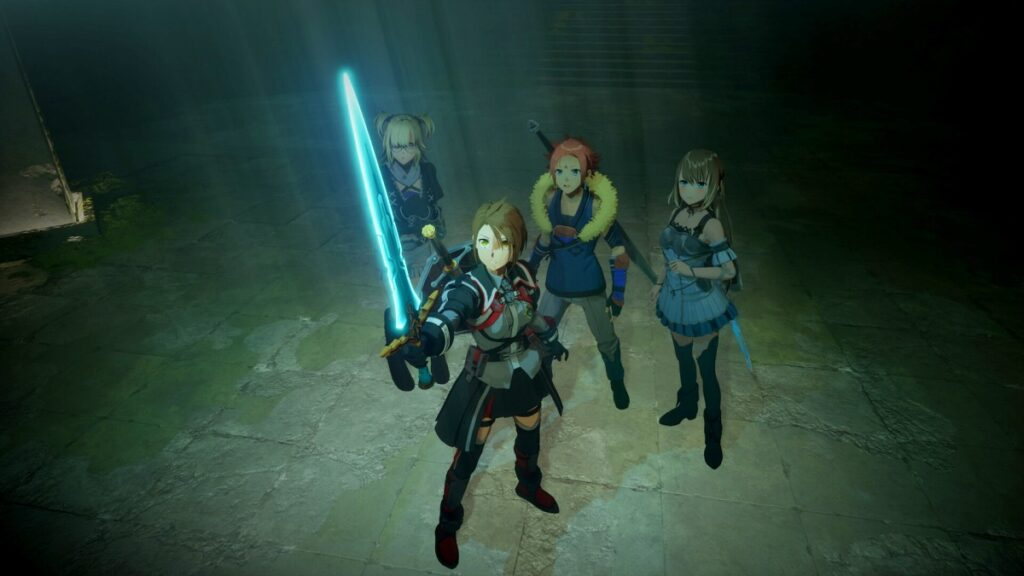
The character-creation system is one of the game’s strongest features. Players can customize their protagonist’s appearance, equipment, abilities, and combat style, making the adventure feel like their own story rather than another retelling centered entirely on the franchise’s established heroes.
This approach is particularly effective because the original premise of Sword Art Online has always encouraged viewers to imagine what they would do if they were trapped inside Aincrad. Echoes of Aincrad finally provides a console and PC experience built around that idea.
The protagonist is joined by original characters such as Iori and Saayu. Iori is a sword-wielding solo player who introduces the protagonist to the game during the beta test, while Saayu is a cheerful party member who helps hold the group together. Familiar franchise characters also appear throughout the journey.
A Darker Story About Survival
The story revisits the beta-test period and the opening stages of the Sword Art Online incident. Players witness the moment when Aincrad stops being an ordinary virtual world and becomes a prison in which every battle could be fatal.
Rather than focusing only on heroic victories, the narrative examines loneliness, psychological pressure, fear, and the gradual breakdown of people placed in an extreme situation. The result is a darker and more serious atmosphere than many previous Sword Art Online games.
This tone gives the story greater emotional weight. The original companions are not simply combat assistants; they are survivors attempting to cope with the same uncertainty and danger as the player.
Fast Action Combat With Six Weapon Types
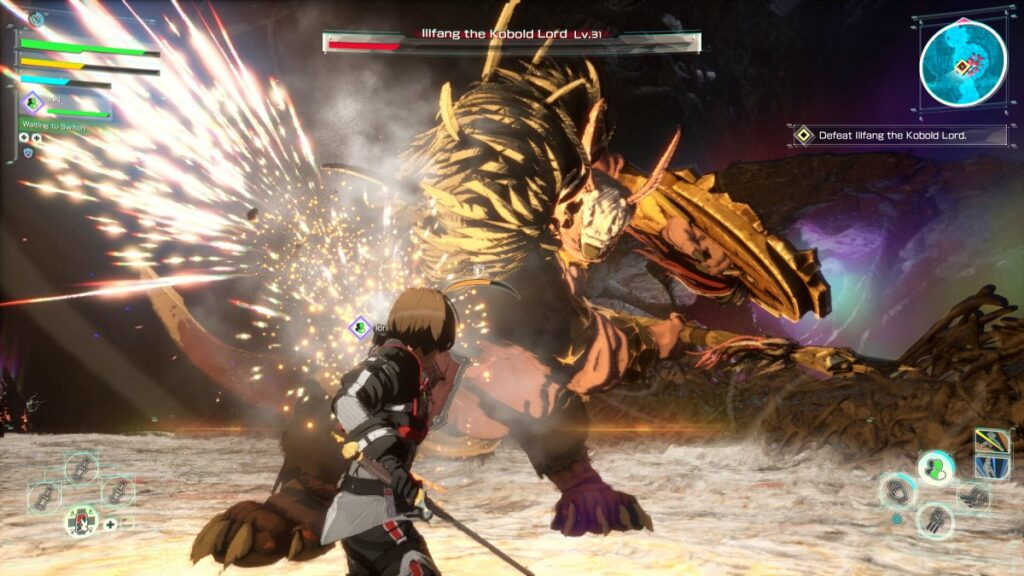
Combat uses a real-time action RPG system built around attacking, guarding, dodging, positioning, and coordinating with an AI-controlled partner.
Players can build their protagonist around six principal weapon types: swords, daggers, maces, rapiers, two-handed swords, and two-handed axes. Swords, rapiers, and maces can also be paired with shields. Each weapon category has its own speed, reach, defensive options, and attack rhythm.
Daggers favor rapid strikes and hit-and-run tactics, while two-handed swords and axes sacrifice speed for heavier damage and greater reach. Maces specialize in breaking enemy defenses, while rapiers support quick attack chains and counterattacks.
The variety gives players room to experiment before committing to a preferred combat style. Switching from a fast dagger build to a heavy two-handed weapon significantly changes how encounters must be approached.
Partner Commands Add Tactical Depth
Players do not fight alone. AI partners can be assigned different tactical behaviors depending on the situation.
Switch Mode allows the player and partner to alternate attacks against a selected target. Performing an evasive maneuver after attacking can transfer the initiative to the partner, creating an effective back-and-forth rhythm during difficult encounters.
Free Mode allows partners to act more aggressively and engage separate enemies. However, extended use gradually reduces their concentration, making them less reliable at dodging and defending themselves.
These commands make partner management more meaningful than simply having an AI companion follow the protagonist. Proper timing can open an enemy’s defenses and create opportunities for coordinated attacks.
The combat is at its best when dodges, guards, partner commands, and weapon skills come together. Large visual effects and rapid attack sequences give major encounters an energetic presentation that suits the anime-inspired setting.
Weapon Crafting Rewards Experimentation
The blacksmith system provides considerable control over character progression. Weapons obtained from enemies come with different attributes and effects, but newly acquired equipment often requires enhancement before it becomes useful against stronger opponents.
Unwanted weapons can contribute materials toward improving preferred equipment. Players can also use enhancement and synthesis systems to create weapons suited to their chosen build.
A key component is the EX-MOD system, which allows weapon effects to be combined and configured. This makes it possible to develop equipment around specific priorities, such as speed, raw damage, durability, or particular skills.
This system makes collecting duplicate weapons more worthwhile. Even an item that is not immediately useful may contain an effect that can strengthen another weapon.
Aincrad Looks Expansive but Feels Restricted
The environments present Aincrad as a large and visually impressive fantasy world. Cities, plains, forests, dungeons, and distant landmarks create the impression that players are exploring a massive virtual kingdom.
However, the game is not open world. Progress follows a quest-based structure, with new areas becoming accessible as missions and story objectives are completed. Certain sections of the map remain unavailable until the relevant quest permits the player to enter them.
This structure limits the sense of freedom. Players cannot always leave town and explore whenever they choose, even when the scenery suggests that a broader area should be accessible.
The outdoor combat zones can also feel underpopulated. Enemy groups and environmental interactions are not always varied enough to make repeated visits feel substantially different.
Repetitive Quests Slow the Adventure
Quest design is another noticeable weakness. Many missions rely on familiar objectives such as collecting specified items, traveling to marked locations, or defeating a required number of monsters.
These activities are functional, but they become predictable after extended play. The limited variety makes some sections feel closer to routine level grinding than a dangerous expedition through an unpredictable death game.
The launch experience also concentrates heavily on the earliest areas of Aincrad. This helps the game establish its characters and survival mechanics, but it can make the overall journey feel smaller than the vast floating castle promised by the premise.
The result is a world that often looks more expansive than it actually feels during play.
Death Game Mode Raises the Stakes
Players seeking a more intense experience can attempt Death Game Mode, an optional challenge designed to reproduce the danger associated with the original Sword Art Online premise.
Death in this mode permanently deletes the corresponding save data. There are no conventional retries or second chances after the protagonist falls in battle. Normal exits, deliberate returns to the title screen, and unexpected interruptions such as power loss do not trigger the deletion; the penalty is tied specifically to defeat during gameplay.
The mode changes how players evaluate every encounter. Equipment preparation, item management, skill selection, and partner commands become considerably more important when one mistake can erase the entire journey.
Death Game Mode normally becomes available after completing the game. Owners of the Deluxe or Ultimate Edition receive an early unlock and can begin the challenge without first finishing a standard playthrough.
It will not appeal to everyone, but it is one of the game’s most thematically appropriate features. Few mechanics could communicate the central tension of Aincrad more directly than permanent save deletion.
An Experience Designed for Sword Art Online Fans
Echoes of Aincrad succeeds most clearly as a fan-focused experience. Creating a personal avatar, meeting other trapped players, revisiting the beginning of the death game, and fighting alongside recognizable characters creates a strong connection to the original series.
Its action combat is accessible but offers enough weapon and equipment customization to support different approaches. Partner commands and the blacksmith system add tactical and progression layers that become more important at higher difficulty settings.
However, the restricted exploration, sparse environments, repetitive mission objectives, and limited early-floor focus keep the adventure from fully realizing Aincrad’s scale.
THIS IS our take
Echoes of Aincrad is most compelling when it allows players to imagine themselves as another survivor inside the Sword Art Online incident. The custom protagonist, darker narrative, weapon variety, crafting systems, and partner mechanics combine to create one of the franchise’s more personal game adaptations.
Its shortcomings are difficult to ignore, particularly when repetitive quests and restricted exploration undermine the illusion of entering a vast virtual world. Even so, fans who value Aincrad’s original atmosphere and want to experience its dangers from their own character’s perspective will find plenty to appreciate—especially if they are brave enough to attempt Death Game Mode.