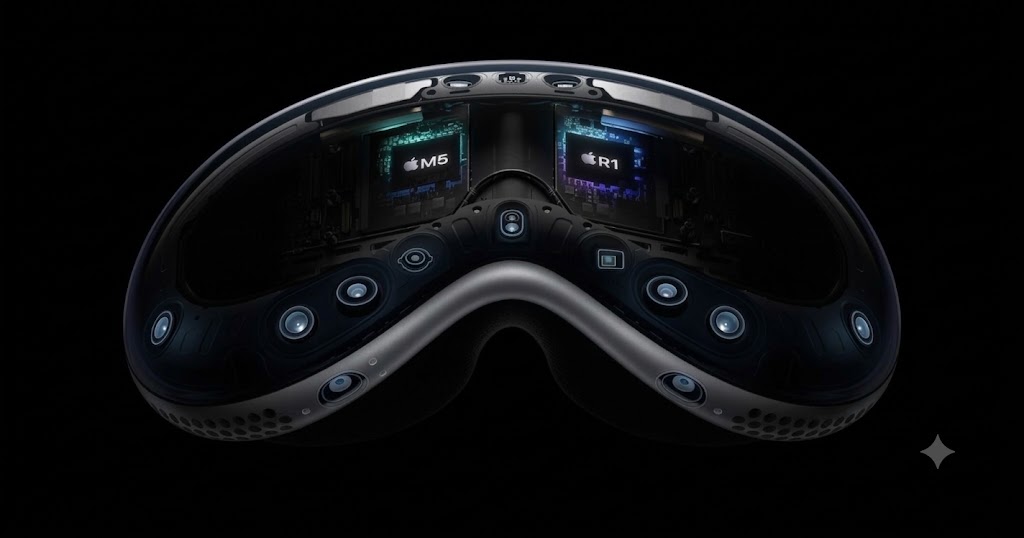
Tech enthusiasts hoping for a more accessible entry into Apple’s spatial computing ecosystem might need to adjust their expectations. Recent supply chain reports indicate that the Cupertino-based tech giant has officially pulled the plug on an entry-level, lower-cost version of its premium mixed-reality headset.
Instead of chasing a mass-market version of the bulky $3,499 device, Apple is reportedly engineering a major strategic shift toward a completely different wearable form factor.
Samsung Halts Production on Crucial Cost-Cutting Displays
According to industry insiders, Samsung Display has finalized an internal decision to permanently terminate a specialized panel development project known as “G-VR.” This project was specifically tasked with producing glass substrate-based micro OLED displays intended for the rumored budget headset, tentatively dubbed the “Vision Air.”
The G-VR panels were designed to feature roughly half the pixel density of the original Vision Pro, sitting around 1,600 to 1,700 PPI compared to the premium model’s 3,386 PPI. By substituting expensive silicon substrates with glass, the display was considered the linchpin for cutting production costs drastically. However, following a wind-down phase that began early this year, Samsung Display is now scheduled to fully close the project by September 2026, officially ending expectations for a 2028 or 2029 launch window.
A Strategic Pivot Toward AI-Powered Smart Glasses
The cancellation of the budget headset reflects Apple’s broader realization that fully immersive headsets face substantial mainstream adoption hurdles due to weight, comfort, and production costs. Industry analysts, including Ming-Chi Kuo, have noted that immersive headset initiatives are vanishing from Apple’s immediate product roadmap under incoming leadership.
Resources are instead being redirected to the development of AI-powered smart glasses. Apple intends to go head-to-head with Meta’s popular Ray-Ban collaboration by focusing on lightweight, everyday eyewear equipped with intelligent audio and visual overlays. While executives maintain that spatial computing remains part of Apple’s ultra-premium niche and long-term vision, short-term commercial volume will now be driven by more seamlessly integrated wearable tech.
THIS IS our take
Scrapping the lower-cost Vision Pro headset makes a great deal of business sense for Apple. The original Vision Pro is a technical marvel, but its sheer bulk and heavy price tag keep it confined to developers and enthusiastic prosumers. Trying to make a cheaper version by cutting screen quality in half risked delivering a subpar user experience that doesn’t live up to Apple’s standard of quality.
By pivoting to AI smart glasses, Apple aligns itself perfectly with modern technological trends. Consumers are far more likely to embrace lightweight spectacles that enhance their daily routines over heavy goggles that cut them off from reality. If Apple can blend its advanced Apple Intelligence ecosystem with a stylish form factor, they might finally find the mainstream wearable success they’ve been looking for.