Google Launches Fitbit Air Screenless Health Tracker
Google has officially introduced the Fitbit Air, a brand new wearable that takes a minimalist approach to health and wellness. Designed without a traditional display, the Fitbit Air focuses on comfort and long-term data collection without the distractions of a typical smartwatch. This device is specifically aimed at users who want comprehensive health insights in a low-profile form factor. Priced at $100, it positions itself as a strong competitor to other high-end screenless trackers currently on the market across the globe.
Advanced Health Monitoring in a Compact Design
Despite its small size, the Fitbit Air is packed with sophisticated sensors. It offers 24/7 heart rate monitoring, blood oxygen (SpO2) levels, skin temperature variation, and heart rate variability (HRV). One of its standout features is the ability to detect irregular heart rhythms, which can alert users to potential signs of atrial fibrillation (AFib). Because it lacks a screen, all detailed insights are delivered through the newly redesigned Google Health app, which provides a deep dive into recovery and activity metrics.
Unmatched Comfort and Seamless Pixel Watch Integration
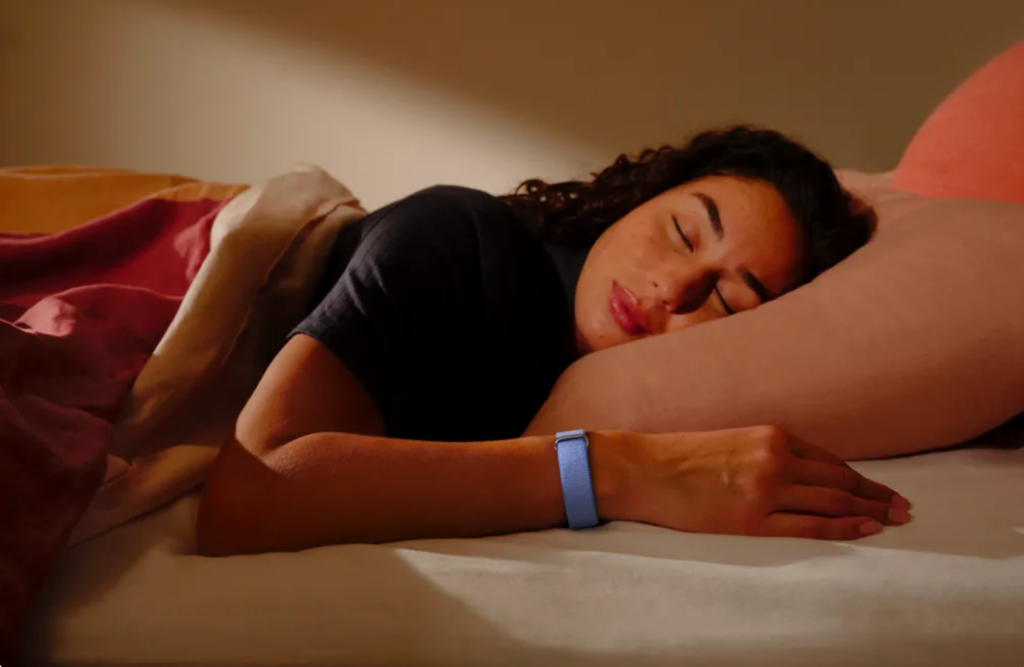
The Fitbit Air is engineered to be the most comfortable wearable in Google’s lineup. It is 25% smaller than the Fitbit Luxe and 50% smaller than the Inspire 3, weighing just 12 grams with its band. This makes it ideal for sleep tracking, as users often find bulkier smartwatches uncomfortable to wear at night. Furthermore, Google has introduced a seamless “multi-device” experience, allowing users to pair both a Pixel Watch and a Fitbit Air to the same account. This enables users to wear the Pixel Watch for daily tasks and switch to the Fitbit Air for sleep or intense workouts without losing any data.
Long Battery Life and Smart Features
The device boasts a battery life of up to 7 days on a single charge, ensuring that users do not have to worry about daily power cycles. For those in a hurry, a quick 5 minute charge provides enough power for an entire day of use. While it lacks a screen, the Fitbit Air uses a vibration motor for haptic feedback, including a Smart Wake alarm that gently vibrates to wake the user during the optimal sleep stage. The tracker is also water-resistant up to 50 meters, making it suitable for swimming and varied weather conditions across Southeast Asia.
Google is clearly taking a shot at Whoop and Oura with the Fitbit Air, and the $100 price tag is a massive advantage. We love the idea of a device so light you forget you are wearing it, especially for people who find modern smartwatches too noisy or bulky. The ability to swap between this and a Pixel Watch is a genius move for those of us who want the full tech experience during the day but total comfort at night. It is a bold, “back to basics” move that proves you do not need a screen to stay on top of your health goals!