Survey Suggests 62% of Players No Longer Buy Full-Price Games
Survey Suggests 62% of Players No Longer Buy Full-Price Games
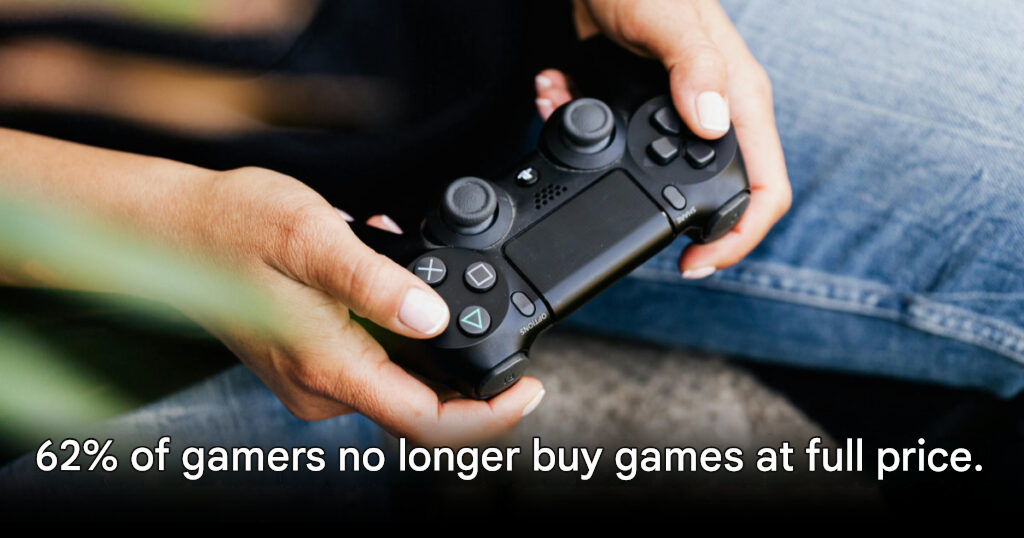
A new survey suggests that the gaming market has changed significantly, with many players no longer rushing to buy games at full price. According to the Generations in Play report, created by IGN Entertainment in partnership with Kantar and the University of California, Berkeley, a large portion of players now prefer to wait for discounts instead of buying new games at launch.
The report is based on a survey of thousands of highly engaged entertainment consumers in the United States, United Kingdom, and Australia. Its findings show that full-price purchases are no longer the default behavior for many players across different age groups.
According to the survey, only 38% of Millennials aged 30 to 44 still buy games at full price. Among Gen Z players aged 14 to 29, the number is slightly higher at 42%. Meanwhile, only 20% of Gen X players aged 46 to 61 continue to buy games at full price.
Taken together, the findings suggest that most players across these three generations are more likely to buy games when they are discounted, showing a major shift in how consumers think about game value.
Players Now Have Too Many Entertainment Choices
Christopher Dring from The Games Business said the survey reflects a market where consumers have more games, movies, and other content to choose from than ever before. Because of this, players no longer feel the same urgency to buy new games on day one.
Another major factor is the condition of some modern game launches. Many players have become more cautious because some games release in an unfinished state, requiring patches and updates before they feel complete. This has reduced the motivation to immediately buy games at launch.
However, Dring also pointed out one advantage of the modern market: games now have a much longer sales life. It is no longer unusual for major titles to continue selling for years, or even for more than a decade, thanks to updates, discounts, expansions, and long-term community support.
Different Generations Discover Games in Different Ways
The report also highlights how players from different generations discover new games.
Gen X players are more likely to search for new games through Google Search, while 85% of Millennials prefer discovering games through YouTube. Gen Z, on the other hand, places the most importance on social media.
This shows that marketing a game today is no longer as simple as relying on traditional trailers or store pages. Each generation finds games through different channels, meaning publishers need to understand how players consume information before making a purchase.
Single-Player and Multiplayer Preferences Also Differ
The survey also found differences in genre preferences between age groups. Gen X players tend to prefer single-player games, while Gen Z is more drawn to multiplayer games. Millennials appear to sit somewhere in the middle, with a more balanced interest in both styles.
This generational difference reflects how gaming itself has evolved. Older players may prefer complete experiences they can enjoy at their own pace, while younger players often see games as social spaces where community, updates, and shared experiences matter just as much as the game itself.
Why Players Return to Games Also Depends on Age
Another interesting finding is why players return to games they already own. Gen X and Millennials often go back to games in order to finish them or master them. For these groups, returning to a game may be about completion, improvement, or getting the full value from a purchase.
Gen Z, however, is more likely to return because of new updates, fresh content, or in-game events. This suggests that younger players are more connected to the live-service model, where games continue evolving over time and players come back to stay current with the community.
Age and Lifestyle Affect Buying Behavior
Dring also noted that generational differences may be connected to time and money. Older players may have more disposable income but less free time, while younger players may have more time but less money.
This helps explain why some players wait for sales, while others focus on getting the most out of the games they already own. A full-price game is no longer judged only by whether it looks exciting, but by whether it fits a player’s budget, schedule, and long-term entertainment habits.
Gaming Is No Longer the Same for Every Generation
Karl Stewart, Senior Vice President of Global Marketing at IGN Entertainment, added that each generation has a different relationship with games.
He explained that Gen X grew up in an era of midnight game launches, full-price releases, and a console-focused market. Because of that, many Gen X players want to get as much value as possible from each game they buy.
For Gen Z, the situation is very different. They grew up in a world filled with multiple platforms, ongoing games, social media, and communities built around live content. For them, games often do not really “end” in the traditional sense. Instead, communities become part of the experience, and players want to stay involved, informed, and up to date.
This means games are no longer just standalone products for many younger players. They are also social spaces, identity markers, and ongoing communities.
The Market Has Changed Alongside the Players
The survey suggests that the decline in full-price purchases is not simply about players becoming more critical. It is also about how much the entertainment landscape has changed.
Players now have enormous backlogs, subscription services, free-to-play games, live-service titles, streaming platforms, and constant discounts competing for their attention. With so many choices available, there is less pressure to buy a new game immediately.
For publishers and developers, this shift creates both a challenge and an opportunity. Convincing players to buy at full price is harder than before, especially if a game launches with technical issues or limited content. At the same time, games that receive strong long-term support can continue attracting buyers well after release.
The modern gaming market is no longer driven only by launch day hype. More than ever, it is shaped by value, timing, trust, and the ongoing relationship between players and the games they choose to support.
Origin: videogameschronicle