Love and Deepspace Criticized by China’s Ministry of Public Security Over Valko
The controversy surrounding Valko’s removal from Love and Deepspace has now reached a national government agency. China’s Ministry of Public Security has issued criticism focusing heavily on content considered inappropriate for minors.
China’s Ministry of Public Security criticizes the Valko storyline
The removal of Valko from Love and Deepspace following strong opposition from Chinese players has attracted the attention of the News and Media Center under China’s Ministry of Public Security.
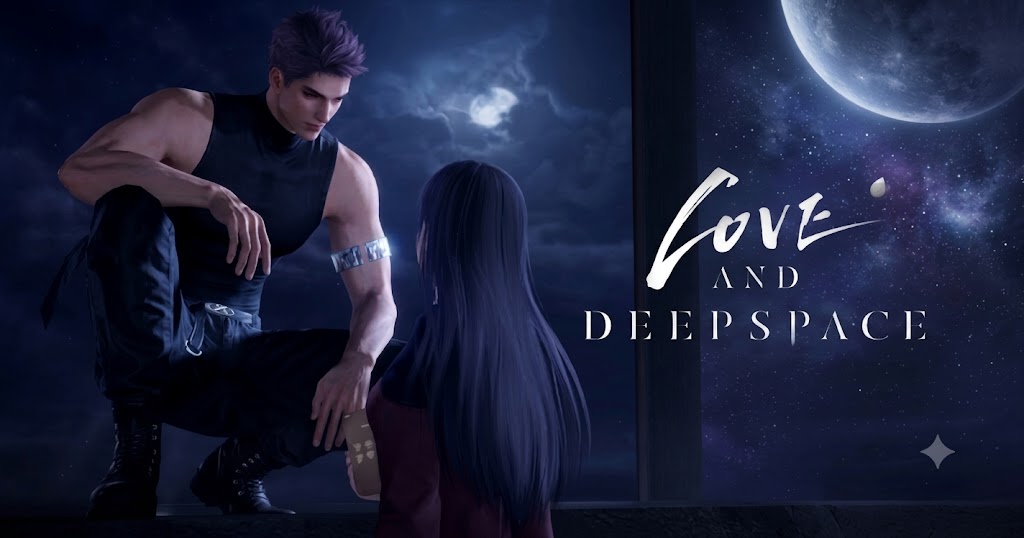
According to the agency, an online game targeting female players recently triggered widespread controversy after presenting a storyline in which a male character entered the home of a woman living alone through a window late at night.
The scene was promoted using the phrase, “What’s wrong with letting a wolf into the house?” The expression is connected to a Chinese idiom referring to inviting a dangerous person into one’s home and placing oneself at risk.
The agency argued that the scene presented an illegal home invasion as a romantic encounter. It criticized entertainment content that prioritizes attention and popularity while ignoring public morality, crossing legal boundaries, and potentially affecting public safety.
Women’s safety should not be treated as entertainment
The Ministry of Public Security emphasized that the safety of women living alone is a serious public concern involving personal rights, social order, and the protection of women.
According to the statement, this issue should not be freely adapted into entertainment or treated as a joke. Chinese law strictly protects a person’s right to the security of their home and prohibits anyone from unlawfully entering another person’s residence.
The statement also noted that illegal home invasion may result in imprisonment of up to three years or criminal detention under Chinese law.
Presenting such behavior as playful or flirtatious interaction could be interpreted as promoting or glorifying methods associated with criminal activity. The agency argued that doing so would disregard the authority of the law and openly challenge the principles of the rule of law.
Officials raise concerns about the effect on minors
Another major concern raised by the agency was the possible long-term effect of this type of content on public perception.
Content designed primarily to attract attention may distort the understanding of younger audiences who have not yet developed mature judgment. It could reduce their awareness of dangerous behavior and weaken broader efforts to educate the public about personal safety.
The Ministry of Public Security added that online game content crossing appropriate boundaries could negatively affect the development of minors. Not every young player can clearly separate the idea that “a game is a game, and real life is real life.”
The statement emphasized the importance of protecting minors online. This includes preventing the creation or distribution of content that may encourage young people to imitate unsafe actions, promote inappropriate conduct, or normalize behavior that conflicts with accepted social morality.
Removing Valko is not considered the end of the issue
Officials stated that removing Valko and the disputed content from the game should not be considered the final response.
The incident should lead to a serious review of the game’s content-production process. Potentially misleading or harmful material should be identified and screened before release to support public safety and the appropriate development of minors.
The agency described the controversy as a warning to the wider gaming industry. Content that intentionally blurs the distinction between legal and illegal behavior may eventually face both legal consequences and opposition from the public.
Valko: Foregone Fall may contain the disputed scene
The scene referenced in the criticism is believed to come from the Valko: Foregone Fall promotional video.
The original video has reportedly been removed or made private, although a fan-uploaded version remains available. The trailer shows Valko approaching the player character through the balcony of her room.
Regarding the game’s age classification, Love and Deepspace is rated for players aged 18 and above on the Chinese App Store. In several other regions, however, the game carries age ratings of 13 or 16 and above.
The situation has now developed into a national-level controversy. It remains uncertain whether Papergames will bring Valko back after revising the character and related content or remove him from the game permanently.
Love and Deepspace is available as a free-to-play mobile game on Android and iOS.
THIS IS our take
The criticism highlights the risks of presenting threatening or illegal behavior through romantic promotional language, particularly when the content may be accessible to younger audiences. Age classifications provide an important safeguard, but developers must also consider how scenes are framed and marketed outside their full narrative context.
At the same time, fictional romance and dark-romance storytelling should not automatically be treated as direct approval of real-world behavior. The central issue is whether the game clearly communicates its fictional context without minimizing genuine safety concerns or encouraging audiences to view dangerous conduct as harmless.